Last Updated on August 18, 2026 by ReTurf
A lot of DIY turf projects stall on a question that sounds simple: how big is the space? Precise answers are rarer than you might expect, and understandably so. Few people willingly plan a weekend around standing in the yard with a tape measure—and what often catches people off guard is that turf does not behave like carpet or tile, where a square footage figure is enough. Turf comes off a roll at a fixed width, and that fact governs everything downstream. Two spaces with identical square footage can call for very different amounts of material depending on their shape.
As you can see, measuring your space correctly is very important before buying artificial turf, and it matters especially when you are shopping for remnant turf, where you are choosing from available lengths at a substantially lower cost rather than ordering a custom cut. Because remnant selection reflects current production runs and commercial project surplus, the buyer who knows their exact dimensions can move quickly and confidently when the right piece appears.
Today we’re going to go over how to measure a space for artificial turf installation, how to read a turf roll’s specifications, and some considerations that apply specifically when you are shopping remnant inventory. It is written for both the residential buyer measuring a backyard and the contractor or manager sizing a larger installation.
One quick note before we head outside: this guide is general information and tips, not a substitute for measuring your own space and confirming your numbers before you order. Every project has its own quirks, and site conditions, local codes, and product specifications vary. We can’t be responsible for materials purchased, or installations completed based on the guidance here. Double-check your measurements, confirm dimensions against the specific product you’re buying, and consult a qualified installer directly if you have any doubt about your project.
How Turf Rolls Are Sized: Width vs. Length
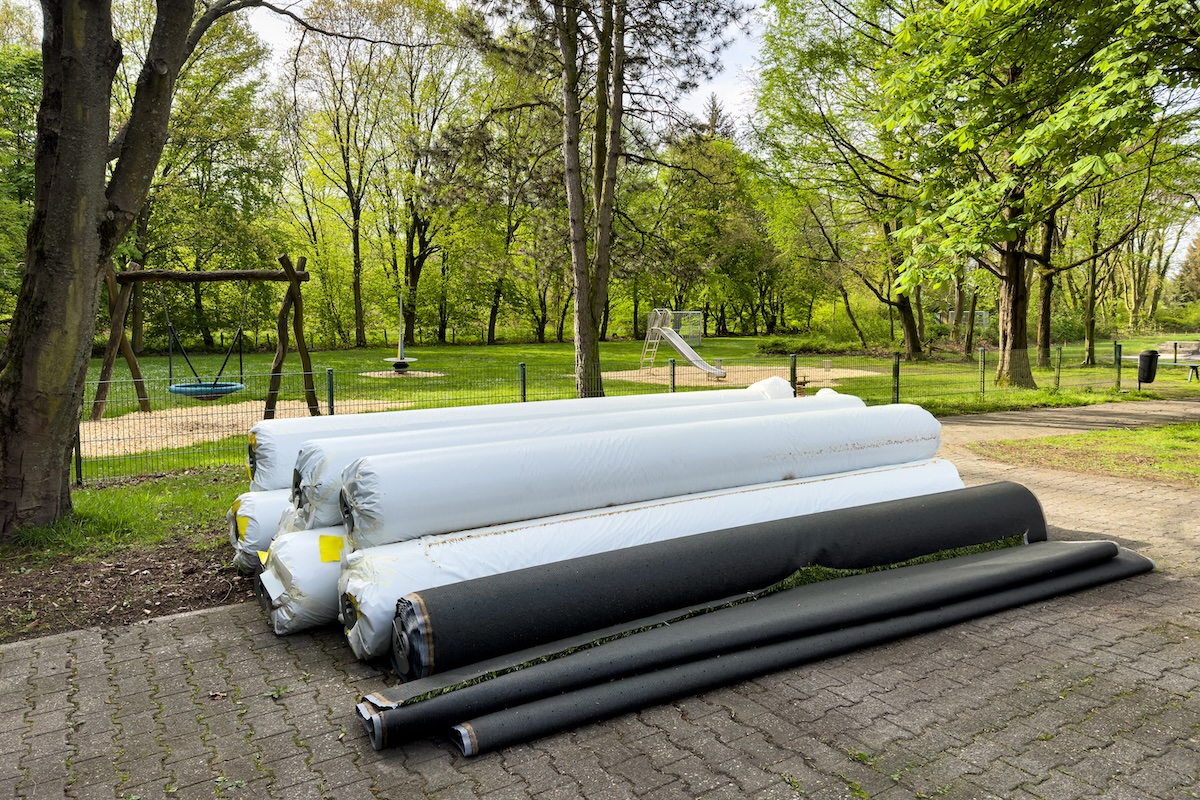
Artificial turf is manufactured and sold in rolls, and being aware of how those rolls are dimensioned is the foundation of measuring correctly.
Width is fixed at the factory. Standard artificial turf rolls are manufactured at either 12 feet or 15 feet wide. This is the full width of the roll as it comes off the production line, and a remnant piece preserves that full factory width from edge to edge, so any remnant you buy will almost always be exactly 12 or 15 feet wide.
Length is the variable dimension. Turf is sold by the linear foot along the length of the roll. A full roll might run several hundred feet long; a remnant might run anywhere from around 20 feet to over 100 feet. Length is the dimension that varies from piece to piece, and it is what you are shopping for when you buy turf remnants.
This distinction changes how you approach measuring. Because width comes in only two options, your job is to identify which of those two widths fits your space best, and then determine how many linear feet of length you need. A space that is 14 feet across is well served by a 15-foot roll with minimal trimming. A space that is 11 feet across works with a 12-foot roll. A space wider than 15 feet is covered by seaming two pieces together, which introduces its own measuring considerations covered later in this guide.
Tools You’ll Need to Measure
Measuring turf does not require specialized equipment, but a few tools make the job more accurate:
- A tape measure long enough for your space, or a measuring wheel for larger areas where a tape becomes unwieldy
- Graph paper or a simple sketch app to draw the area to scale
- Marking flags, stakes, or spray chalk to mark corners and boundaries on the ground
- A calculator for converting your measurements into square footage and linear feet
For irregular spaces, having a helper makes the process considerably easier, since holding a tape measure taut across an open area is difficult to do alone. Failing that, a stake or a heavy object to anchor one end can do the job on shorter runs.
Step-by-Step: Measuring a Rectangular Area
Most turf projects start with a rectangular or near-rectangular space. The process breaks down into a few clear steps.
Measure the width and length of the space
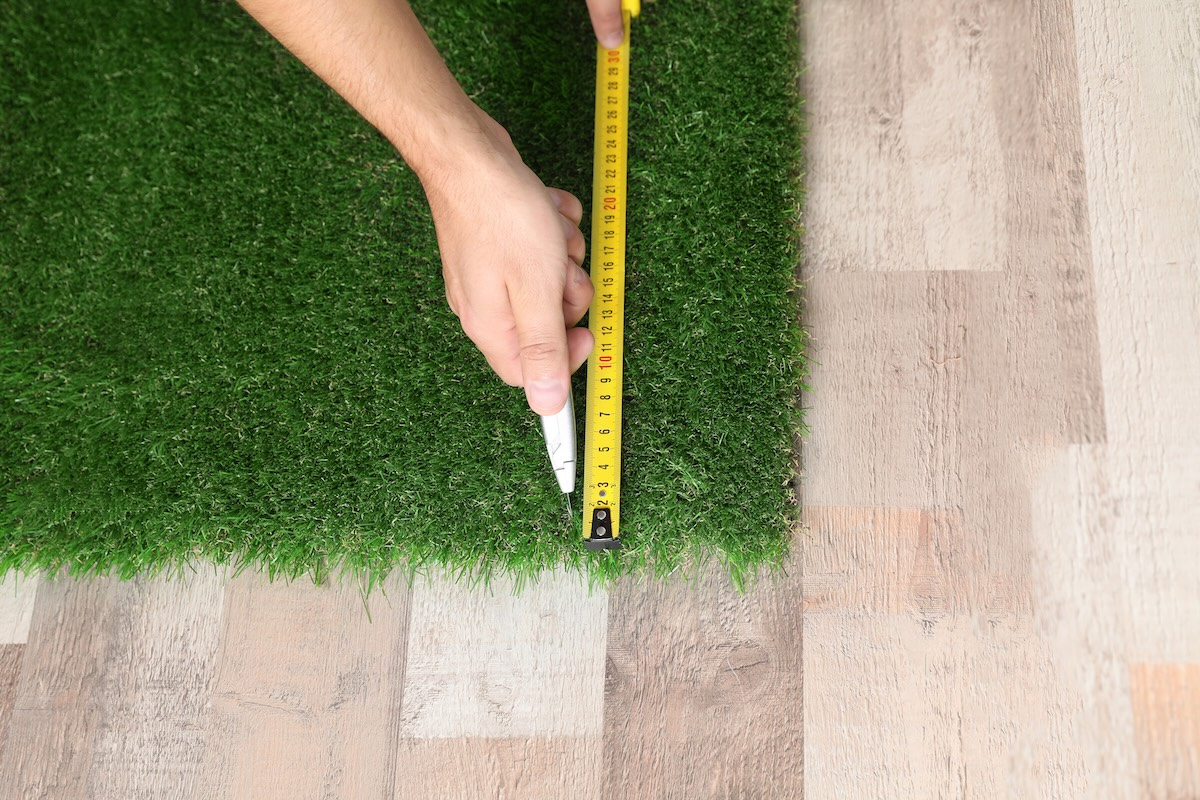
Measure the two dimensions of your area in feet. Record the widest point and the longest point, since these are what determine the size of turf you need. Write both numbers down before doing anything else.
Decide which dimension maps to the roll width
This is the step that determines which pieces will fit your project. One of your two measurements needs to fit within a 12-foot or 15-foot roll width. Identify which side of your space will run across the width of the roll, and confirm it is 15 feet or less. If both dimensions exceed 15 feet, your project will use more than one piece seamed together.
Calculate square footage
Multiply width by length to get the total square footage. A space that is 12 feet by 30 feet is 360 square feet. This figure is a useful reference point as you compare options.
Translate to linear feet at the roll width
Since turf is sold by the linear foot at a fixed width, express your need in those terms. A 12-by-30-foot space maps cleanly to 30 linear feet of a 12-foot-wide roll. A 14-by-40-foot space maps to 40 linear feet of a 15-foot-wide roll, with a foot of trim off the width.
Add your buffer
Add roughly 10 percent to your linear-foot figure to account for trimming, edge securing, and minor measuring error. More on this in the buffer section below.
Measuring Irregular or Angled Spaces
Not every project is a clean rectangle. Pool surrounds, curved garden beds, pet runs that wrap around structures, and rooftop terraces with angled parapets all present irregular shapes. The reliable approach for any irregular space is to reduce it to rectangles.
Sketch the area on graph paper, then divide it into the smallest number of rectangles that together cover the whole space. Measure each rectangle individually, calculate its square footage, and add the totals together. This gives you an accurate square footage even for a complex shape.
For the purposes of ordering, though, remember that turf is cut from a rectangular roll. An irregular space is covered by ordering a rectangular piece that spans the widest and longest points of the area, then trimming the turf to the actual shape on site. Because there is more trimming involved than with a clean rectangle, a slightly larger buffer above the standard 10 percent gives you the room to work.
Pool surrounds are a common remnant use case precisely because of this. The irregular perimeter of most residential pools means the buyer needs enough turf to wrap the edges rather than a precise linear run, and a remnant piece often provides exactly that at a lower cost than a full custom roll.
Reading a Turf Roll Specification
Every turf listing carries a set of specifications. Knowing how to read them helps you match the right roll to your project.
| Spec | What it tells you |
|---|---|
| Width | The fixed factory width, almost always 12 or 15 feet. Confirm this fits your space’s narrower dimension. |
| Length | The linear footage of that specific roll or piece. This is the number that varies from listing to listing. |
| Pile height | The length of the fiber blades, typically 1.5 to 2.5 inches. Shorter pile suits athletic and high-traffic use; taller pile gives a more lawn-like look. |
| Fiber type | Polyethylene, polypropylene, or nylon. Determines softness, durability, and how the turf holds up to your specific use. |
| Face weight | The weight of fiber per square yard. Higher face weight generally indicates denser, more durable turf. |
| Backing | The material the fibers are stitched into, and whether it includes drainage perforations. Affects drainage and dimensional stability. |
The two specs that matter most for measuring specifically are width and length. Pile height, fiber type, face weight, and backing matter for suitability, but they do not affect how much turf you need. When you have your space measured, you are matching your required width against the roll’s fixed width and your required length against the length available.
Why Fiber Grain Direction Affects Your Measurements
Artificial turf has a grain. The fibers are stitched to lean slightly in one direction along the length of the roll, which creates a natural lay to the blades, much like the nap on carpet or velvet. This grain affects both appearance and how you plan your measurements.
When turf is viewed from the direction the fibers lean toward, it appears lush and full. Viewed from the opposite direction, it can look slightly darker or show a different sheen. For a single-piece installation this rarely comes up, but it becomes a planning factor the moment a project uses more than one piece.
Seaming multiple pieces together is a routine technique, and a well-executed seam is nearly invisible at normal viewing distance. The key is orientation: every piece should have its grain running the same direction. This has a practical measuring consequence, since pieces need to be laid in matching orientation rather than rotated to fit. Planning your grain direction at the measuring stage means the pieces you order will line up correctly when they arrive.
For functional applications where appearance matters less, a garage gym, a temporary event floor, a dog run in a side yard, grain direction can be treated more loosely. For anything that will be seen as a continuous visible lawn, it is a primary planning factor.
Adding a Buffer: How Much Extra to Order
Whether you’re buying brand new or used synthetic grass, your final order should include a little more length than the bare measurement, because several parts of the installation process use up linear footage.
Trimming to fit an edge, allowing enough material to secure the perimeter without stretching the surface tight, accommodating a base that came in slightly larger than planned, and absorbing minor measuring variation all draw on the available length. A buffer covers these comfortably.
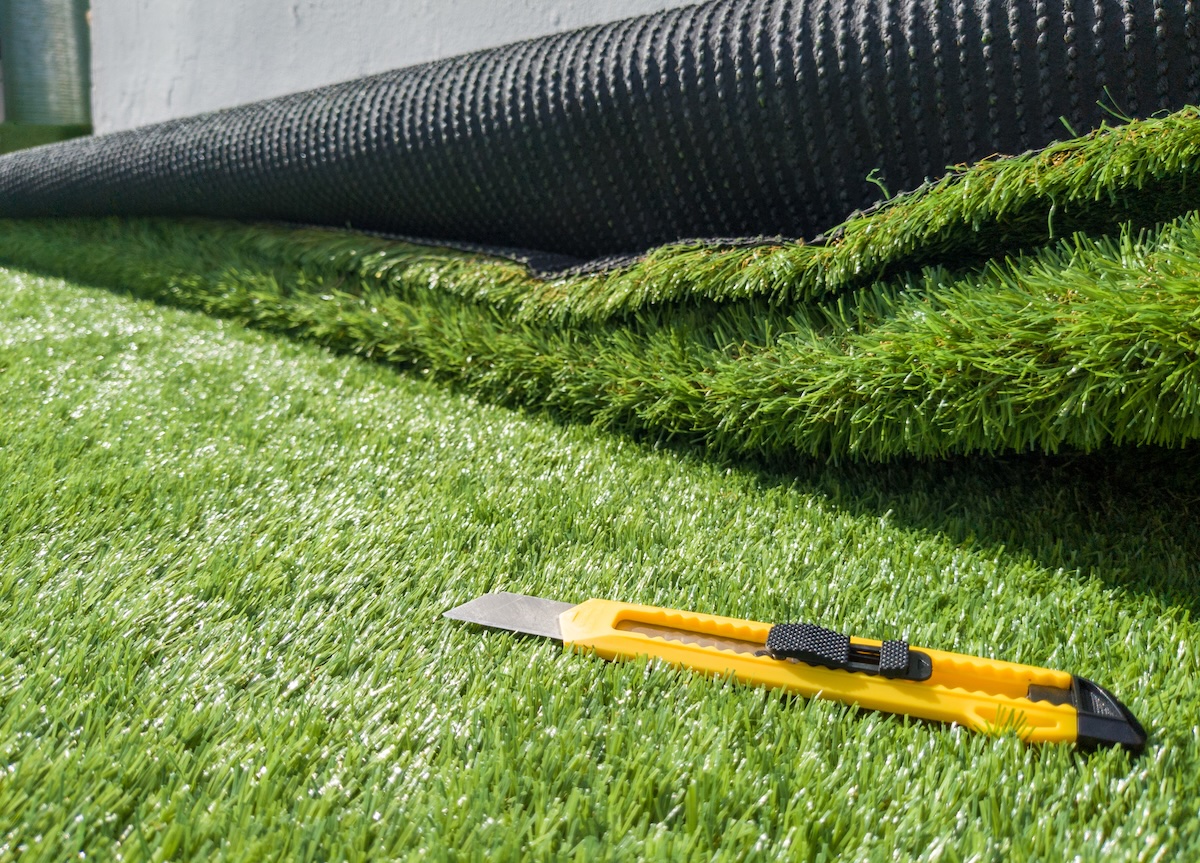
A buffer of roughly 10 percent on the length is a reasonable default for a clean rectangular space. For spaces with irregular perimeters, multiple angles, or obstacles to cut around, a larger buffer of 15 percent or more gives you comfortable working margin. With remnant pieces in particular, building that margin into your order up front is the simplest way to keep the installation moving smoothly from start to finish.
Special Considerations for Remnant Turf
Measuring for remnant turf vs new or used artificial grass follows the same fundamentals as measuring for a full roll, but a few factors specific to remnant buying deserve attention.
Measure before you shop. Remnant selection reflects current production runs and commercial project surplus, and knowing your numbers in advance puts you in a position to recognize the right piece immediately. A buyer who already knows they need, for example, 40 linear feet of a 15-foot-wide roll can evaluate available inventory at a glance and move forward with confidence.
Know where your project has flexibility. A turf batting cage that needs to be 60 feet has a fixed requirement. Home artificial grass projects, say a dog run, or a play area that works anywhere from 30 to 45 feet, opens up more of the available inventory and more opportunities to find an excellent value using turf remnants creatively in the backyard . Identifying which category your project falls into makes shopping considerably easier.
A single piece is convenient when the sizes line up. If your project fits within one remnant at 12 or 15 feet wide, covering it in a single piece skips the seaming step and speeds up installation. For larger spaces, joining two or more pieces is routine work that opens up considerably more of the available inventory, so it is worth measuring for both scenarios and seeing which pieces are available.
Know which width you need. Since remnants come in 12 or 15 foot widths, confirm which one your space calls for before shopping. A project that is 13 feet wide takes a 15-foot roll with 2 feet trimmed off. Knowing your width in advance narrows the inventory to exactly the pieces that will work for you.
What to Double-Check Before You Order
- Confirm which dimension is the roll width. Square footage alone does not tell you which piece will fit. Assign one dimension to the fixed 12 or 15 foot roll width first, then work out the length.
- Add your buffer to the final number. The buffer covers trimming and edge securing. Building it in up front keeps the installation on track.
- Decide your grain direction on multi-piece jobs. Matching the grain across all pieces is what makes a seam blend. Settle this before ordering when more than one piece is involved.
- Include any edges the turf will wrap. Turf that covers a slope, a raised bed, or a pool coping needs extra length for the vertical or curved surface beyond the flat footprint.
- Account for obstacles. Trees, posts, drains, and fixtures that the turf must be cut around call for extra trimming. Measure the full bounding rectangle, then add buffer for the cutouts.
Frequently Asked Questions
Q: How do I calculate how much artificial turf I need?
A: Measure the width and length of your space in feet, and multiply them for the total square footage. Then identify which dimension fits within a 12 or 15 foot roll width, and express your need as linear feet at that width. Add roughly 10 percent for trimming and edge securing.
Q: What width does artificial turf come in?
A: Standard artificial turf rolls are manufactured at 12 feet or 15 feet wide. Remnant pieces preserve that full factory width, so a remnant will almost always be one of those two widths.
Q: What if my space is wider than 15 feet?
A: A space wider than 15 feet is covered by joining two or more pieces with turf seam tape and adhesive, which is a routine part of larger installations.
Keep the fiber grain running the same direction on every piece and the seam will blend well. Plan this at the measuring stage, since it determines how much material you need and how the pieces orient.
Q: How much extra turf should I order?
A: A buffer of about 10 percent on the length works for a clean rectangle. For irregular shapes, spaces with obstacles to cut around, or projects wrapping slopes and edges, 15 percent or more is the safer figure. Building that margin into your order up front is the simplest way to keep an installation running smoothly.
Q: Does it matter which direction I lay the turf?
A: For visible installations, yes. Turf fibers lean in one direction, creating a grain that affects how the surface catches light. On a single piece this rarely comes up. When joining multiple pieces, keeping the grain running the same way on all of them is what makes the seam blend cleanly. For functional applications where appearance is secondary, grain direction can be treated more loosely.
Q: How do I measure an irregular or curved space?
A: Break the space into rectangles, measure each one, and add the square footage together. For ordering, you will need a rectangular piece large enough to span the widest and longest points, then trim to shape on site. Irregular spaces involve more trimming, so add a little extra to your buffer.
Q: Why should I measure before shopping for remnant turf?
A: Knowing your exact width and length requirements in advance lets you evaluate available pieces at a glance and move forward as soon as you find the right fit. Buyers who arrive with their numbers ready tend to have a faster, easier shopping experience than those still working out their dimensions.
Accurate measurements turn turf shopping into a quick, confident decision. Once you know your space in terms of roll width and linear length, with a sensible buffer added, you can evaluate any roll or remnant piece against your project in seconds.
With your width, length, and buffer settled, you have everything you need to shop remnant inventory with confidence and find commercial-grade turf for your project at remnant pricing.