Last Updated on June 22, 2026 by ReTurf
Artificial turf remnants are brand-new pieces of synthetic grass sold in shorter or irregular lengths — the byproduct of how large-scale turf manufacturing and installation naturally generates usable surplus material. They come from the leftover ends of full production rolls, overstock from large commercial projects, or inventory cleared when a manufacturer updates a product line.
What they are not is used turf, damaged goods, or a lower-grade product. The fibers, backing, drainage systems, and UV resistance are identical to what ships on a full-price roll. The only difference is the length. That distinction is important because it determines the price, and the price difference is substantial. Buyers may be able to save 60 up to 90 percent compared to buying new turf at standard retail rates. So today, we’re going over some of the most important things a buyer, contractor, or facility manager needs to understand about artificial turf remnants: how they’re created, what they’re best suited for, how to evaluate quality, and how to install them correctly.
How Artificial Turf Remnants Are Created
Having a picture of where remnants come from in the first place can help clarify why they’re available in the first place, why they’re discounted, and why their quality can be so high.
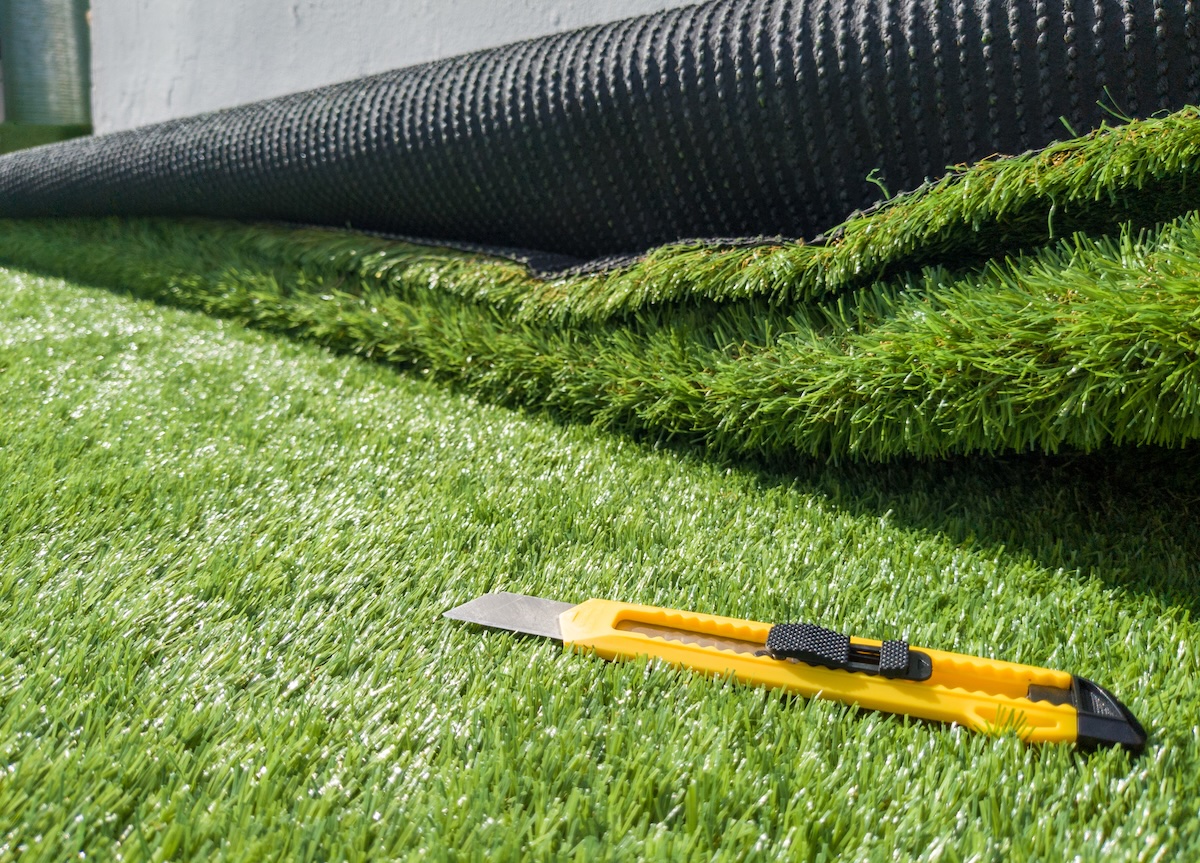
Synthetic turf is manufactured in continuous rolls, typically 12 to 15 feet wide and anywhere from a few hundred to several thousand linear feet long. When a distributor or contractor cuts from that roll to fulfill a specific order — say, a 75-foot artificial turf batting cage — whatever remains on the roll becomes a remnant. Naturally, if the original roll was 300 feet and the contractor only needed 75, the remaining 225 feet doesn’t disappear. The leftover artificial grass can be made available as turf rolls for sale, often at a reduced price.
Commercial and municipal installations can generate remnants in a similar way. A 50,000-square-foot sports field installation ordered to spec will almost always produce surplus. Even a two-percent overorder on that scale can result in a thousand square feet of brand-new, unused turf. That material filters into the market as remnant stock.
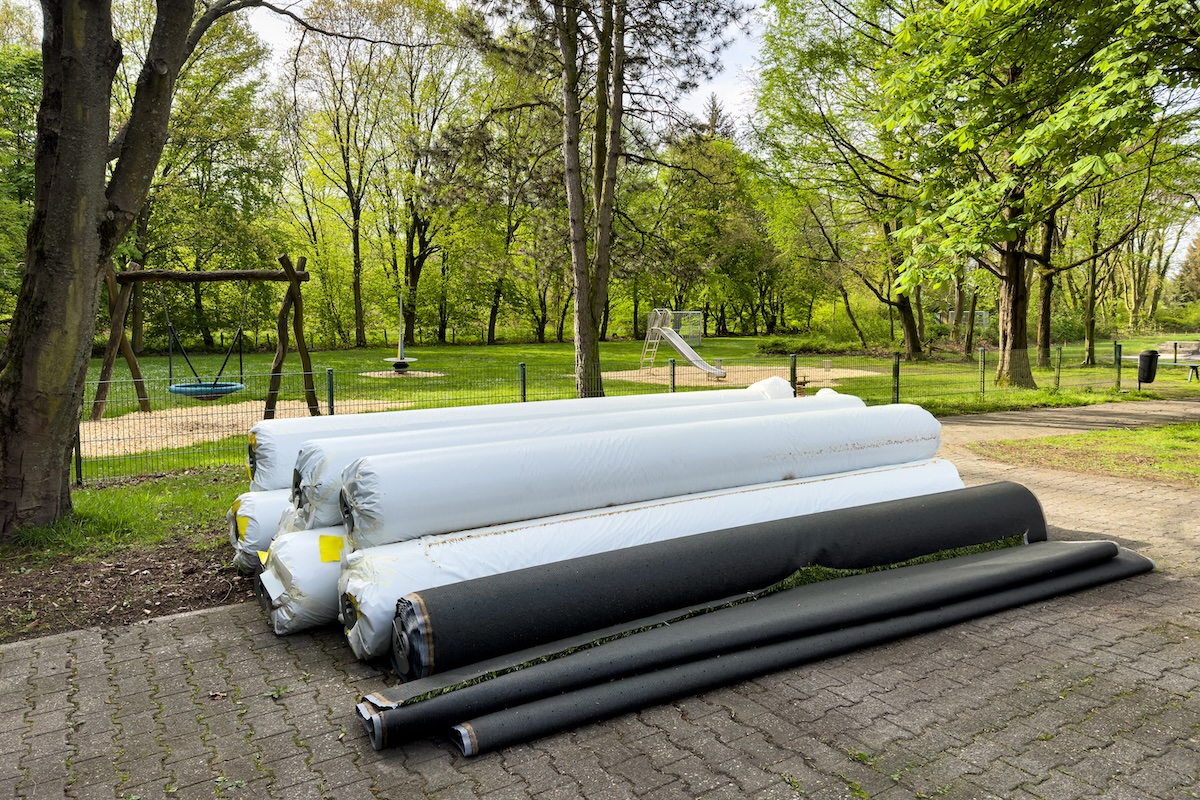
A third source is product line changes. Turf manufacturers periodically update blade shapes, fiber compositions, and backing systems. When an existing product line is discontinued or revised, retailers and distributors may offload their remaining inventory as remnants — new, unused, and fully functional, but no longer part of the active catalog.
In all three of these cases, the turf itself has never been installed, never been exposed to weather or foot traffic, and has not degraded in any way. It simply didn’t fit a particular job’s size requirements or was cleared to make room for something new.
Remnant vs. Used Artificial Turf: Understanding the Difference
The terms “remnant” and “used” often appear close together in some suppliers’ listings, which can create confusion. They describe fundamentally different types of material.
- Remnant turf is unused. The fibers stand at full height, the backing carries no adhesive residue, and the infill layer has never been compacted under foot traffic. When you buy a remnant, you’re buying new turf in a non-standard length.
- Used turf originates from a field or facility that has completed its service life. After removal, it gets cleaned, trimmed, inspected, and rolled for resale. Used artificial turf can still serve a wide range of applications, but it carries the physical history of its installation: e.g. compacted fibers and potential backing wear at seams, though ReTurf inspects, repairs, and refit used synthetic grass to make sure it is a high quality product before shipping.
For projects where appearance and long-term performance matter — a residential backyard, a commercial rooftop, a batting cage that will see daily use — new remnants offer a meaningfully different product than used turf, even when both are positioned as budget-friendly alternatives to full-price retail rolls.
Standard Dimensions and What They Mean for Your Project
Knowing what to expect in terms of sizing helps narrow down whether remnant turf will work for a given project before a buyer even starts shopping.
Width is almost always consistent. Standard artificial turf rolls are manufactured at 12 or 15 feet wide, and remnant pieces come from those same rolls. A remnant will almost always be one of those two widths — the full factory width of the original roll, preserved from edge to edge. This is useful for planning because it eliminates one variable entirely.
Length is where remnants vary. Pieces can range from as short as 20 feet to well over 100 feet. The distribution of available lengths depends on what projects are generating surplus at any given time, which is why remnant inventory tends to shift frequently. A buyer looking for a 30-foot piece might find one immediately; a buyer needing exactly 95 feet might need to check back over several weeks.
For projects with a fixed dimension requirement — a standard baseball batting cage, for example, typically runs between 55 and 70 feet long at 12 to 14 feet wide — remnant rolls in the 60-to-75-foot range are a near-perfect fit both dimensionally and economically.
Applications: Where Artificial Turf Remnants Perform Well

Remnant rolls are particularly well suited for projects where the required square footage falls below what a full commercial roll would cover, or where flexibility on length is acceptable. The following categories represent some of the most common and practical uses.
Batting Cages and Bullpens
Athletic training facilities — especially baseball and softball programs at the high school, college, and recreational level — represent one of the clearest use cases for remnant turf. A standard batting cage is approximately 12 to 14 feet wide and 55 to 70 feet long, dimensions that align almost exactly with the width and length range of commonly available remnants.
Turf in a cage needs to hold up under repeated foot traffic, cleated footwear, and equipment drag. New remnant turf, with its intact fibers and fresh backing, can handle that workload from day one. Some indoor facilities and youth programs use remnant sections specifically for pitching mats and bullpen areas, where a 10- to 12-foot section provides a stable surface that drains quickly if the area is near an entrance or subject to humidity.
Residential Lawns and Backyard Projects
Compact residential spaces — side yards, shaded areas where natural grass won’t establish, narrow strips between fencing and hardscape — are often too small to justify ordering a full commercial roll but large enough that smaller premade turf mats feel inadequate. Remnants fill that gap well.
A 15-foot-wide roll in a length between 20 and 50 feet can cover a typical backyard play area, a side yard, or a strip of lawn along a driveway with minimal cutting and very little waste. Homeowners who want a single-seam installation — one continuous piece rather than multiple sections joined together — often find that remnant rolls in the 30-to-60-foot range give them exactly that.
Pet Areas, Dog Runs, and Animal Facilities
Pet owners and commercial animal care facilities have adopted synthetic turf in large numbers, and remnants are particularly popular in this segment. For kennels, doggy daycares, and veterinary practices, turf needs to be sanitary, durable under constant paw traffic, and easy to rinse down.
New remnant turf meets those requirements. The non-absorbent fibers resist staining, hold their color under repeated cleaning, and maintain a level surface that doesn’t develop the ruts and bare patches that worn natural grass produces under high animal traffic. When paired with antimicrobial infill, synthetic turf surfaces can help reduce odor accumulation between cleanings.
For residential dog owners, smaller remnant pieces can serve as designated outdoor relief areas, portable pet pads for apartment balconies, or yard sections that replace the muddy patches that tend to develop under a dog’s regular patrol routes.
Rooftops, Decks, and Balconies
Urban residential and commercial properties often lack green space at ground level but have usable roof decks, terraces, or large balconies. Artificial turf installed on these surfaces softens the visual hardness of concrete and membrane roofing, reduces glare, and creates a more comfortable surface underfoot.
Property managers and developers use remnant rolls in these applications because the dimensions of most rooftop decks and private terraces fall within what a single remnant can cover. Installing over a drainage layer allows for easy airflow and cleaning, and the material stays in place without requiring permanent adhesive when secured at the edges.
Events, Trade Shows, and Temporary Installations
Event designers and trade show exhibitors have long used artificial turf as a flooring material for booths, outdoor festivals, corporate activations, and hospitality areas. The visual impact is immediate: turf draws attention in an environment dominated by concrete floors and hard-edged displays, and it provides a comfortable surface for attendees who spend hours on their feet.
Large remnant rolls — particularly pieces in the 50-to-100-foot range — can cover the floor of a substantial trade show booth or outdoor exhibition area with minimal seaming. After the event, the roll can be folded or re-rolled for storage and reused at the next engagement. Multi-color turf options are especially relevant here, since green is only one choice among several for applications where branding or visual distinctiveness matters.
Landscaping and Commercial Property Maintenance
Landscaping contractors often use remnant turf for commercial properties where natural grass is impractical to maintain. Medians, roundabouts, building perimeters, common areas in multi-family developments, and parking lot islands are all candidates. These spaces need consistent visual presentation year-round, and synthetic turf delivers that without irrigation, mowing cycles, or reseeding.
For a landscaping contractor, buying remnant rolls to fulfill smaller commercial contracts can meaningfully reduce material costs, which in turn helps win bids in a competitive market.
Sports Rooms, Garage Gyms, and Indoor Training Spaces
The growth of home fitness and garage gym culture has created a consistent demand for turf in residential training environments. Artificial turf in a garage or basement gym provides a durable surface for sled pushes, agility ladder drills, and equipment placement. It’s easier on joints than bare concrete, holds up under heavy equipment, and cleans easily.
A typical two-car garage is roughly 20 by 20 feet, which falls squarely within the length range of many remnant rolls at 15-foot width. Buyers in this category can often get a full-coverage solution from a single remnant piece.
Pool Surrounds and Outdoor Living Areas
Synthetic turf around pool decks reduces the risk of slipping on wet concrete, stays cool faster than stone or tile in direct sun, and provides a comfortable surface for bare feet. Remnant turf is frequently used here because the irregular perimeter of most residential pools makes a standard-length roll unnecessary — the buyer needs enough to wrap around the edges, not a precise linear run.
Additional Applications
Beyond the categories above, buyers have used artificial turf remnants for RV pads, porch and patio coverings, boat decks, playground surfaces, school common areas, mobile home parks, erosion control on slopes, and various DIY projects ranging from putting greens to decorative outdoor furniture. The material is cuttable with a sharp utility knife, which makes it adaptable to almost any shape requirement.
Evaluating Quality in Remnant Turf
Not all remnant turf is the same, and understanding how to evaluate a piece before buying can prevent problems down the road.
Fiber Type
Most modern artificial turf is manufactured from polyethylene, polypropylene, or nylon fibers, or some combination of the three. Polyethylene is the most common for landscape and pet applications — it’s soft, UV-resistant, and holds its color well over time. Polypropylene is lighter and less expensive but can be more prone to matting under heavy use. Nylon is the most durable fiber type and is often used in high-traffic athletic applications, though it tends to be firmer underfoot.
When evaluating a remnant, it helps to know which fiber type you’re working with so you can match it to the demands of the project.
Pile Height
Pile height — the length of the individual fiber blades — typically ranges from around 1.5 inches to 2.5 inches for landscape and general-use turf. Shorter pile tends to stay upright longer under heavy traffic. Taller pile creates a more realistic lawn appearance but can mat more quickly in high-use areas without regular brushing.
For athletic applications like batting cages or training surfaces, shorter pile heights in the 1.5-to-1.75-inch range often perform better than taller landscape-style turf.
Backing System
The backing is the layer the fibers are stitched into, and it determines drainage performance, dimensional stability, and how the turf feels and behaves when installed. Most commercial-grade turf uses a polyurethane or latex backing with drainage perforations. Checking that these perforations are intact and evenly distributed is worth doing on any remnant piece.
Backing integrity is especially important for remnant pieces because the edges of the cut are exposed. A clean, even cut edge indicates the piece was handled carefully. Fraying or separation at the edge of the backing can be a sign of rough handling, though it can often be addressed with edge tape or adhesive during installation.
Color Consistency
One consideration specific to large projects using multiple remnant pieces is color consistency. Even within the same product line, slight shading differences can appear between rolls manufactured at different times. For projects where the turf will be visible in a continuous surface — a large backyard or commercial landscape — it’s worth requesting pieces from the same production batch when possible, or at minimum verifying that the colors match before installation.
UV Stability
Quality artificial turf incorporates UV inhibitors into the fiber polymer to prevent ultraviolet fading and degradation under prolonged sun exposure. Remnant turf from a reputable source should carry the same UV protection as full-price rolls from the same manufacturer. Asking about the original product’s UV rating or warranty can help confirm this.
Installation Basics
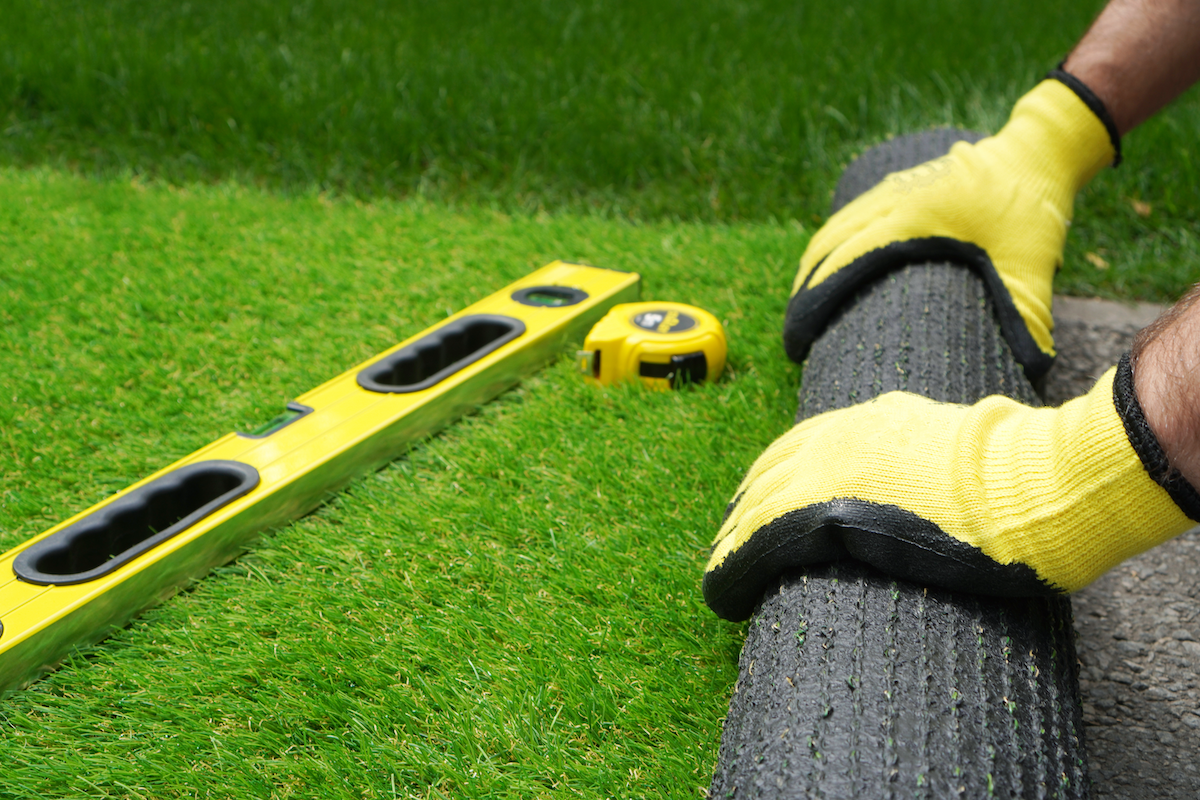
Installing artificial turf remnants follows the same general process as installing full rolls, with a few considerations specific to remnant sizing.
Surface Preparation
The surface beneath the turf determines how well it performs and how long it lasts. For outdoor installations, the ground should be compacted and graded to allow water to drain away from structures. A base layer of crushed aggregate — typically three to four inches of decomposed granite or crushed stone — provides drainage and a firm, stable surface for the turf to rest on.
For indoor or hardscape applications like decks, rooftops, or concrete pads, a drainage layer between the concrete and the turf can improve airflow and make cleaning easier, though it’s often optional for temporary installations.
Cutting and Seaming
Artificial turf cuts cleanly from the back side using a sharp utility knife. Cutting from the back preserves the fiber blades at the edge and produces a cleaner seam. For projects using multiple remnant pieces, seam tape and adhesive designed for synthetic turf bonds the edges together and prevents gaps or movement. Matching the grain direction of the fibers on adjacent pieces helps seams blend visually.
Securing the Edges
The perimeter of an installed turf area should be anchored to prevent movement and curling. Common methods include landscape staples or nails driven through the backing into a compacted base, turf adhesive applied along the border, or bender board and edging systems that cap the edge of the turf and hold it in place.
Infill
Many outdoor turf applications benefit from infill material brushed into the fiber blades after installation. Silica sand is the most common type — it adds weight, helps the blades stand upright, and improves drainage. For pet areas, zeolite infill can help control odor. For athletic applications, crumb rubber or a rubber-sand blend can provide cushioning underfoot.
Some remnant applications, particularly short-term event installations or indoor garage gym setups, can work without infill entirely, depending on the pile height and how the turf will be used.
Maintenance
Artificial turf requires far less maintenance than natural grass but isn’t completely maintenance-free. For outdoor installations, periodic rinsing removes dust, pollen, and surface debris. Brushing the fibers periodically with a stiff-bristle broom or power broom keeps them upright and distributes any settled infill. Pet areas benefit from more frequent rinsing with enzyme-based cleaners to control odor.
For indoor installations or event-use turf, vacuuming and occasional spot cleaning is typically sufficient.
Common Questions About Artificial Turf Remnants
Is remnant turf as durable as a full-price roll?
When the remnant comes from the same manufacturing run as a full-price product, the durability is the same. The length of the piece doesn’t affect how long the fibers last, how well the backing holds up, or how the turf responds to foot traffic and weather. Durability differences, where they exist, come from fiber type and backing quality — not from whether the piece is a remnant.
Will the color fade faster on a remnant?
Color retention depends on the UV stabilizers built into the fiber polymer. A remnant from a reputable commercial product line carries the same UV protection as the full roll it was cut from. Quality outdoor turf can be expected to retain its color for many years under normal conditions, though darker colors and direct southern exposure can accelerate visible fading over the long term.
Can remnant pieces be joined together for a larger area?
Yes. Multiple remnant pieces can be seamed together using turf seam tape and adhesive to cover areas larger than any single piece. Matching fiber direction and selecting pieces with consistent coloring are the two most important factors for a seam that blends well. A skilled installer can join multiple pieces in a way that’s nearly invisible at normal viewing distance.
Are remnants available with specific features like drainage perforations or antimicrobial backing?
It depends on the original product. Many commercial-grade remnants do include drainage perforations, and some products include antimicrobial or odor-control treatments in the backing. These features are properties of the specific product line, so checking what the original roll included is the most reliable way to know what a given remnant piece offers.
How long does artificial turf last?
Under normal residential or light commercial use, quality artificial turf can often last 15 to 25 years before fiber wear or backing degradation requires replacement. Heavy athletic use — particularly on surfaces with cleated traffic or equipment drag — can shorten that lifespan, especially if infill isn’t maintained and the fibers mat down permanently.
Can artificial turf get hot in direct sun?
Synthetic turf can absorb and retain heat in direct sun, sometimes reaching temperatures meaningfully higher than natural grass under the same conditions. Light-colored infill and turf products with heat-reduction coatings can help mitigate this. For applications in hot climates or direct sun exposure, asking about a product’s heat management characteristics is worth doing before purchasing.
Tips for Sizing Up a Remnant Purchase
- Measure the target area carefully before shopping. Artificial turf is sold by the linear foot at a fixed width, so knowing the square footage of your project — and which dimension runs parallel to the roll width versus the length — helps narrow down what size remnant you need.
- Add a buffer. Cutting, trimming around obstacles, and ensuring enough material to secure at the edges without pulling the surface tight all consume some of the linear footage. A ten-percent buffer on your length estimate can be enough to avoid coming up short.
- Confirm that the fiber direction matches your project requirements. Artificial turf has a grain — the fibers are stitched in a direction that creates a natural lay. For a large surface, all pieces should have their fiber grain running the same direction for a consistent appearance. For smaller or functional applications where appearance is less critical, this matters less.
- Ask about the original product specifications if they’re available. Knowing the fiber type, pile height, and backing system helps verify that the remnant is appropriate for the intended use before it ships or gets picked up.
- At ReTurf, inventory changes frequently as new stock comes in and turf rolls move. Checking availability early, especially for specific size requirements, gives the best chances of finding a piece that fits the project without modification.
The Environmental Dimension
One aspect of buying remnant turf that often goes unmentioned is the environmental argument for it. When surplus stock or end-of-roll material stays in storage indefinitely or goes to waste, the environmental cost of manufacturing that turf produces no corresponding benefit. Buying and using remnants puts that material to work rather than letting it sit or eventually end up in a landfill.
From a water conservation standpoint, any artificial turf installation — remnant or otherwise — eliminates the ongoing water consumption that lawn irrigation requires. In drought-prone regions, this can represent a meaningful reduction in residential or commercial water use over the lifetime of the installation.
Artificial turf also eliminates the need for pesticides, herbicides, and synthetic fertilizers in the installed area. For households with pets or children, or for properties near waterways where runoff is a concern, this can be a relevant factor in the decision to install.
Summary
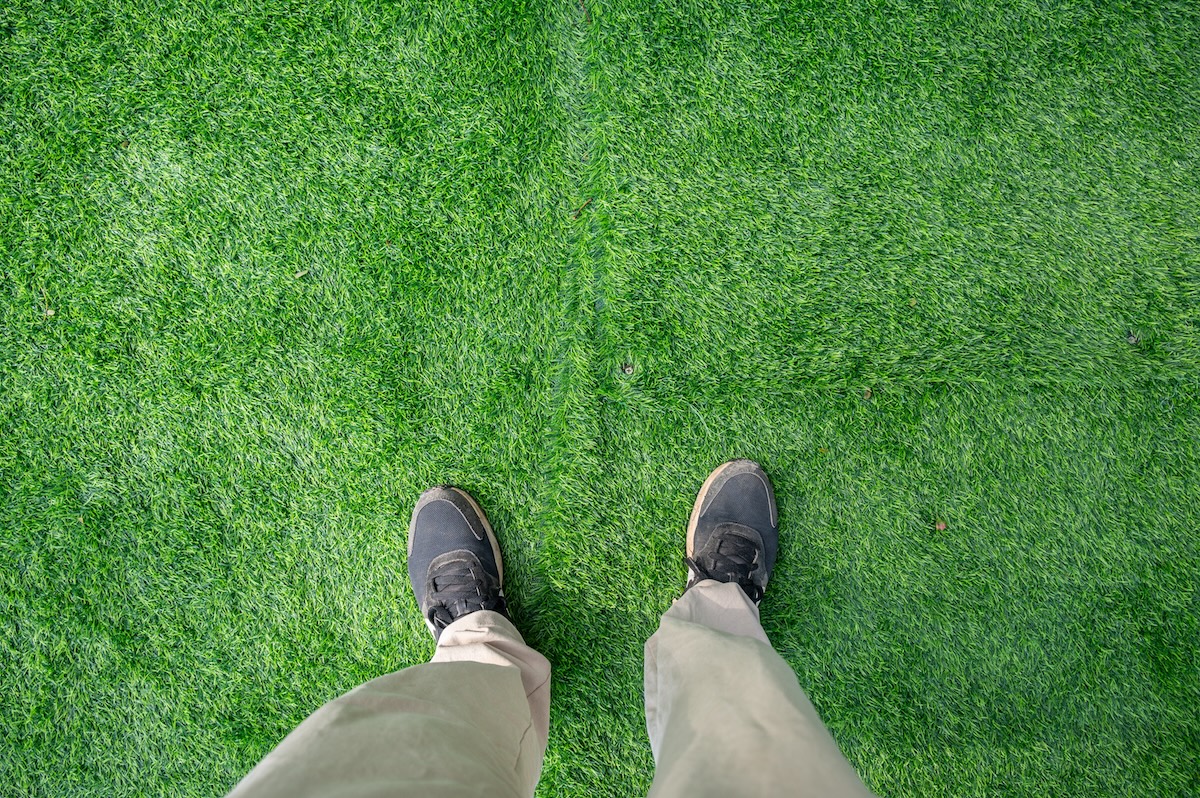
Artificial turf remnants are new, unused synthetic grass in non-standard lengths, produced by the natural surplus of large-scale turf manufacturing and installation. They carry the same fiber quality, backing performance, and durability as full-price rolls — at a fraction of the cost.
The applications are wide-ranging: batting cages, residential lawns, dog runs, rooftop decks, trade show flooring, landscaping fill, garage gyms, and pool surrounds are all well-served by remnant turf in the right dimensions. For buyers whose projects fall within the size ranges that remnant rolls typically cover, the value proposition is difficult to match through any other channel.
The keys to a successful purchase are knowing the dimensions of the target area, understanding the fiber and backing requirements for that specific application, and sourcing from a supplier whose remnant stock comes from verified commercial-grade products rather than unknown or irregular origins.
ReTurf specializes in used, new, and remnant artificial turf available in a range of sizes, colors, and pile configurations, ready to ship to residential buyers, contractors, and facility managers who need commercial-quality turf without the commercial price tag. We have a large inventory of new artificial turf remnants in stock and available for immediate pickup or delivery at exceptional value. Multiple color options are available, including green and multi-color blends. Roll lengths typically range from approximately 20 feet to well over 100 feet, with widths between 12 and 15 feet. These special remnant turf pricing opportunities are available exclusively offline, so contact us today for current inventory and availability.