Last Updated on May 25, 2026 by ReTurf
A batting cage is only as good as what’s underfoot. The turf surface affects how grounders behave, how comfortable it is to take hundreds of swings per session, and whether the whole setup holds up for years, or starts looking ragged after a single season.
Whether you’re outfitting a full indoor facility, a backyard setup, or a team practice space, getting the turf right from the start saves time, money, and a lot of headaches. This guide covers everything from the basic categories of batting cage turf to sizing, underlayment, and what to look for when comparing new and used turf for batting cages.
Why the Type of Turf Makes a Difference for Batting Cages
Batting cages take a specific kind of abuse, and it’s not the kind most people think about when they’re planning the build. There are other things to think about like the netting, the frame, the pitching machine — and all of that is important as well. But the floor is where most of the punishment happens. Unlike an open field where players spread out naturally and the wear distributes across a couple of acres, a batting cage compresses everything into a lane maybe 12 feet wide.
Every session, same spots. The batter’s box gets hit hundreds of times before lunch. The strip in front of the machine, same deal. You put the wrong surface down there and you’re going to know about it pretty quickly. It’ll mat down, it’ll shift, it’ll start looking rough in exactly the places that get the most use, which happen to be the most visible places in the whole cage. So the turf decision is actually one of the more consequential calls in the whole project.
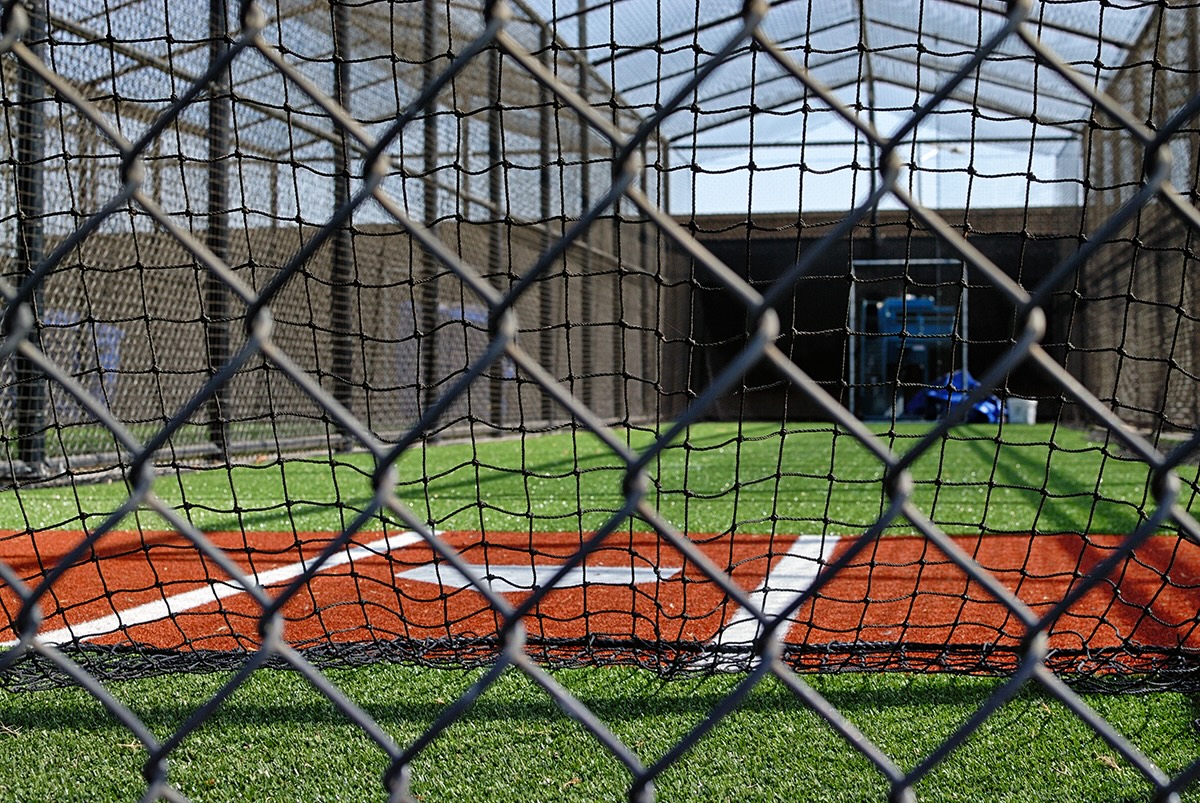
Beyond durability, turf affects the experience. A decent surface absorbs some of the shock from repeated stance shifts and pivoting, which matters during long practice sessions. It also keeps dirt and mud out of the equation, which is the entire point of building an indoor or semi-permanent cage in the first place.
Good quality sports turf for batting cages creates a surface that’s consistent, functional, and low-maintenance for the long haul. The wrong choice wears unevenly, becomes slippery when wet, or simply doesn’t hold up to daily use.
⚾ Key Takeaway
Batting cages take a specific kind of abuse. Unlike an open field where foot traffic spreads out naturally, a batting cage concentrates wear in a narrow strip. That’s especially true around the batter’s box and the area where pitchers or pitching machines stand. A surface that can handle that kind of repetitive, concentrated use is important.
New Turf vs Used Turf for Batting Cages
Batting cage turf generally falls into two buckets — new product manufactured for sports and batting cage use, and recovered sports turf repurposed from professional sports fields. Both are legitimate, widely used options. The better choice depends on budget, intended use, and personal priorities.
New Batting Cage Turf
New turf is purpose-built and comes with defined specs: pile height, face weight, backing type, warranty coverage. This can be the right call when you want a uniform, factory-fresh surface with documented performance characteristics and no question marks about the material’s history.
A well-made new turf — like this sports turf for batting cages from Tempo Turf with a 0.75-inch pile height and 45oz face weight — delivers a firm, resilient surface that performs consistently across the full footprint of the cage. At that pile height and face weight, you get a surface that behaves predictably under cleats and turf shoes, holds its shape under heavy use, and looks clean and professional.
Face weight is worth understanding because it’s often misunderstood. It measures the weight of the fiber itself, not the backing — a higher face weight means more fiber per square foot, which translates to a denser, more durable pile. For batting cages, where players are planting their feet repeatedly in the same spots, a heavier face weight pays off over time.
Pile height in a batting cage is generally kept moderate — typically around three-quarters of an inch. Taller piles feel softer underfoot but can feel spongy and unpredictable under cleats. A mid-range pile height like 0.75 inches hits the sweet spot between cushion and firmness.
New synthetic turf also tends to come with manufacturer warranties — an 8-year warranty on a sports-grade batting cage turf, for example, is a meaningful assurance for a facility making a long-term investment. New turf is sold by the roll, typically in 15-foot widths, which aligns well with standard batting cage dimensions.
Used Turf for Batting Cages
Recovered artificial turf from professional sports fields is one of the more interesting options in the batting cage world. These are surfaces that were laid down in professional baseball, football, and soccer stadiums, used for seasons of play, then recovered during renovation cycles when stadiums update their fields.
The appeal is significant: by looking at used turf for batting cages you can find field-quality turf, often from the same manufacturers that supply pro teams, at a fraction of the cost of new product. The trade-off is naturally that the turf has already seen some degree of use, which affects fiber condition and appearance. Understanding the grades can help set the right expectations.
Basic Grade Used Turf
Basic grade typically refers to turf that’s been in service for around 10 to 12 years. At that age, the synthetic grass fibers have “fibrillated” — meaning they’ve split along their length and taken on a curled, flattened appearance rather than standing fully upright. The surface still functions well as a batting cage floor, but it looks like a well-worn field, because it is one.
For a backyard cage, a school facility on a budget, or any setup where function outweighs aesthetics, basic grade used turf delivers strong value. It’s the same structural foundation as higher-grade options — the backing, the fiber density, the padding characteristics — just with more visible age in the fibers.
Premium Grade Used Turf
Premium grade covers lightly used turf and turf with special construction features like a thatch layer or root zone. Thatch refers to the layer of shorter, brown-toned fibers at the base of the pile that mimics the dead grass layer of a natural field — it improves drainage, adds cushion, and contributes to a more realistic appearance. Root zone construction adds further performance characteristics that made these turfs more expensive when new.
Lightly used premium turf can look remarkably fresh. A surface that was installed and then replaced as part of a stadium upgrade cycle — rather than one worn out by a decade of play — may show minimal fiber wear, and the thatch layer keeps the pile looking upright and full.
Game Marked vs. Logo Marked
One of the distinctive features of field-recovered turf is that it often comes with the original field markings still present. This breaks into two sub-categories.
Game marked turf comes from the main playing field and typically includes yard lines, hash marks, yard numbers, and directional arrows from an American football field. These markings are inlaid directly into the turf during manufacturing — they’re not painted on — so they’re permanent features of the material. In a batting cage context, these markings are purely aesthetic. Some builders actually prefer the look, since it adds character and a distinctly pro feel to the space.
Logo marked turf comes from end zones and midfield areas where team logos and graphic elements were inlaid. Because logo turf almost never captures a complete logo — it’s sections and fragments of larger graphic elements — the result is an abstract mix of colors and design shapes within the green field. For those who don’t mind an unconventional aesthetic, logo turf can create a genuinely unique-looking cage.
Standard Batting Cage Turf Sizes
Used batting cage turf is typically offered in two pre-cut sizes calibrated to the two main use cases:
- Baseball: 15 feet wide by 75 feet long — designed to cover a full-length batting tunnel sized for realistic batting distances.
- Softball: 15 feet wide by 55 feet long — appropriately scaled for the shorter pitching distances in softball.
The 15-foot width is a standard across both new and used batting cage turf because it matches the typical interior width of a constructed batting cage. Most prefabricated cage frames are built to accommodate this dimension, which means a single roll covers the full floor with clean edges against the walls.
For new turf sold by the linear foot, the same 15-foot roll width applies — you’re simply specifying how many feet of length you need to cover your cage’s total run.
Batting Mats: A Versatile Option for Targeted Coverage
Not every batting setup requires full floor coverage. A portable batting mat covers the specific zone where the batter stands — the plate area and a few feet in each direction — without requiring turf throughout the entire cage or space.
A purpose-built batting mat, typically around 12′ x 6′, handles this job well. The key features to look for are a foam backing for cushioning and stability, and inlaid turf lines rather than painted or applied markings. Inlaid lines are part of the turf construction itself, which means they won’t fade, chip, or peel over time the way applied markings do.
Foam-backed mats in this size range are lightweight enough to roll up and transport, which makes them genuinely portable for teams that train across multiple locations or need to set up and break down quickly. They work equally well indoors and outdoors, and they pair naturally with a portable home plate. Turf batting mats can also serve as a cost-effective way to protect the highest-traffic zone in a full-turf cage. Even in a cage with full turf flooring, layering a mat in the batter’s box area reduces wear on the primary surface and makes spot replacement simple.
Underlayment: The Case for Rubber Padding
Turf alone over a concrete or compacted base is functional, but adding a rubber underlayment changes the experience meaningfully. That can ring especially true for indoor facilities where players spend extended time on their feet.
An 8mm bonded rubber pad provides several things at once. It adds cushioning that reduces fatigue during long sessions, improves traction by giving the turf a more stable foundation, and softens the feel for any surface play or fielding drills that happen in the cage. For indoor use over concrete especially, the difference between turf-only and turf-over-rubber is noticeable after the first couple of hours.
Recovered bonded rubber pads are available as add-ons alongside used turf and represent a practical upgrade for any indoor facility. Because recovered rubber material sometimes has minor damage or variation, it’s typically provided with a small amount of extra material to ensure complete coverage despite any irregularities.
For outdoor batting cages with turf over a permeable gravel base, the base itself provides some give. But any setup over concrete, asphalt, or hardwood flooring benefits from rubber underlayment.
Note: When constructing a training facility, subgrade choice (e.g. gravel base versus concrete slab under turf), is its own decision with a lot of nuance, and is worth making sure you fully understand before you build. For some information, see: Why You Probably Don’t Need Concrete Under Turf
Choosing Between New and Used
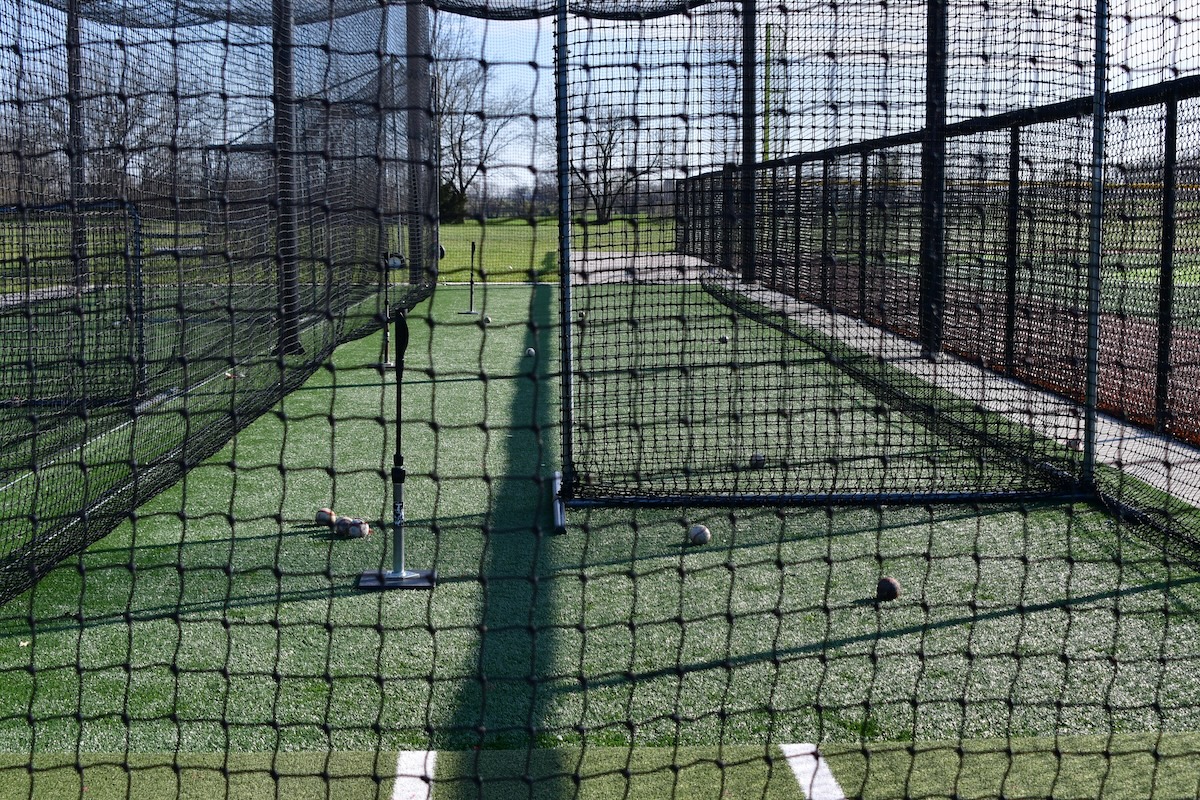
Neither new nor used turf is inherently superior, they serve different priorities.
New artificial turf makes the most sense when appearance and uniformity are important, when you need a specific performance spec documented for a league or facility standard, or when the installation is meant to last 8-plus years without any changes. The warranty coverage on purpose-built batting cage turf can be an asset for commercial or institutional installations.
Used artificial turf makes the most sense when budget is a primary factor and you want to maximize square footage of coverage per dollar spent. It also makes sense when you appreciate the character of field-recovered material — the history, the markings, the knowledge that the surface actually saw professional play. For backyard cages, school facilities, and community programs, used turf delivers the functional performance needed at a price point that keeps the whole project achievable.
The grade decision within used turf comes down to aesthetics and budget. If the surface condition matters and the budget allows, premium grade is worth the upgrade. If this is a workhorse facility where function is the only consideration, basic grade does the job.
Installation Basics
Batting cage turf installation ranges from DIY-friendly to a job that benefits from professional installation, depending on the scope. A portable batting mat or a single backyard cage with a simple subfloor is well within reach for anyone comfortable with basic physical work. On the other end of the spectrum, an indoor facility with multiple lanes, new construction, and so on is a different project entirely — one where getting pro installers involved early can save money and headaches later.
When installing artificial grass for batting cages, a few of the main considerations are:
- Surface prep. The subfloor or base needs to be clean, level, and free of sharp protrusions that could damage the backing. Concrete should be swept and free of loose debris. Outdoor installations typically involve a compacted gravel base for drainage.
- Roll direction. Turf has a grain — the pile leans in a particular direction — and laying the turf with consistent pile direction across the whole cage prevents the visible seam effect that occurs when adjacent sections face differently. For a single roll covering the full cage width, this is relatively simple. For any multi-section installation, plan the layout before cutting.
- Seaming. If your cage requires more than one piece of turf, seams should run parallel to the cage length and be secured with seaming tape and adhesive. Keep seams out of the highest-traffic zones when possible.
- Securing edges. The perimeter of the turf should be secured to prevent shifting. Depending on the subfloor, this can be done with adhesive, staples into a wood subfloor, or weighted edge strips for installations that need to remain removable.
- Padding installation. If using rubber underlayment, lay it before the turf, seaming the pad edges with tape. Then roll the turf over the top. The weight of the turf holds the pad in place in most cases, though adhesive can be added for permanent installations.
Maintaining Batting Cage Turf
Artificial grass or turf in a batting cage requires far less maintenance than any natural grass surface, but a few habits extend its life significantly.
- Regular brushing — with a stiff broom or a purpose-made turf brush — keeps the pile standing upright and prevents fibers from matting in high-traffic zones. Brushing against the grain of the pile restores the upright position.
- Infill material (crumb rubber or sand) is used in some sports turf but is generally omitted from batting cage installations, which simplifies maintenance considerably. Without loose infill, cleaning the surface means sweeping debris, occasional rinsing for outdoor cages, and spot treatment for any stains.
For used turf that’s already seen years of play, the fiber condition is what it is — but keeping it brushed and clear of debris prevents premature matting and extends the useful life of the surface.
Sizing Your Turf Order
Getting the math right before ordering is best to prevent both shortfall and excess waste.
- For a standard batting cage, measure the interior length and width. If ordering from a pre-cut used turf section, confirm that the standard baseball (15×75) or softball (15×55) size covers your cage dimensions. Most batting cages are built to accommodate these standard roll widths.
- For new turf ordered by the linear foot off a 15-foot-wide roll, the calculation is simply: cage length plus a few feet of overage for trimming and seating at the ends. A small amount of overage is always worth building in — cutting tight to exact length leaves no room to adjust if the surface isn’t perfectly square.
- For batting mats, sizing is simpler: the mat covers the batter’s box and surrounding area, typically in a footprint around 12×6 feet, and placement is adjusted to center on the plate position.
If the project is more complex than a single cage (e.g. multiple lanes, irregular dimensions, a mix of surface types) or even for a smaller turf batting cage project, running the numbers by a synthetic sports turf supplier before ordering is time well spent. Artificial turf experts like those at ReTurf have seen enough installations to flag the things that aren’t obvious on paper, and are happy to help you with any questions you have.
The Bottom Line
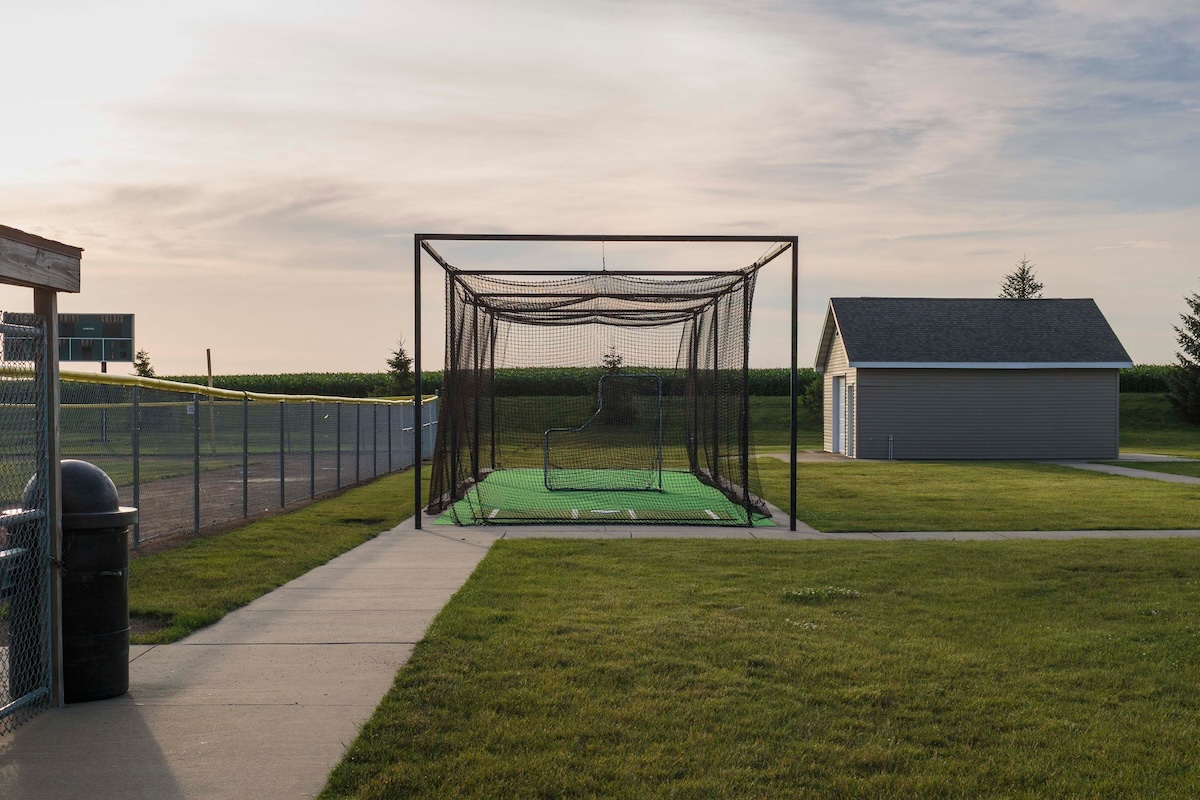
The turf you use for a batting cage shapes how the space feels to players, how long the investment lasts, and how much ongoing attention the surface requires. Whether the right answer is a pre-cut section of field-recovered turf, a roll of new batting cage turf with a warranty, or even a batting mat made of remnant turf for targeted coverage, each option solves the core problem: giving players a consistent, durable surface that holds up to the specific demands of repetitive batting practice.
The investment in quality turf — even on the more budget-conscious end of the spectrum with used field turf — pays back in reduced maintenance, longer surface life, and a facility that players and coaches are comfortable using day after day.
Is This Part of a Bigger Project?
Batting cage turf is often one piece of a larger build — a full indoor facility, a multi-cage training complex, a school or park district upgrade, and so on. ReTurf has expertise across the full scope of artificial turf projects, and if your batting cage project has specific dimensions, a mixed-use footprint, a certain timeline to hit, or other concerns, there’s usually more we can do on sizing, materials, and shipping than what shows up on a product page.
If you want to talk through what you’re building, ReTurf is a full-service turf solutions provider. Call (828) 518-5787 or click here to get in touch.