Last Updated on June 18, 2026 by ReTurf
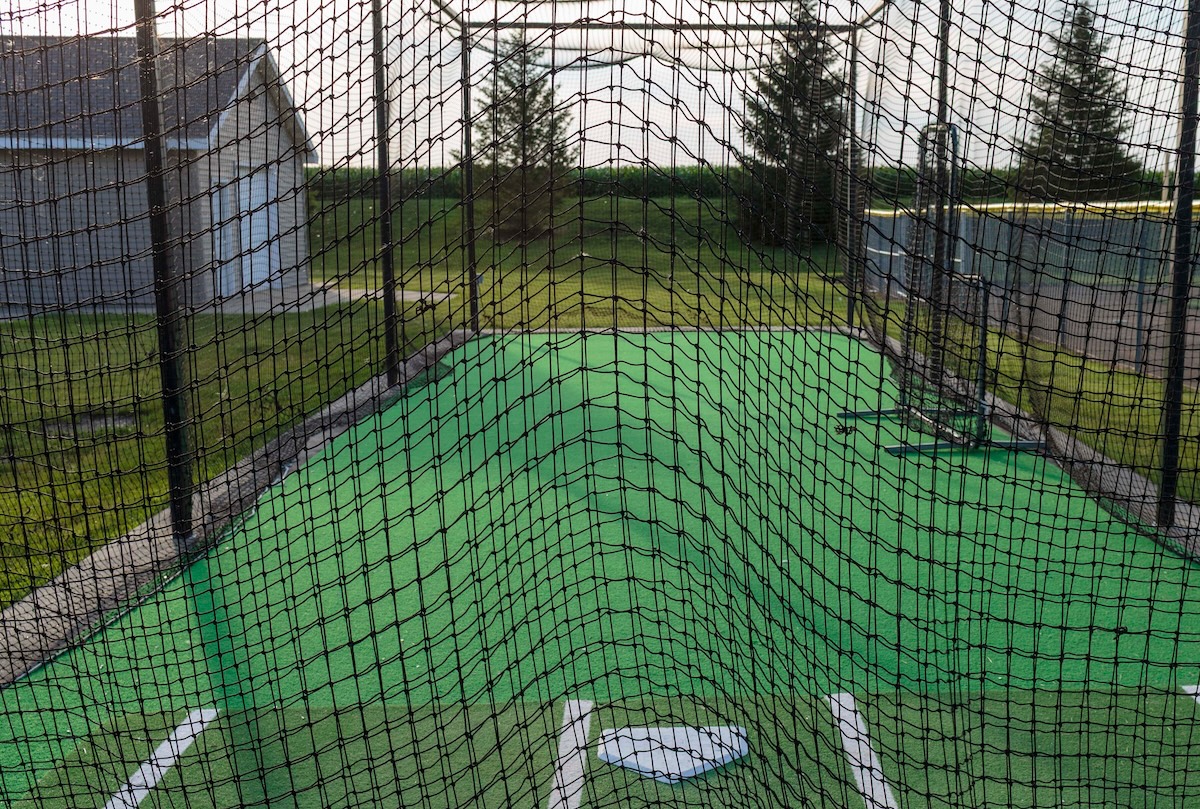
A batting cage kit can be an easy way to get the job done, but it’s also the expensive way. Making your own batting cage costs a fraction of the price once you account for the markup on packaged kits, and the tradeoff is simple: you handle the planning and building yourself. That means picking the right dimensions for your space, choosing a frame that won’t sag or blow over, getting the netting specs right so a line drive doesn’t punch through, and deciding what kind of artificial grass or turf for batting cages will go underfoot. This guide walks through all of it, whether you’re building in a backyard or converting part of a garage.
This guide is intended for general informational and planning purposes only. Materials, site conditions, and installation approaches can vary significantly, and results may differ depending on how a build is executed and the environment it’s placed in.Readers should use their own judgment and, where appropriate, consult qualified local professionals before beginning construction or making structural decisions. No responsibility is assumed for outcomes resulting from the use or adaptation of this information.
Backyard or garage: choosing your build location
The location decision shapes nearly every choice that follows, from cage length to frame type to what you do about flooring. Many DIY batting cage builders land in one of two places: a freestanding setup in the backyard, or a cage built into part or all of a garage.
A backyard cage gives you more freedom on length and width, since you’re not boxed in by walls and a ceiling. It also means dealing with weather, wind load on the frame, and a surface that has to handle rain if it’s not covered. A garage cage solves the weather problem entirely and lets you play year-round regardless of season, but it introduces a hard ceiling height limit (many home garages run 8 to 10 feet), walls and a garage door that need protecting from mishits, and the practical question of whether the space still needs to function as a garage when you’re not hitting.
| Factor | Backyard | Garage |
|---|---|---|
| Length available | Flexible, limited by yard size | Fixed by garage depth, typically approx. 20–24 ft |
| Ceiling height | As tall as the frame allows, 10–12 ft typical | Capped at garage ceiling, often 8–10 ft |
| Weather exposure | Full exposure unless covered | Fully protected, usable year-round |
| Frame needed | Yes, full freestanding structure | Often unnecessary; net mounts to ceiling and walls |
| Wind/anchoring concerns | Significant; frame must be staked or weighted | None |
| Dual-purpose space | No conflict with other yard use | May need to retract net to park a car or store items |
Plenty of builders end up doing both: a full-length backyard cage for game-speed swings, and a shorter garage setup for tee work, soft toss, and off-season reps when the weather doesn’t cooperate.
Sizing your cage correctly
Length is the dimension people get wrong most often, usually by underestimating it. A cage that’s too short doesn’t allow enough distance between the hitter and pitch source for realistic timing, which trains bad timing more than it trains good swings. Width and height matter too: too narrow and foul-tipped balls hit the side netting constantly; too low and a pop-up or a tall player’s bat clips the ceiling.
| Use case | Recommended length | Width | Height |
|---|---|---|---|
| Tee work / soft toss only | 12–20 ft | 10–12 ft | 8–9 ft |
| Youth (8U–10U) | 35–40 ft | 12 ft | 10 ft |
| Youth (11U–14U) | 55–60 ft | 12–14 ft | 10–12 ft |
| High school / adult baseball | 70–75 ft | 14 ft | 12 ft |
| Softball (all ages) | 50–55 ft | 12–14 ft | 10–12 ft |
For a garage build, measure your actual ceiling height before committing to anything. Garage ceilings often have garage door tracks, light fixtures, or ductwork that eat into usable height well before you hit the framing. If your garage tops out around 8 feet, plan around tee work and soft toss rather than live pitching, since a realistic swing path and a pitched ball both need more overhead room than most garages have to offer.
What you need: the core components
Every DIY batting cage, regardless of size or location, comes down to the same handful of components. What changes is how each one is sourced and installed.
- A frame or mounting structure: something the netting attaches to, whether that’s a built frame of pipe or PVC, or the existing structure of a garage (joists, studs, wall anchors).
- Netting: the enclosure itself, sized to the cage dimensions with a mesh tight enough to stop the ball you’re using.
- Flooring: turf, a mat, or a bare surface, depending on budget and how much of the floor needs coverage.
- Anchoring hardware: ground stakes and guy lines for outdoor builds, or eye bolts, lag screws, and wall anchors for a garage.
- A ball delivery method: a tee, a soft-toss setup, or a pitching machine, plus a power source if the machine is electric.
- Wall and surface protection (garage only): plywood or impact panels behind the net wherever a missed ball could reach drywall, a garage door, or stored items.
Choosing your frame material
For a backyard build, the frame is what holds the netting up and keeps it from collapsing the first time the wind picks up. Three approaches dominate the DIY space, each with a different balance of cost, durability, and labor.
| Frame type | Cost | Durability | Notes |
|---|---|---|---|
| Schedule 40 PVC | Lowest | Moderate; can become more brittle in cold weather and is more prone to joint stress under repeated load | Easiest to cut and assemble; good for budget or temporary setups |
| Galvanized steel pipe | Moderate to high | High; resists wind, weather, and impact for years | Heavier and harder to cut without the right tools; the standard choice for permanent outdoor cages |
| Pressure-treated wood | Moderate | Moderate; needs periodic resealing outdoors | Familiar materials and tools for most DIYers; bulkier footprint than pipe |
| No frame, mounted to structure | Lowest | High, limited by the anchor points used | Best suited for garage, shed, or setups that use existing structures with solid anchor points |
For most backyard builds, galvanized steel pipe is worth the extra cost and labor over PVC. It holds up to repeated impact, is less prone to flexing in wind when properly anchored, and is generally more stable than PVC in outdoor setups. PVC works fine for a smaller tee-work cage or a setup you plan to take down seasonally, but it’s not the right call for a tall, full-length cage that’s going to sit outside year-round.
Step by step: building a backyard cage
Mark out the footprint
Measure and stake the four corners of your cage based on the dimensions from the sizing table above. Check that the area is reasonably level and clear of low branches, fence lines, or anything else that would interfere with the frame or with a swung bat.
Set the corner and support posts
Dig footings at each corner and at intermediate support points along the length (typically every 10 to 12 feet for pipe frames). Set posts in concrete for a permanent structure, or use ground sleeves if you want the option to remove posts later. Posts need to go deep enough to resist wind load, generally 24 to 36 inches depending on soil and cage height.
Assemble the top rails and cross-bracing
Once the vertical posts are set and cured, connect the top rails that run the length and width of the cage. Add diagonal cross-bracing at the corners and at intervals along the structure. Bracing is what keeps the frame square and rigid under the lateral load the netting puts on it once it’s hung and the wind catches it.
Hang the netting
Drape the netting over the top rails and attach it at the border using bungee cord, rope, or zip ties through the grommets, depending on what the netting came with. Work from one corner outward to keep tension even. Leave one end or one side as a walk-through opening, secured with a separate panel or overlap rather than sewn shut.
Tension and anchor the structure
Add guy lines from the top of the frame to ground stakes on the outside of the cage, especially at the corners and at the open end. This relieves stress on the posts themselves and is the main thing standing between your cage and a strong wind gust. Don’t skip this step even if the posts feel solid on their own.
Lay the flooring
With the structure standing, install whatever flooring you’ve chosen, whether that’s a full turf surface, a portable mat in the batter’s box, or a prepared gravel base. Doing this last avoids dragging turf or mats through an active construction zone.
Test before full use
Before anyone takes a real swing, hit a few soft-toss balls into the net from multiple spots to check for gaps, loose grommets, or sagging panels. Walk the perimeter and confirm there’s no spot where a ball could squeeze through a seam or under the bottom edge.
Adapting the build for a garage
A garage build skips most of the framing work above. In most garages, the netting can mount directly to the ceiling joists and wall studs, which means no posts, no concrete footings, and no guy lines. What replaces that work is a different set of considerations specific to building inside a finished or semi-finished space.
Find and use real structure, not just drywall
Eye bolts and netting clips should be anchored into ceiling joists or roof trusses, with hardware sized for sustained tension and repeated impact loads. Drywall alone is not suitable for structural anchoring. Use a stud finder to map the joist locations before drilling, and plan your anchor point spacing around where the structure actually is rather than where you’d ideally want it. The same applies to wall studs for any side anchoring.
Protect the garage door and drywall
The netting stops the ball from passing through and absorbs a significant amount of energy through flex and stretch, but it can still allow enough residual force to reach what’s behind it. Add a layer of plywood, OSB, or a dedicated impact panel behind the netting anywhere a hard-hit ball could reach the garage door, a finished wall, or anything stored nearby. This matters most directly behind the pitching or machine end of the cage, where mishits are concentrated.
Plan for a retractable or removable setup
Most garages still need to function as a garage when nobody’s hitting. A net on a track system, hooks that let you bundle the netting up against the ceiling, or simply a design where the whole assembly comes down in a few minutes keeps the space flexible. Building the cage so it permanently occupies the full garage footprint only makes sense if the garage isn’t needed for a vehicle.
Account for lighting and power
Garage lighting is often dimmer than what’s comfortable for tracking a pitched or tossed ball. Add supplemental lighting if the factory garage fixtures leave shadowed corners. If you’re running an electric pitching machine, plan the outlet location and cord routing before you finalize where the machine sits, since extension cords running across a hitting lane are a tripping hazard waiting to happen.
Netting specs
Not all batting cage netting is interchangeable, and the wrong spec on this one component undermines the whole build regardless of how solid the frame is.
- Mesh size: netting is sized by the square opening in the weave, commonly labeled as #15 through #42 in this context (a higher number means a smaller, tighter opening). A baseball needs a mesh small enough that it can’t pass through; #36 or #42 mesh is standard for baseball and softball cages. Larger mesh sizes are used for golf or multi-sport nets and are not appropriate for a baseball or softball cage.
- Knotted vs. knotless: knotted netting is more affordable and more abrasion-resistant against repeated impact, making it the common choice for the high-traffic end of a cage. Knotless netting is lighter and less likely to cause rope burn or hand injury if a player grabs it, which makes it a common pairing for side and overhead panels.
- Twine weight: netting is rated by twine size, with thicker twine handling more repeated impact before fraying. For the impact zone directly behind a pitching machine or live pitcher, a heavier-rated twine extends the usable life of the net significantly compared to a lightweight residential-grade net.
- UV treatment: any netting installed outdoors needs UV-stabilized material, or sun exposure will degrade the fibers and shorten the net’s life dramatically, sometimes within a single season. UV treatment isn’t necessary for an indoor garage installation.
- Border rope and grommets: a reinforced rope border with grommets spaced every couple of feet gives you secure, evenly distributed attachment points to the frame or anchors. Netting without a proper border is harder to tension evenly and more likely to tear at the attachment points.
Flooring: what to put underfoot
The floor is the part of a DIY build that gets the least attention during planning and the most attention once the cage is in use. A bare concrete garage floor or compacted dirt backyard surface works in the short term, but both can get slippery, uneven, or muddy with regular use, and importantly, neither gives a batter the same footing as a real field.

Most builders will land on one of three approaches: full batting cage turf coverage across the entire footprint, a portable foam-backed mat covering just the batter’s box, or a layer of rubber underlayment topped with turf for indoor installations over concrete. Each one solves a slightly different problem, and the right call depends on budget, how much of the cage gets foot traffic, and whether the floor needs to handle a pitching machine’s footing as well as the batter’s.
Budgeting your build
Costs vary widely depending on size, frame material, and how much of the floor gets covered. Fortunately you mostly have to factor in typical DIY material costs, not labor, since most of this project is reasonable to handle yourself, or with one or two extra hands.
Add a pitching machine, electrical work, or rubber underlayment for an indoor floor and the total climbs from there. Even at the higher end of these ranges, a DIY build typically lands well below the cost of a comparable prefabricated cage kit covering the same footprint.
You can lower your costs further by making use of second-hand/used turf for batting cages, which may come from the high-grade artificial turf for sports facilities or training centers that are resurfacing, since it often still has plenty of usable life left and can be trimmed easily to fit your footprint without paying new-material pricing.
Common mistakes to avoid
- Undersizing the length to fit the available space, then wondering why timing feels off. A cage that’s too short for the intended pitch distance or machine setting trains a swing that won’t transfer to a real field or mound.
- Skipping guy lines on an outdoor frame because the posts feel sturdy during assembly. A fully netted cage catches significant wind load, and a frame that seemed solid without the net hung can still go over once the netting is up and the wind picks up.
- Anchoring into drywall instead of structure in a garage build. Drywall anchors are not rated for the repeated dynamic load of a netting system absorbing line drives; the only safe anchor points are joists, studs, and rated wall anchors driven into them.
- Using the wrong mesh size for the ball in play. Netting rated for golf or general sport use often has openings too large to reliably stop a baseball or softball, especially as the netting ages and stretches slightly.
- Leaving the garage door or drywall unprotected behind the netting. The net stops the ball from leaving the cage; it does very little to stop the impact energy from denting a garage door or putting a hole through drywall on a hard mishit.
- Running extension cords across the floor for an electric pitching machine. Route power along a wall or overhead wherever possible, and use a cord cover or tape down any unavoidable floor crossing.
Maintaining your cage
- Inspect netting regularly for fraying, loose grommets, or small holes, especially at the impact zone in front of the machine or pitcher. Small tears are easy to repair with netting twine before they grow into a real gap.
- Re-tension guy lines and border ropes periodically, since netting stretches slightly under repeated use and outdoor exposure. A loose net sags, which makes balls bounce unpredictably off the slack panels.
- Brush turf flooring against the grain periodically to keep the pile upright in high-traffic zones like the batter’s box.
- Check frame hardware on outdoor cages each season for rust, loose bolts, or footing movement, particularly after winter freeze-thaw cycles in colder climates.
- Take down or loosen outdoor netting ahead of severe weather. A net left fully tensioned through a major storm puts unnecessary strain on the frame; loosening or removing it temporarily protects the larger investment.
Frequently asked questions (FAQ)
How much does it cost to build your own batting cage?
A simple garage setup mounted to existing structure can run as little as $150 to $500 in materials. A full backyard cage with a steel frame and turf flooring typically falls between $1,500 and $4,000 depending on length and artificial turf grade. Either way, a DIY build generally costs significantly less than a comparable prefabricated kit.
What size batting cage do I need for my age group?
Tee and soft-toss work needs as little as 12 to 20 feet. Youth players in the 8U to 10U range do well with 35 to 40 feet. Players aged 11 to 14 benefit from 55 to 60 feet to simulate realistic pitch distances. High school and adult baseball players need 70 to 75 feet for a true game-speed look at the ball.
Can I build a batting cage in a one-car garage?
Yes, with realistic expectations. A standard one-car garage may run roughly 20 to 24 feet deep and 8 to 10 feet tall, which is plenty of room for tee work, soft toss, and short-distance machine work, but generally too short and too low for full-speed live pitching at game distance. Many garage builds focus on mechanics, tee work, and reps rather than replacing a full-length cage entirely.
What netting size keeps a baseball from getting through?
Mesh rated #36 or #42 is standard for baseball and softball cages and is generally appropriate for containing balls under normal use conditions. Avoid netting designed for golf or general multi-sport use, which often has larger openings that a baseball can pass through, particularly once the net has stretched slightly with age.
Do I need a permit to build a backyard batting cage?
Requirements vary by city and county. A freestanding netting structure usually falls outside building permit rules in most jurisdictions, but anything involving permanent concrete footings, structures over a certain height, or proximity to property lines can trigger local zoning or permit requirements. Check with your local building department before starting a permanent installation, particularly for a full-height, full-length cage.
Can I use a tarp or plywood instead of turf for the floor?
A tarp over grass or dirt is a temporary, low-cost option, but it shifts underfoot, tears with repeated cleat or shoe contact, and doesn’t hold up to regular use. Plywood is stable but hard and slippery, especially when it gets damp. Turf, even a budget-grade option, holds up far better over a full season of use and provides more consistent, predictable footing.
How do I protect my garage walls and door from being hit?
Install a layer of plywood, OSB board, or a dedicated impact panel directly behind the netting in any area where a hard-hit ball could reach a wall, the garage door, or stored items. This is especially important directly behind the pitching machine or pitcher’s position, where mishits concentrate.
What’s the minimum ceiling height needed for a batting cage?
For tee work and soft toss, 8 to 9 feet can work in tighter garage setups, though taller hitters or larger swing paths will often feel restricted and may need adjustments to stance or drill type. For any live pitching or full swing simulation at game speed, 10 to 12 feet of clearance is the realistic minimum to avoid the bat or a popped-up ball regularly contacting the ceiling.
How long does DIY batting cage netting last?
UV-treated outdoor netting typically lasts three to seven years depending on twine weight, sun exposure, and frequency of use, with heavier twine and shadier installations lasting longer. Indoor garage netting, protected from sun exposure, often lasts significantly longer with the same usage level, since UV degradation is the primary factor that shortens netting life.
Should I use a pitching machine or just a tee in a garage cage?
This comes down to available length and ceiling height more than preference. A pitching machine needs enough distance behind the batter to simulate a realistic pitch and enough overhead clearance for the ball’s arc, which most one or two-car garages can’t fully provide. A tee or soft-toss setup works within tighter dimensions and is the more practical choice for most garage builds, with a machine reserved for longer backyard cages.
Is PVC strong enough for a batting cage frame?
Schedule 40 PVC works for smaller, shorter-term cages, particularly tee-work setups under 20 feet, but it’s more prone to cracking in cold weather and flexing under wind load than galvanized steel pipe. For a tall, full-length cage meant to stand outdoors year-round, steel pipe is the more durable choice, even though it costs more and takes more effort to assemble.
Can the same net handle both baseball and softball?
Yes. Netting rated #36 or #42 mesh stops both a baseball and the larger softball, since the mesh opening that contains the smaller baseball easily contains a softball as well. The dimensions of the cage itself, particularly length, are what typically need to change between the two sports rather than the netting spec.
The Bottom Line
The components are simple: a frame or anchor structure, the right netting, and a floor that holds up to repeated use. What separates a cage that lasts for years from one that needs rebuilding after a season usually comes down to getting the sizing right from the start, choosing frame and netting specs suited to how often the space gets used, and not skipping the less exciting steps like guy lines, wall protection, and proper anchoring.
Measure your space carefully, decide on backyard versus garage based on the tradeoffs above, and budget for the floor as its own line item rather than an afterthought. The result is a cage built around how batters should train, at a fraction of what a packaged kit covering the same footprint would cost.