Last Updated on February 19, 2026 by ReTurf
Every lawn has that area.
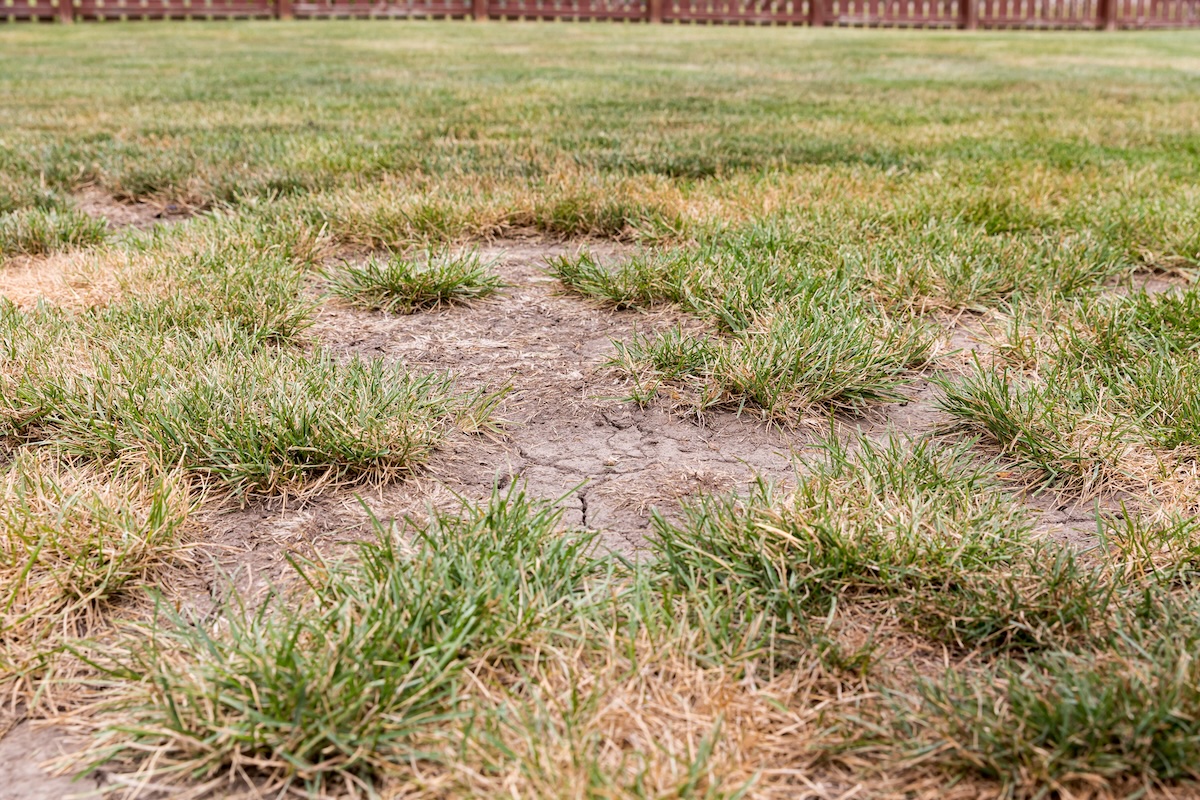
You know the one. The rest of the yard comes in fine, maybe not golf-course perfect, but respectable, and then there’s a patch that looks like the earth is rejecting the idea of grass as a concept.
You reseed it, it comes in just enough to give you hope, and a month later you’re looking at the same dirt circle again wondering what you did wrong this time.
Homeowners often assume they’re doing something wrong. But most of the time, they aren’t. Lawns fail in very specific ways, and the reason usually isn’t laziness or bad watering habits. It’s that the conditions in that one location don’t match what turf grass needs to survive long-term.
Even in a small yard, soil and light conditions can vary dramatically over a few feet, and turfgrass survival depends heavily on micro-environment conditions, not the overall yard care routine. Depending on the cause of the grass not growing, ideas include everything from planting shade-tolerant plants to replacing the problem area with modern, realistic fake grass.
Let’s go through what’s really happening with those areas/spots/patches/strips where grass won’t grow—before throwing fertilizer, seed, and money at it again.
First: Figure Out Which Kind of Grass Failure You’re Looking At
Most bare lawn patches look identical from 10 feet away—just dirt where green should be—but they don’t happen for the same reason. One spot might be getting baked every afternoon, another might be packed down like a walking path, another could be fighting tree roots you never see.
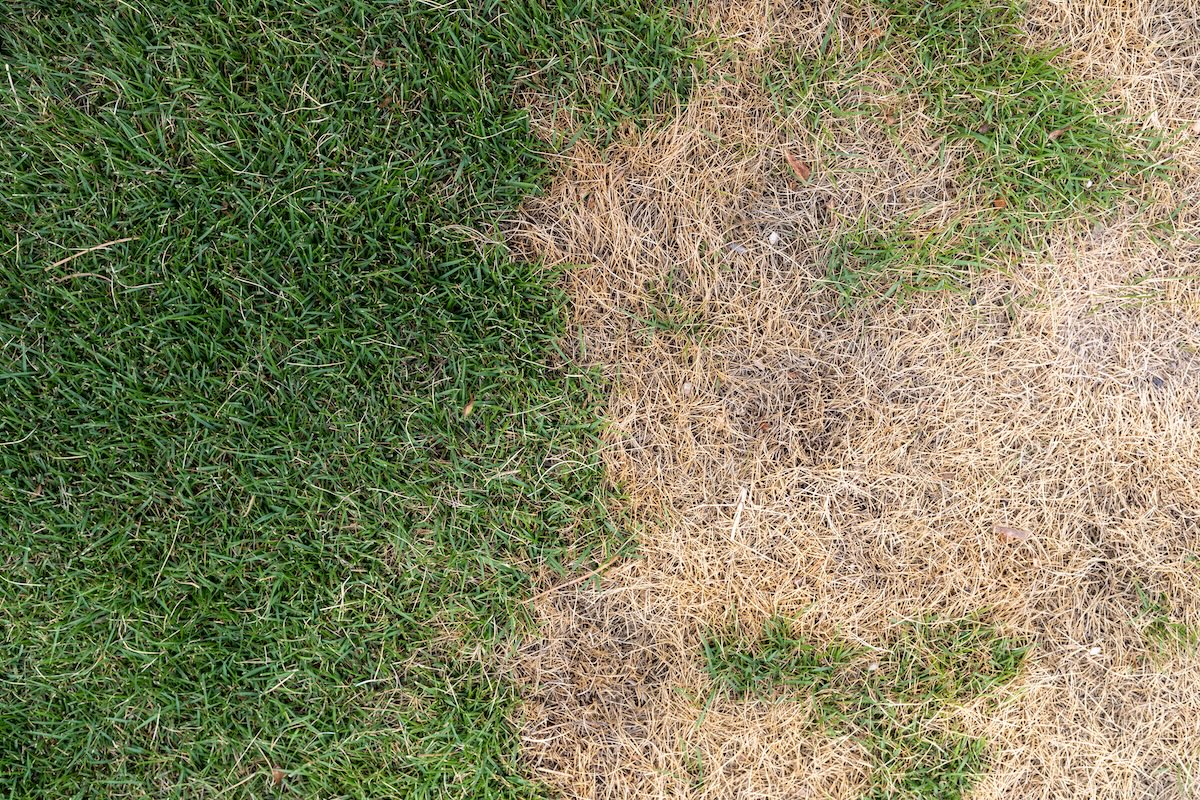
If you don’t identify what’s causing the grass to not grow, you’ll end up “fixing” the wrong problem repeatedly (Which is why some homeowners have been reseeding the same 4-foot circle since 2017!)
Compacted Soil
Common near:
- Walkways
- Fence gates
- Dog paths
- Downhill runoff areas
- Where kids cut corners instead of using the patio
Soil gets compressed over time until roots physically can’t push into it anymore. Water also stops soaking in properly, it either puddles or runs off. Grass seedlings sprout in compacted soil because seeds only need the top layer. Then the roots hit the barrier and the plant quietly gives up.
You can confirm this with a simple screwdriver test. Take a long flathead screwdriver and try to push it straight into the soil after a normal watering or the day after rain. You shouldn’t have to lean your body weight into it.
In healthy soil it’ll slide in several inches with steady hand pressure. If it stops almost immediately or you feel like you’re trying to stab a parking lot, that ground is compacted. Grass roots are softer than steel and far less motivated than you are, so they hit the same barrier and stay shallow. The plant survives on borrowed time until heat or dry weather shows up, and then that spot goes thin again no matter how much seed you throw at it.
Fix: mechanical aeration plus a soil amendment. The aerator pulls plugs out of the ground so air and water can finally move again, and the amendment — compost, sand blend, something with structure — gives roots a place they can actually grow into instead of sealing back up like clay pottery. You usually see improvement pretty quickly because the grass finally has somewhere to go underground.
Reality check though: if the reason it compacted in the first place is still there — a walkway, a gate path, kids cutting across the yard, dogs doing laps — the soil will slowly tighten back up. Maybe not this month, maybe not even this year, but traffic always wins eventually. Aeration fixes the condition, not the behavior that created it, so those spots often need repeating maintenance or a different surface long-term.
Nutrient-Starved Soil
Common in:
- New construction yards
- Areas where topsoil was scraped away
- Spots with heavy clay or sand fill
You see this a lot in newer neighborhoods, places where builders graded the lot and whatever decent topsoil used to be there got pushed aside or buried. Same story in spots that were backfilled with straight clay or sand. The grass doesn’t disappear overnight, it just never looks confident. Light green, thin blades, grows a little and then stalls out like it’s running on fumes.
Here the grass grows thin, pale, and weak rather than instantly dying. Fertilization programs do work in this case, but they’re ongoing maintenance, not a one-time cure. You feed it and it perks up because you’re supplying what the soil isn’t holding onto.
The catch with this is that you’ve basically put the lawn on a meal plan. It’s not a one-time correction, it’s ongoing support for a plant living outside its comfort zone.
This is where lawn services make sense financially if the area receives good sunlight and low traffic.
If it doesn’t… the cost never stops. If the spot is shaded, wet, or constantly walked on, you’re stacking maintenance on top of a location problem. The grass might improve for a while, but you’ll keep chasing it year after year because the underlying soil never changed, you’re just supplementing it indefinitely.
The “Sunk Cost” of the Annual Reseed
Many homeowners view a bag of seed and a couple of bags of soil as a “cheap” fix, but they rarely calculate the cumulative cost of failure. If you are spending $150 every spring and fall on seed, starter fertilizer, and extra watering, only to have that patch die off by July, you aren’t “saving” money. You’re paying a subscription fee for a dirt patch.
Over five years, that “cheap” annual fix can easily cross the $1,500 mark when you factor in your time, fuel for the mower, and the water bill. At that point, you’ve spent professional-grade money for a result that still doesn’t exist. There is a psychological and financial “break-even” point where a one-time investment in a permanent surface, whether that’s a mulched bed or high-quality turf, actually becomes the more frugal choice. It can be the difference between buying a solution once or renting a problem forever.
Shade
Grass doesn’t just need sunlight, it needs a certain duration of sunlight. Many turf types need 5–7 hours of direct sun daily. Filtered light through a tree canopy rarely counts.
You can water perfectly, fertilize perfectly, reseed endlessly… and the grass will still fade because the plant cannot photosynthesize enough energy to maintain itself.
Signs you’re fighting shade:
- Moss appearing
- Grass grows in winter but disappears in summer
- Bare soil under dense trees
- Thin growth near fences or north sides of houses
There is no permanent lawn care solution to deep shade. Only temporary improvement.
Water Extremes (Too Much or Too Little)
Low spots collect water. Slopes shed it. Both kill grass for opposite reasons.
Soggy soil suffocates roots. Dry hard soil prevents roots from forming.
Drainage correction can work, but it quickly becomes a landscaping project rather than a lawn fix, grading, drains, trenching, and cost.
When Grass Can Be Saved
Grass succeeds when three conditions overlap:
- Sunlight
- Root space
- Consistent moisture
Remove any one long enough, and you don’t have a lawn problem, you have a location problem. That distinction makes a difference.
If the conditions are correct → Repair the lawn.
If the conditions are permanent → Change the surface.
Landscaping Ideas for Areas Where Grass Won’t Grow
⚠️ A Quick Note on Protecting Your Trees
While it’s tempting to bury those stubborn roots under a thick layer of soil, mulch, or turf to level the ground, be careful not to “smother” the tree.
The Root Flare – Never pile material against the base of the trunk where it flares out into the ground. This area needs gas exchange to stay healthy.
Depth – If using mulch, keep it to 2–3 inches deep. If installing artificial turf over a large root zone, ensure you’re using a highly permeable base so the tree can still “breathe” and drink.
If you kill the tree trying to save the lawn, you’ve just traded a patch of dirt for a much more expensive removal bill.
Mulched Beds

Under trees especially, mulch often looks better than struggling grass. It matches what nature was trying to do anyway and eliminates constant reseeding.
Good for:
- Tree rings
- Fence lines
- Deep shade zones
Less ideal for:
- Paths
- Pet owners
- Play spaces
Because eventually mulch migrates, thins out, and turns into maintenance again.
As you can see, where mulch starts to show limits is anywhere people actually move through the space. Paths, dog runs, kids cutting across to the gate, mulch shifts, scatters, and slowly thins out. After a while you’re raking it back, topping it off, or finding it where you didn’t put it. It’s better than fighting grass that won’t grow at all, but it’s still a surface that wants periodic attention rather than something you can mostly forget about once it’s in place.
Common Mulch Types
- Hardwood bark mulch for a darker, finished look around foundations and tree rings
- Pine bark nuggets in larger landscape beds where you want slower breakdown
- Shredded cedar where scent and insect resistance matter
- Dyed mulch for color contrast along walkways or front yard borders
Groundcover Plants
Another route some homeowners might try is shade-tolerant groundcovers (ivy, pachysandra, creeping plants that are happier without direct sun than grass). Visually they can look great once they fill in, and they definitely soften those stubborn areas.
The natural trade-off is you’ve now moved from lawn care into plant care. There’s trimming so they don’t wander where you didn’t invite them, seasonal dieback in colder stretches, and the occasional replanting where traffic or weather takes a toll.
Bottom line: Nice solution if you want a landscape feature. Not ideal if you just want a usable, low-maintenance surface.
Common Types of Groundcover Plants Used
A few commonly used options include:
- English ivy or Baltic ivy for dense coverage along fences and foundations
- Pachysandra in consistently shaded beds under trees
- Creeping Jenny or ajuga where you want lower height and some color variation
Artificial Turf
After enough reseeding cycles, people stop asking “how do I grow grass here” and start asking “should grass even be here.”
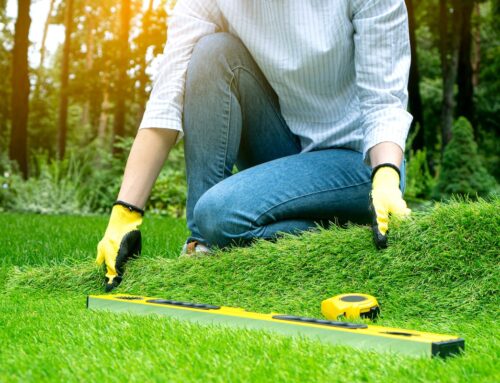
Modern turf is very different from the early bright-green carpet people remember. Blade color variation, brown thatch layers, and mixed fiber heights now mimic how real lawns actually look, including imperfections.
But the real advantage is not visual. It’s predictability. Shade doesn’t matter. Traffic doesn’t matter. Soil chemistry doesn’t matter. You stop having to negotiate with the environment just to have a good looking yard.
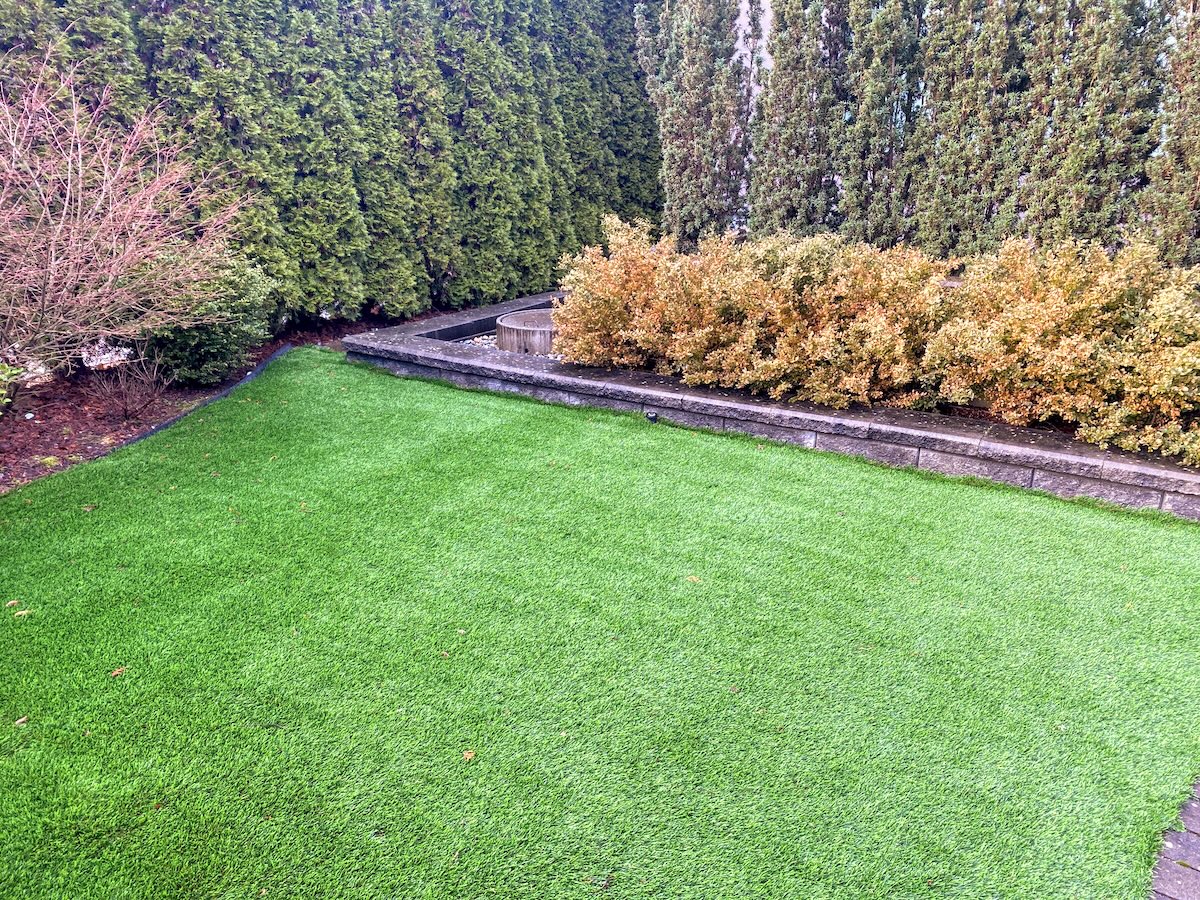
Different Types of Turf People Don’t Realize Exist
Not all turf installations are the same decision.
Realistic Artificial Turf
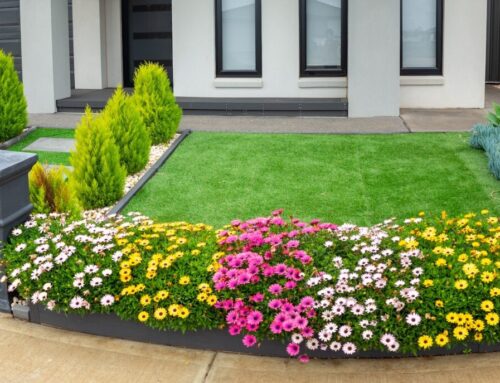
Best for high-visibility areas where appearance is priority, patios, courtyards, front yards. Longest lifespan, most realistic looking.
Modern fibers vary in color, blade width, and height, with a subtle brown thatch layer underneath so it doesn’t look uniformly green from every angle. From the patio or street it reads as “well-maintained yard” rather than “fake grass.” The materials in the highest-quality, most realistic artificial turf products are built for UV exposure and regular use, so once installed and brushed in, the surface stays consistent for years instead of cycling through thin and patchy periods.
Reused / Repurposed Turf
A creative option comes from athletic fields, training facilities, and larger installations where turf gets replaced on a schedule long before it’s worn out. The material still has years of usable life, it’s just no longer competition-grade. Once cut and fitted into residential spaces, it works especially well in places where grass repeatedly fails anyway. It’s often perfect for side yards, dog runs, and other residential/commercial problem areas where grass won’t grow.
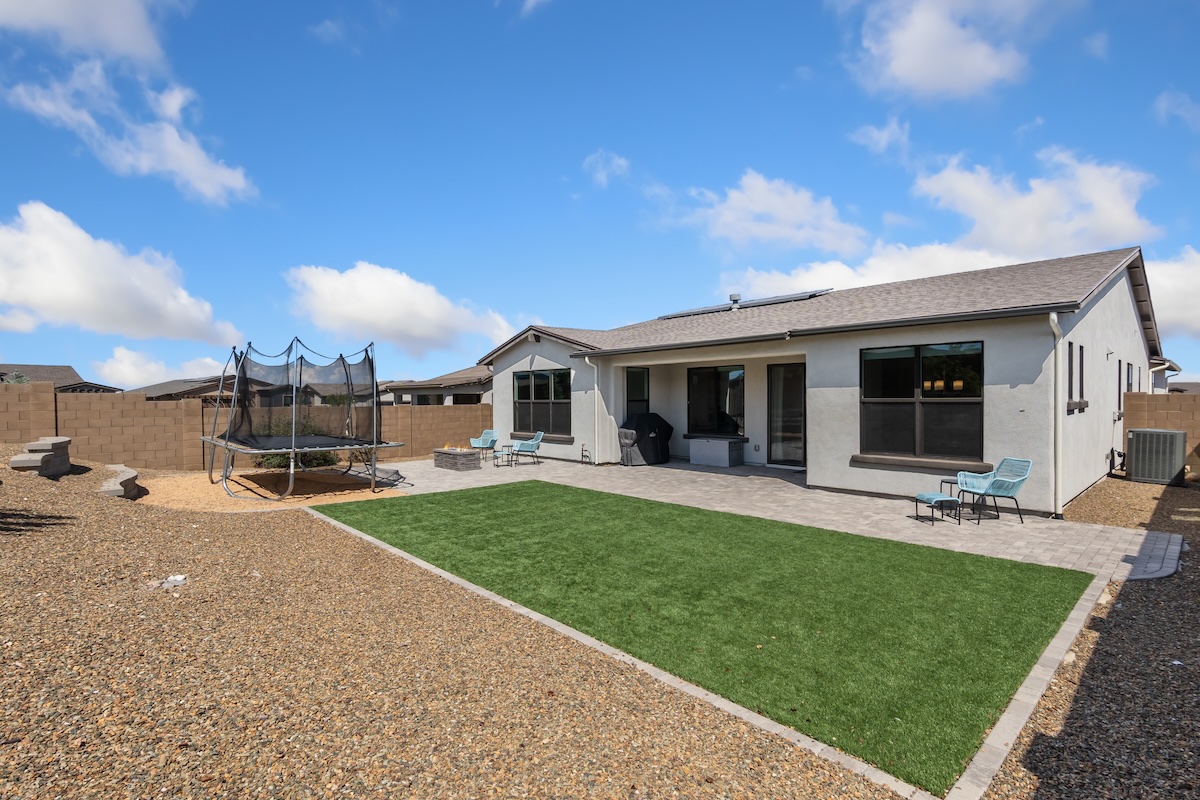
Benefits include much lower cost, already weathered naturally, blends in quickly. For homeowners dealing with a stubborn patch of grass that won’t grow in more than a design project, this can sometimes be the easiest and most affordable way to fix the problem.
100% Recyclable Turf (Circular Materials)
There’s also a newer category designed with the end of its life already planned. Instead of eventually becoming disposal waste, the material can be processed and turned back into new turf again.
Products like Tempo Turf are engineered so the material itself stays in circulation rather than becoming construction waste later. This naturally appeals to homeowners who like solving a problem without creating a future problem.
Some Thoughts on Fixing Dead Grass Areas with Artificial Turf

The reason artificial turf keeps coming up in these conversations isn’t because it’s trendy, it’s because certain areas of a yard never graduate out of “ongoing experiment.” You try seed, then a different seed, then soil, then a watering tweak. Each attempt helps a little for a while, but you’re still checking on that same patch every time you’re outside.
At some point the question shifts from how do I fix it to how many times do I want to fix it.
Modern, realistic-looking synthetic grass with variable shading makes sense specifically in those locations because it removes variables. Shade stays shade. Foot traffic stays foot traffic. Tree roots don’t decide to be less competitive next year. Instead of managing conditions that don’t really change, you put in a surface that already tolerates them.
The practical effect is pretty simple. That area where grass won’t grow in well stops dictating your lawn care routine. You’re no longer watering longer just for one strip, reseeding every season, or working around a section that always looks a week behind everything else. The rest of the yard becomes easier because you’re maintaining it for what it actually is, not compensating for a spot of grass that keeps dying no matter how many times it’s repaired.
The Real Goal: Stop Fighting the Site
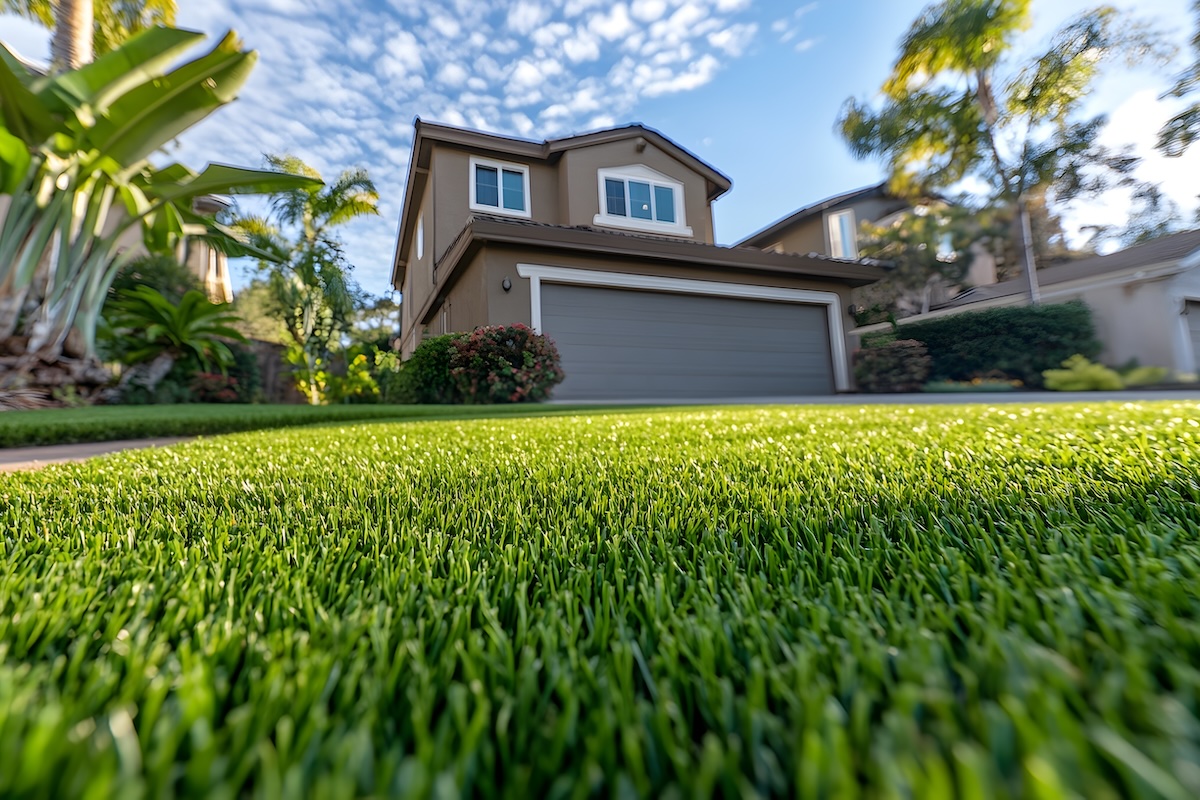
A lot of lawn frustration comes from trying to make every square foot behave the same way. But yards aren’t uniform environments. They have micro-climates, tiny ecosystems just a few feet apart behaving differently. Some people want grass. Some want mulch. Some want a durable, good looking, low cost/low maintenance surface.
Remember: The best looking landscapes often aren’t the ones with the most natural grass.
Every property’s got zones whether we planned them or not. This strip along the fence barely sees the sun, that corner stays wet because everything slopes toward it, that spot where people cut across to the gate gets walked on fifty times a day, and under that tree the roots are drinking half the water before the soil even notices.
When we try to make all of that behave like the same lawn, we end up babysitting it forever: more seed, more water, more fertilizer, and it still looks tired because the conditions never changed.
Once the problem spots are handled, whether by soil repair or artificial grass, the rest of the lawn can even improve because you’re no longer overwatering, overseeding, or over-treating the whole yard trying to save a few square feet.