Last Updated on February 24, 2026 by ReTurf
Years ago, artificial turf used to be an environmental dead end. Once it went into the ground, that was pretty much the entire story: it lived out its years on a field or in a backyard, took a beating season after season, and when the fibers finally broke down or the infill compacted beyond repair, most of it was rolled up and hauled straight to a landfill. Everyone in the industry knew this was the weak link. Turf solved water use, chemical runoff, and maintenance fatigue, but it created a disposal problem that didn’t have a practical solution for decades.
And that is the backdrop behind today’s conversations about eco-friendly artificial turf. People aren’t just asking whether turf can look realistic anymore. They’re trying to sort out which of the new materials, recycling pathways, and recovery programs change the long-term impact of installing it.
The good news is that the old, linear lifecycle is no longer the only path. Turf technology has moved fast. Manufacturers have started designing systems with recyclability in mind, using single-polymer constructions that can be processed cleanly at end-of-life. ReTurf is creating reuse pipelines for sports turf that still has plenty of life left for homeowners and DIY projects. Meanwhile, recyclable products like Tempo Turf show that the industry is beginning to treat sustainability as part of the engineering process. Thus, the idea of “environmentally friendly turf” isn’t merely a hopeful-sounding slogan anymore. There are eco-friendly synthetic grass options that address the problems people used to accept as unavoidable.
This guide walks through where artificial turf stands today, how to define “environmentally friendly” in a way that isn’t wishful thinking, and how newer systems such as Tempo Turf fit into the evolving landscape without drifting into a sales pitch. The goal is to give you enough clarity to navigate the terminology, the science, and the practical trade-offs so you can make a grounded decision for a backyard project, a high-traffic facility, or a full athletic field replacement.
What Makes Artificial Turf More or Less Environmentally Responsible?
The environmental footprint of turf comes from four main areas: what it’s made of, how long it lasts, how it behaves during use, and what happens at the end of its life. Improvements in any one of these categories can affect the overall picture.
Materials
Older turf systems often combined several different plastics, backing layers, and infill types that were difficult to separate for recycling. A modern environmentally responsible turf product typically leans on a single polymer family, which increases recyclability and reduces the number of additives needed to hold the system together.
Water & Maintenance
Artificial turf eliminates irrigation, herbicides, and fertilizers. That single factor is why some municipalities and athletic programs started exploring it decades ago. From a water-conservation standpoint, turf already performs well. The challenge is balancing that benefit with the material footprint.
Longevity
A long-lasting turf system delays disposal and reduces production emissions over time. A 12-year field that truly lasts 12 years is more environmentally responsible than a cheaper system that needs replacement halfway through.
End-of-Life Options
This is where some of the biggest progress is happening today. Until recently, turf recycling options were limited and inconsistent. Newer products focus on building a turf system that can be mechanically recycled into new materials or new turf components. Used turf itself, when pulled from sports fields, also has a second life in residential and DIY projects.
Most turf is still extremely difficult to recycle. Mixed plastics, adhesives, and sand infill make separation expensive. Even companies committed to sustainability struggle when the product itself wasn’t designed for end-of-life handling.
In practice, most used turf gets rolled up and landfilled. A small portion gets repurposed in batting cages, dog runs, backyard projects, and landscaping. Very little becomes new turf. That is the bottleneck newer turf technologies are trying to break.
How New Recyclable Artificial Turf Fits Into This Landscape
Some manufacturers are now building turf from a single polymer so that it can be recycled in a predictable way. Tempo Turf is one of the examples people point to when discussing more sustainable options because it uses 100% Olefin as its building block. A single-material system is inherently easier to recycle because it removes the mixed-layer problem that has historically prevented processing. Olefin is also chemically stable, resistant to UV degradation, and does not require the same level of additives that more complex turf systems rely on. From an environmental perspective, that simplicity has real advantages.
Tempo Turf’s L-73175 Landscape Artificial Grass is fully recyclable and designed to improve installer handling and long-term durability. 100% recyclability is not the only measure of environmental responsibility, but it meaningfully shifts what happens at the end of the product’s life.
Where to Find Recyclable Turf
True recyclable turf is still a developing category, and only certain suppliers specialize in it. Without retailers willing to stock and distribute these next-generation surfaces, consumers wouldn’t have a real option to choose a recyclable product in the first place.
ReTurf currently serves as the sole online retailer for Tempo Turf, including their 100% recyclable artificial turf. ReTurf also highlights which of their products are recyclable, making it easier for consumers to intentionally select turf aligned with sustainability goals.
What About Used Artificial Turf?
Used artificial turf is one of the most underrated environmental wins in the entire category. What usually happens is much more procedural: the field simply ages past the strict replacement timelines that colleges and professional programs follow. These organizations operate on maintenance schedules built around athlete safety, performance consistency, and institutional standards, not around the literal condition of every square foot of turf.

So when that calendar date arrives, even a field that is still physically strong and perfectly usable in everyday settings gets slated for removal. The end result is an enormous volume of material being pulled up all at once, and the surprising part is how much of it is still structurally intact, with lots of product “life” left in it The fibers are usually stable, the backing is still sound, and the surface often has years and years of practical use left, especially when re-used in settings that don’t involve constant high-speed athletic play.
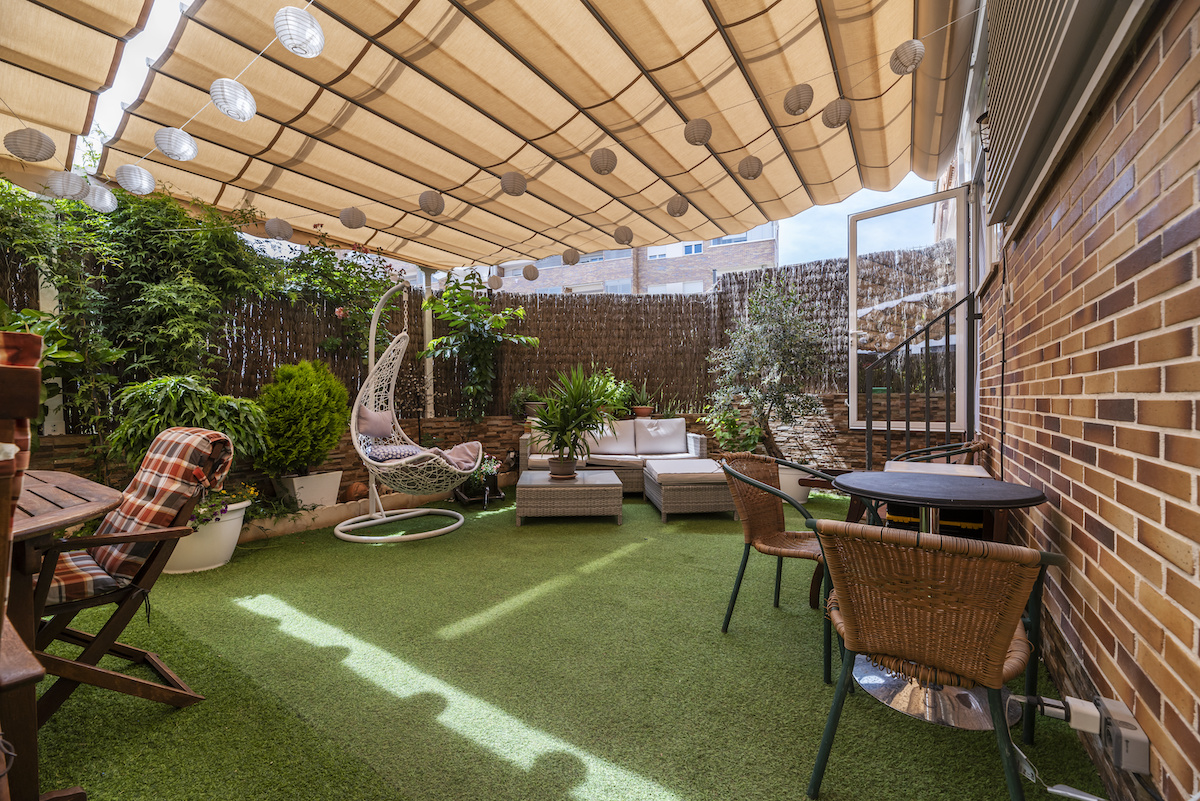
For a long time, this material had nowhere to go. Perfectly usable turf was rolled up and discarded simply because its original setting demanded a higher standard. Today, with companies retrieving, grading, and reselling it, those same turf rolls get a second life. They become backyard runs for dogs, home gym flooring, batting cage surfaces, DIY landscaping, or project material for people who want the durability of sports turf without paying for brand-new turf.
It’s a cost-efficient and eco-friendly use of turf that would otherwise be wasted, and one of the strongest examples of how the turf industry is finding more responsible pathways without compromising performance for the next user.
ReTurf’s used turf offerings fall into two categories:
- Basic Used Turf: High-performance turf that is usually 10 to 12 years old, coming off sports fields nearing the end of their competitive lifespan.
- Premium Used Turf: Newer, lightly-used, or containing value-added features such as thatch or a root-zone layer.
Repurposing this material for dog runs, home gyms, batting cages, backyard strips, trailer flooring, or DIY landscape projects prevents a huge amount of plastic from entering landfills. It is, in practical terms, one of the most environmentally friendly choices a homeowner can make when comparing turf options.
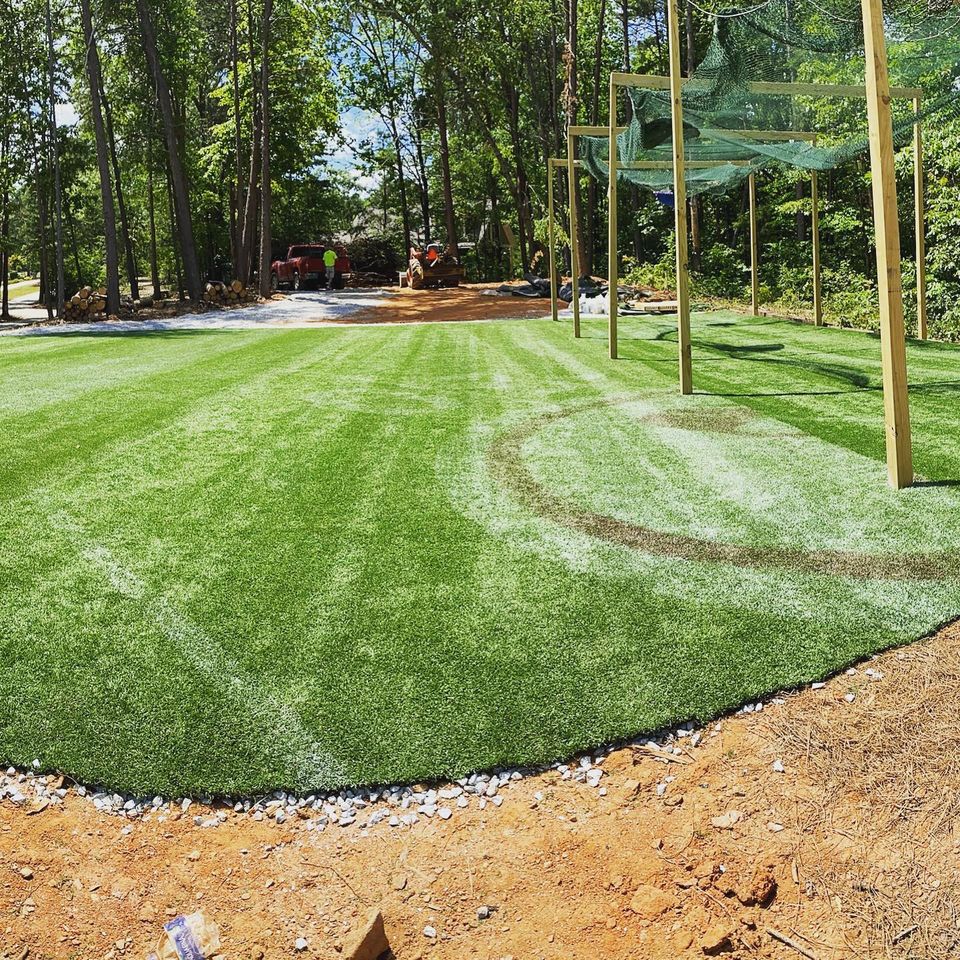
Used turf does not eliminate the long-term recycling issue, but it extends the material’s useful life by years. That alone changes its overall environmental footprint.
How Recyclable Turf & Used Turf Can Both Help the Environment
A complete sustainability strategy for artificial turf includes both ends of the lifecycle. Recyclable new turf reduces the future waste problem, while used turf reduces the current one. The industry needs both at the same time.
Recyclable turf is only as effective as the recycling infrastructure behind it, and that infrastructure will grow faster when more recyclable turf hits the market. Meanwhile, used turf prevents large volumes of material from being discarded before its time.
Some eco-minded homeowners and builders might even consider installing both: using premium used turf for low-wear areas and choosing recyclable new turf for focal, high-visibility installations.
Are Any Synthetic Turfs 100% Environmentally Friendly?

Artificial turf will always have a footprint, but the environmental impact varies a lot depending on how the system is built and where it goes at the end of its life. Of course, you could technically say the same thing about sod, mulch, pavers, or anything else that gets manufactured and installed. That said, turf isn’t like sod, which breaks down naturally and returns to the soil. It’s a manufactured surface, and its environmental responsibility depends on how it’s engineered and where it goes when it’s eventually removed.
However, some newer systems, like Tempo Turf’s 100% recyclable artificial turf, are designed so the material can re-enter a production cycle instead of becoming waste. Others still have no practical end-of-life pathway. From the outside they may look the same, but their environmental profiles are completely different.
Some factors matter more than others:
- Material simplicity. Turf built from a single polymer can be recycled in ways mixed-material systems cannot.
- Documented end-of-life handling. A product with a defined recycling pathway or take-back program behaves differently than one that has no plan once it’s removed.
- Reuse opportunities. Recovered athletic turf reduces waste immediately because it gives an existing material several more years of functional life.
- Fiber durability and UV stability. Longer-lasting turf reduces the number of replacement cycles over time.
- Correct grade for the site. A well-matched turf system avoids premature wear, which is one of the biggest environmental pitfalls.
The point isn’t to chase perfection. It’s to recognize that turf has a different relationship with the environment than natural grass, and the most responsible choice is the one that minimizes waste, maximizes lifespan, and fits into a recycling or reuse pathway rather than ending in a landfill.
When Artificial Grass Makes Environmental Sense
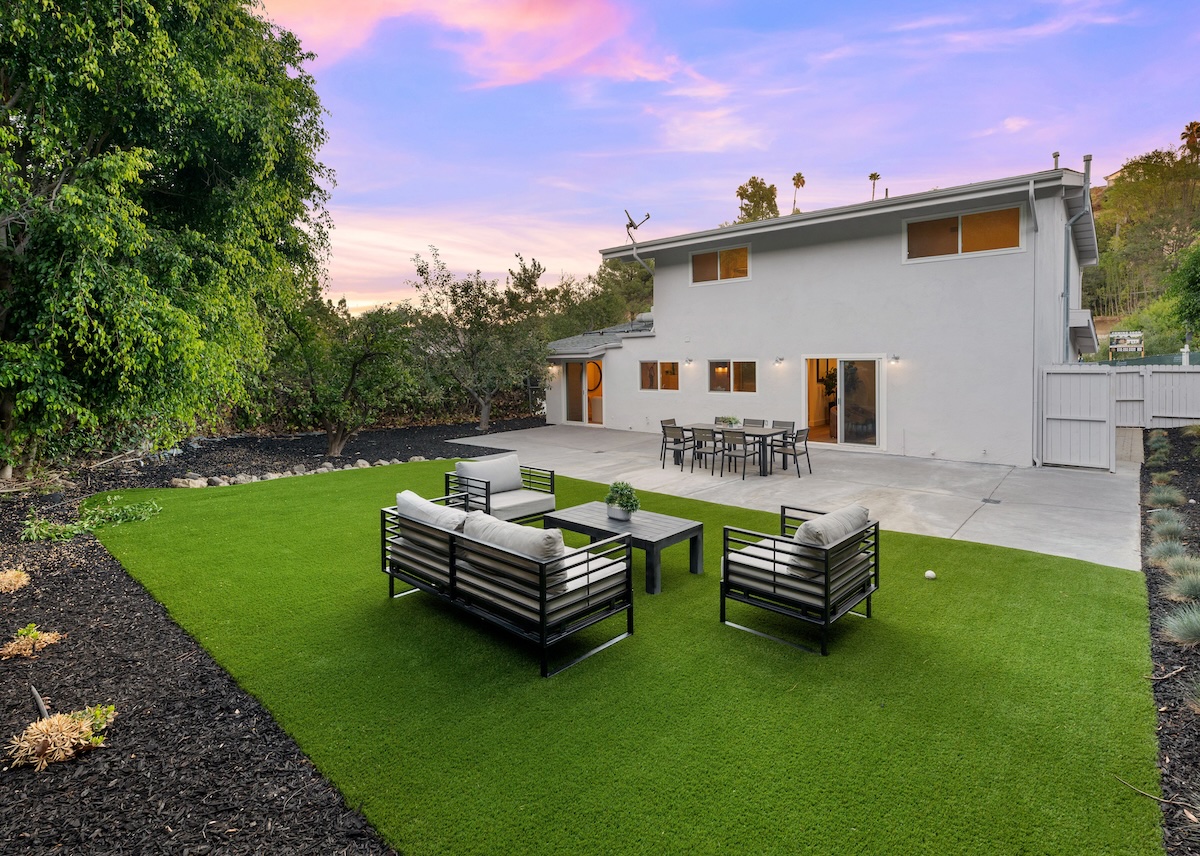
A well-chosen turf system can reduce water usage dramatically, remove fertilizer runoff, eliminate herbicide applications, and replace consumptive landscaping cycles. In drought-prone or high-use areas, that can be a significant environmental improvement over natural grass.
Where turf becomes problematic is at end-of-life. Recyclable single-polymer systems and reuse programs like ReTurf’s help close that gap.
A Practical Way to Think About Eco-Friendly Turf
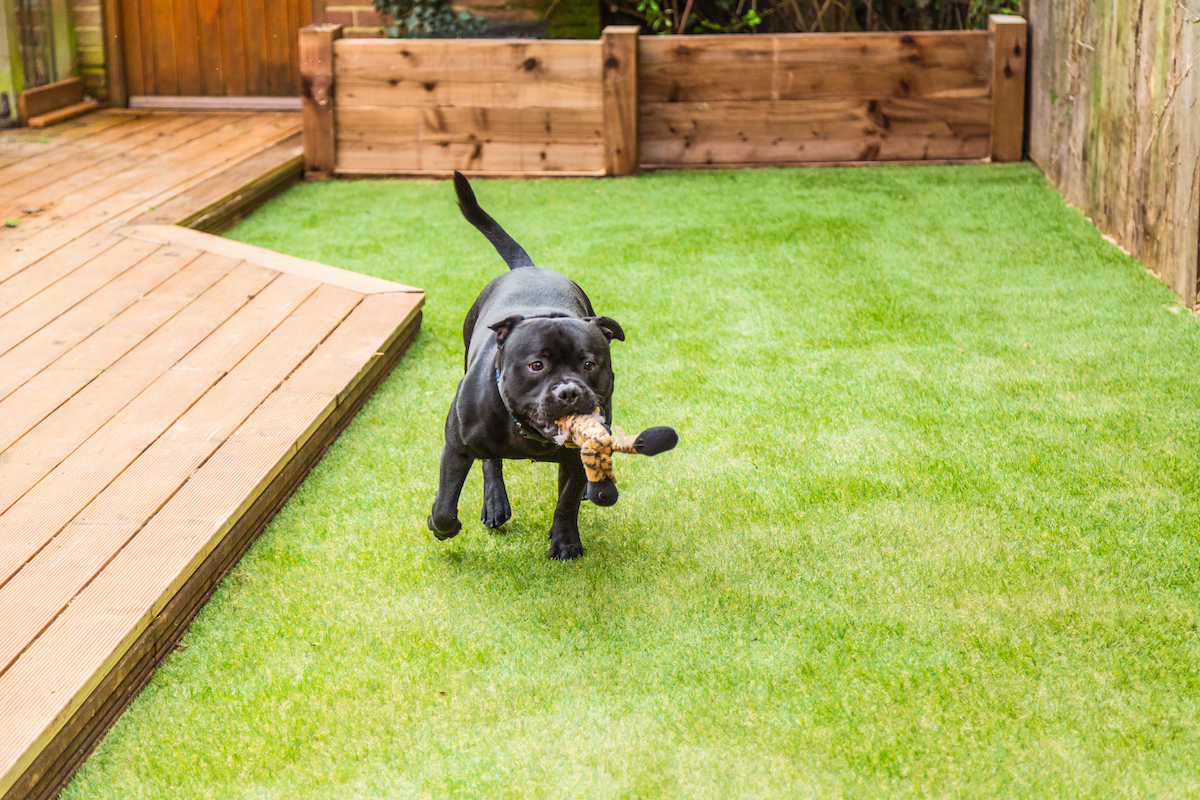
A genuinely eco-friendly artificial turf option is less about perfection and more about direction. For years, the conversation stalled because turf didn’t have many paths forward at the end of its life. It performed well in the ground but had nowhere productive to go once it was pulled up. That used to be the defining limitation of the category. Today, the landscape looks very different. The products available now are measurably better than earlier generations, both in how they’re built and in what can be done with them later. The industry is steadily moving toward systems designed with responsible disposal in mind, and you can see that shift in the materials, the manufacturing choices, and the programs surrounding them.
Tempo Turf represents part of that shift with its recyclable Olefin construction. Building the entire system from a single polymer is exactly the kind of engineering change that makes recycling practical instead of theoretical. ReTurf complements that by offering access to recyclable new turf and by giving retired sports turf a meaningful second life through consumer resale. A field that once would have gone directly to a landfill can now spend several more years as backyard turf, a DIY project surface, or a home training area before it’s finally processed.
For someone trying to lower their environmental impact while still choosing turf, the combination of recyclable materials, responsible sourcing, and reuse pathways presents the clearest route forward. It’s not about chasing an ideal so much as choosing products and suppliers that are already steering the category in a better direction. The options that used to feel out of reach are now real, and they give homeowners and builders a way to participate in a more sustainable turf lifecycle without sacrificing aesthetics, performance, or longevity.