Last Updated on December 18, 2025 by ReTurf
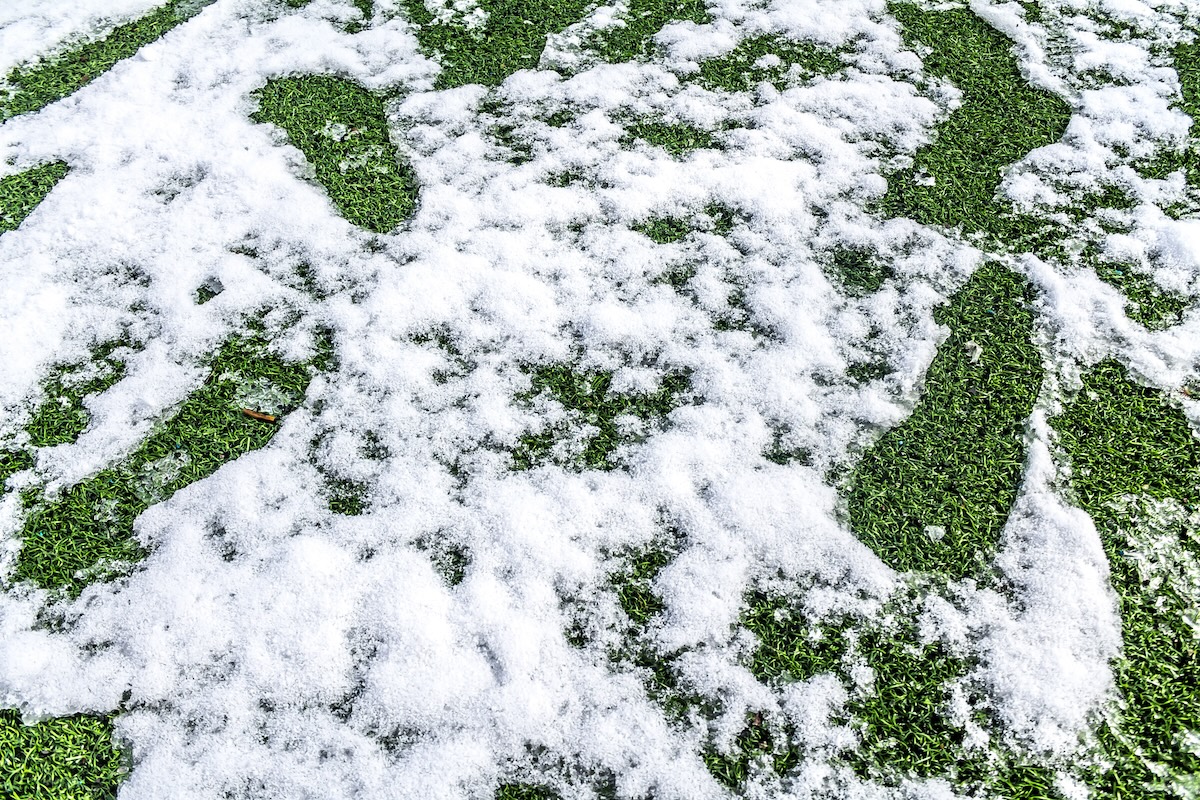
If you’ve ever stepped outside after a snowstorm and wondered whether your artificial grass is going to end up a sad, frozen expanse like natural grass —relax. Synthetic turf doesn’t hibernate, and it definitely doesn’t mind a little winter weather.
But just like anything else outdoors, it’s got its own quirks when things turn cold, and there are a few good habits that’ll keep it looking great all the way through the spring thaw.
This guide goes deeper than the usual talking points. We’ll get into how ice affects turf fibers, why melt-and-refreeze cycles are important, what you can and shouldn’t do when it snows, and whether winter is a smart time to install new synthetic turf (or used artificial grass) in the first place.
“Does Artificial Turf Do Okay in Snow?”

Yes. It doesn’t die, turn brown, or get soggy like natural grass. In fact, high-quality synthetic turf is built to handle everything from blazing summer heat to deep-winter frost.
The blades are made from polyethylene or polypropylene (sometimes nylon), which aren’t phased by sub-zero temperatures. The thatch layer stays flexible unless it’s completely saturated and frozen solid, and drainage layers do their job even under a thin layer of snow.
The bigger issue isn’t the snow itself—it’s what you do with it. That’s where maintenance comes in.
Snow Removal on Turf
What Works, What Damages It
Here’s what you don’t want to do:
- Use a metal snow shovel. The edge can snag and tear turf fibers or seams.
- Drop a salt mix directly onto the turf. Sodium can damage the backing and mess with infill over time.
- Let compacted snow become an icy skating rink without a plan.
Here’s what does work:
- Let it melt naturally when you can instead of using salt or ice melt on turf. That’s the safest option, and synthetic grass drains fast once things thaw.
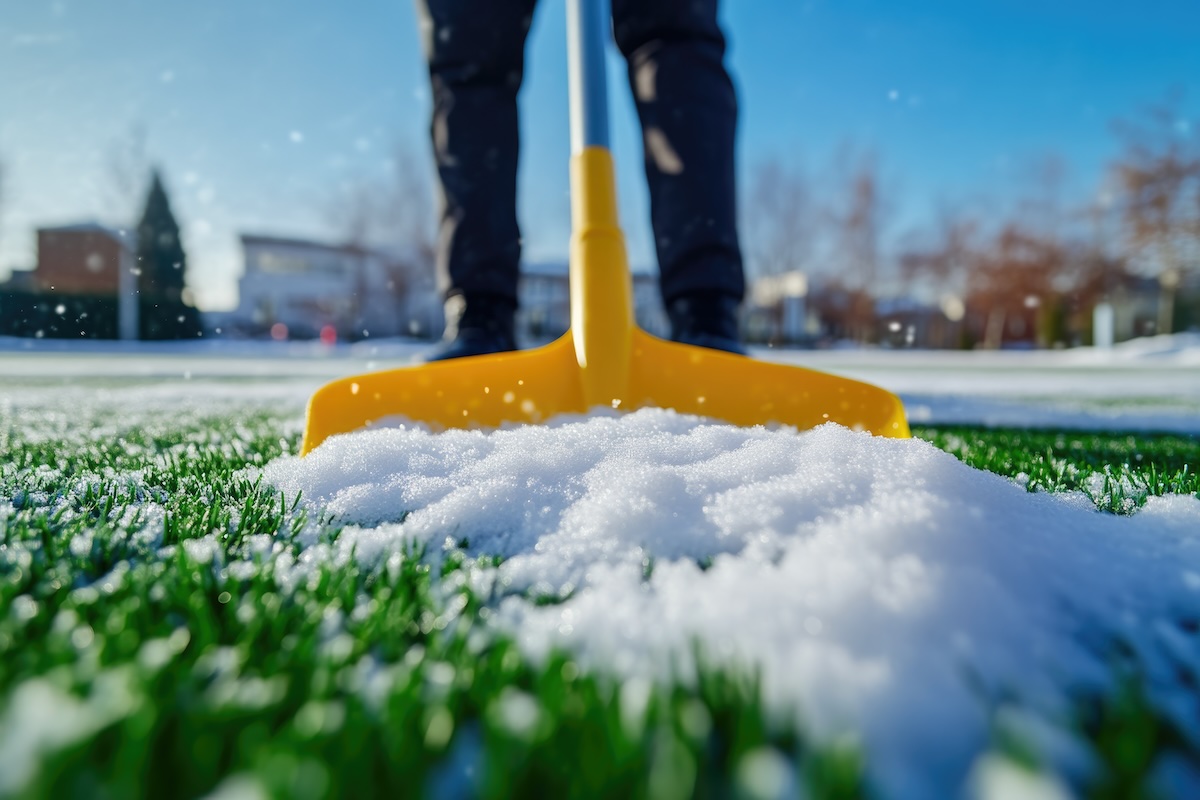
- If you need to clear snow, use a plastic shovel, a soft-bristle push broom, or a leaf blower if the snow is fluffy enough.
- For heavier snowfalls, use a snow blower with rubber paddles, not metal augers.
Freeze-Thaw Cycles and Turf Drainage
Artificial grass has good drainage by design—but freeze-thaw cycles can still leave you with crunchy, frosty turf in the morning and a damp, refreezing surface at night.
If your base was installed with proper slope and crushed aggregate, water should exit underneath just fine. But if the sub-base is compacted clay or gets unevenly frozen, you might see surface pooling after a warmup. That’s not a turf failure—it’s a base issue.
Tip: If you notice standing water after winter storms or uneven ice patches, it’s worth checking for low spots or compacted areas in the subgrade come spring.
Can You Walk on Frozen Turf?
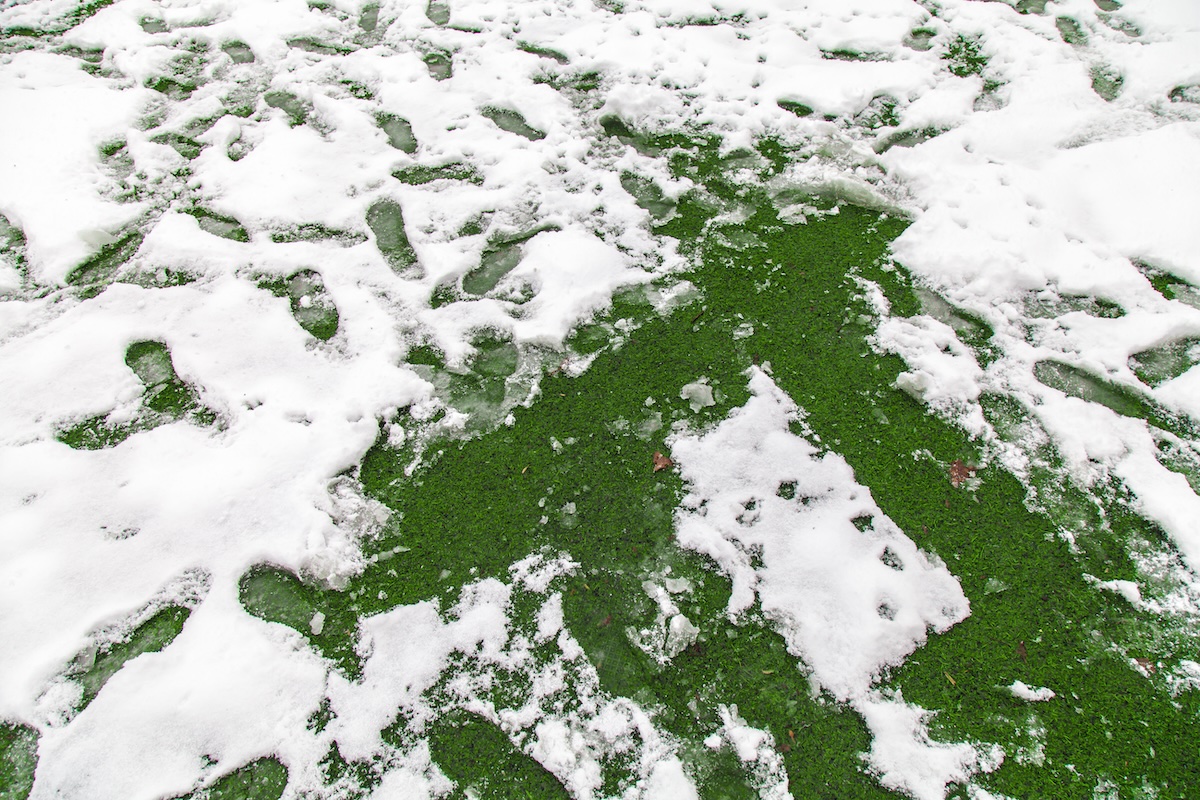
Technically yes, but with a light touch. Turf blades can become more brittle when frozen, especially in shady areas that stay colder. Walking on it won’t destroy it, but repeated traffic could lead to:
- Flattened or crimped fibers that don’t bounce back easily
- Broken or split tips on older or cheaper turf models
- Compacted infill that needs re-fluffing come spring
Best bet? If it’s stiff and crunchy, leave it alone. If it’s soft and flexible underfoot, you’re fine.
Firepits, Heaters, and Turf Don’t Mix
This comes up more often than it should. Portable propane firepits, chimineas, and space heaters absolutely do not belong directly on or next to artificial turf.
Even indirect heat—like a firepit on a paver with turf around it—can radiate enough warmth to warp nearby blades. Synthetic turf can melt at temps around roughly 200°F+, and it doesn’t take much to hit that with an ember or hot metal.
Here are the typical softening/melting ranges:
- Polyethylene: ~221°F (105°C)
- Polypropylene: ~266°F (130°C)
- Nylon (less common): ~374°F (190°C)
Even propane fire pits on a paver can radiate 200°F+ heat several inches away, depending on flame intensity and duration. Chimineas, which burn wood or charcoal, can reach 600°F+ on the outer surface, and that heat radiates downward and outward. Space heaters, especially propane patio models, typically release BTUs in the tens of thousands, and objects within a couple feet can reach dangerous temps, especially in still air.
Artificial turf and fire features can coexist—you just need to treat them like neighbors with healthy boundaries. Synthetic grass won’t catch fire on its own, but it can warp or melt if it’s exposed to direct flames, embers, or sustained radiant heat. That doesn’t make turf fragile—it just means it has a known limit, like any outdoor surface. You wouldn’t park a hot grill on a wood deck either.
As long as you keep firepits, patio heaters, and chimineas on hardscape zones or use proper barriers, your turf can stay in great shape and keep looking realistic through winter nights by the fire.
While 175–200°F may not instantly melt polyethylene turf, prolonged or concentrated heat exposure at or near those temps absolutely can deform and warp it. If exposed to prolonged radiant heat, blades can:
- Curl
- Flatten
- Discolor
- Permanently deform
Workaround: Use pavers, gravel borders, or fire-safe zones to separate turf from any heat source. Better yet, install a fireproof hardscape zone for cold-weather hangouts and keep the turf as your walkable green space.
What About Heavy Stuff Sitting on the Turf All Winter?
Snow itself doesn’t weigh enough to flatten turf permanently. But:
- Planters
- Patio furniture
- Kids’ playhouses
- Storage bins
…left out all winter long? That’s a different story.
When the ground underneath freezes, weight becomes more of a problem. Frozen turf can’t flex to distribute load the way it can in warm weather, so compression marks or flattened fibers can set in.
Fix it: When the weather warms up, give the area a brush with a stiff-bristle turf rake (not metal). Most high-quality turf will bounce back, especially if the infill hasn’t been displaced too badly.
Should You Be Cleaning Your Turf in Winter?
You don’t need to go out there with a scrub brush—but a little winter upkeep does go a long way. It can be less like cleaning and more like keeping things from piling up. Fallen leaves, pine needles, and twigs can trap moisture or clog drainage, especially in shaded areas. And if you’ve got pets, it’s easier to deal with waste on a warmer day than after it’s been through three freeze-thaw cycles.
A quick pass with a leaf blower or plastic rake every now and then is usually plenty. If you spot anything that needs rinsing, wait for a mild day and hose it down—or use a little diluted vinegar if you’re feeling ambitious. Most of the time, your turf’s just fine being left alone—but a 5-minute once-over here and there helps it bounce back faster come spring.
Here’s why it matters:
- Matted leaves can trap moisture and cause algae or mold where the sun doesn’t reach.
- Twigs, pine needles, or acorns can settle into the infill and interfere with drainage.
- Pet waste left to freeze-thaw repeatedly is harder to clean come spring.
Winter Turf Clean-Up Checklist:
- Use a leaf blower or plastic rake to keep the surface clear.
- Hose off small messes on warm days when water won’t instantly freeze.
- Spot clean with diluted vinegar or turf-safe cleaner if needed.
Can You Install Artificial Turf in Winter?
Absolutely. In fact, depending on where you live, winter can be one of the best times to install artificial turf—unless the ground is frozen solid or you’re dealing with consistent heavy snow or rain. In those cases, it’s usually smarter to wait until early spring when the soil is workable and conditions are more predictable.
However, installers tend to have more availability in the off-season, and you won’t be waiting in line behind every pool project and backyard makeover once the weather warms up. Turf doesn’t need warm soil to settle the way natural grass does, and as long as the ground isn’t frozen solid, the work can move along smoothly.
Plus, getting it done now means you’re not dealing with a muddy mess in spring—you’ll already have a clean, finished surface in place by the time everyone else is just starting their yard projects.
Cold weather doesn’t stop installs, but there are a few caveats. The turf itself isn’t the problem—it’s flexible enough to roll out in the cold. But the base prep can get tricky if:
- The ground is frozen solid and can’t be excavated
- Heavy snowfall prevents access or grading
- Rain or melting snow saturates the subgrade and causes compaction issues
Pro tip: If you’re planning a winter install, choose a window when the ground is cold but not frozen, and make sure drainage is addressed. Some installers use heated sand or gravel to maintain workability. Others may prefer to stage the base prep before winter and lay the turf as a final step on a dry, sunny day.
It may be best to hold off on winter turf installation in:
- The Upper Midwest (e.g., Minnesota, Wisconsin, the Dakotas)
Ground is often deeply frozen for months, making excavation nearly impossible without heavy equipment. - New England (e.g., Maine, Vermont, New Hampshire)
Snow cover and freeze-thaw conditions are unpredictable and can delay or damage early install work. - Mountain States (e.g., Colorado, Montana, Wyoming)
High elevation plus variable snowstorms make it hard to schedule base prep or finish turf seams properly. - Northern Plains & Prairie regions (e.g., parts of Canada, Northern Iowa, Nebraska)
Windchill and deep frost layers mean subgrade work is tough and turf adhesives may not cure correctly.
In these areas, spring or even early summer gives you a more stable window for excavation, grading, and proper compaction—especially if drainage is a concern.
On the flip side, winter installs can work surprisingly well in regions with milder winters and workable ground conditions. For example:
- Southern California
With dry winters and moderate temps, you can prep and install turf almost year-round with minimal weather delays. - The Southeast (e.g., Florida, Georgia, the Carolinas)
Frost is rare, and even after a cold snap, the ground usually stays soft enough to work with. - Texas (Central and South)
Outside of the occasional ice storm, winters are dry and mild—perfect for scheduling work before the spring landscaping rush. - Southwest desert areas (e.g., Phoenix, Las Vegas)
Cold doesn’t pose much of an issue here. The biggest concern is keeping dust and debris out of the base during install, which is easy to manage with a good crew. - Coastal areas in the Pacific Northwest
Even though it’s wet, if the soil isn’t too saturated and you’ve got proper drainage, a winter install is still very doable.
In these areas, winter can actually be a strategic time to get ahead of the busy season, lock in better scheduling, and enjoy a finished lawn before peak outdoor weather arrives.
Spring Recovery: Bringing Turf Back to Life After a Harsh Winter
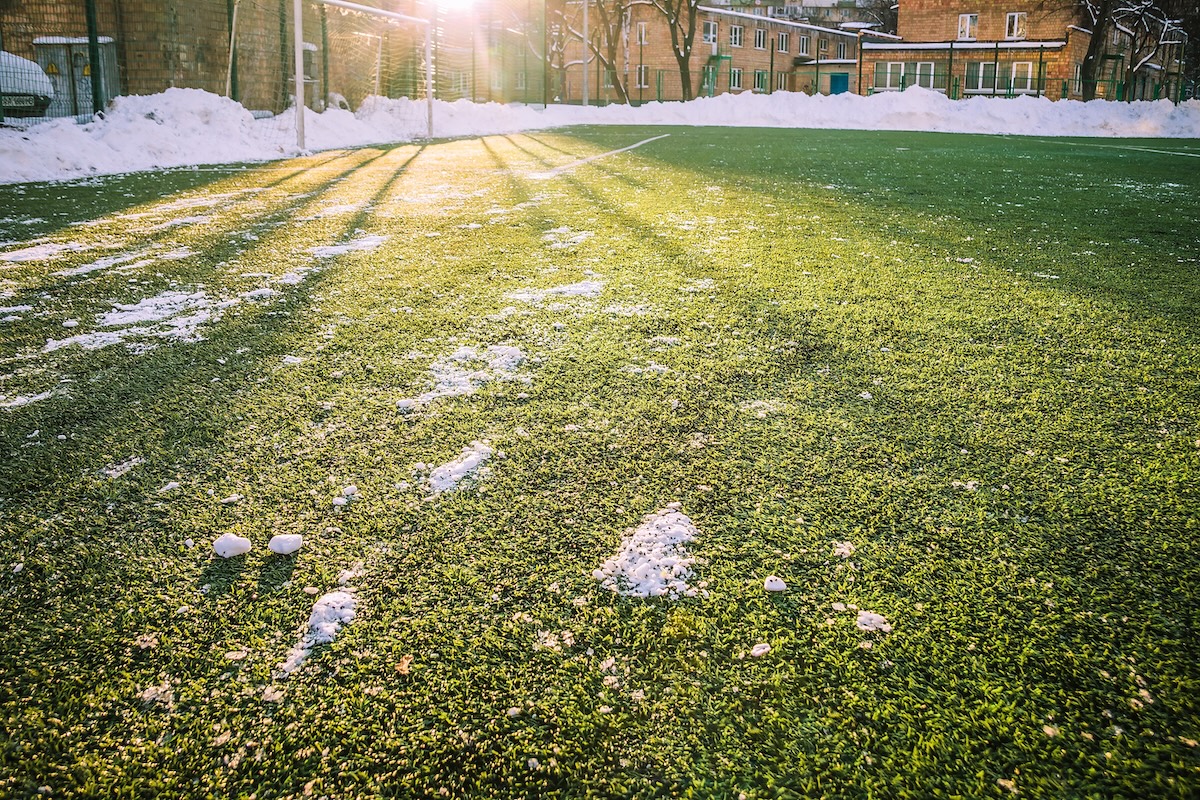
When the freeze finally breaks, turf sometimes needs a little spring cleaning:
- Brush against the grain to lift flattened fibers.
- Top off infill if it’s compacted or washed out.
- Hose down any dusty or pet-impacted zones.
- Check seams and edges for signs of shifting from frost heave or snow removal.
If your lawn’s looking a little sad after a rough season, don’t panic. Most winter-related turf issues are cosmetic and reversible with light maintenance.
Bottom Line
Artificial turf doesn’t wilt, freeze, or brown out—but it’s not bulletproof either. With common sense, the appropriate tools, and a once-over before and after the coldest months, it can keep looking great through every season.
It’s one of the few things in your yard that doesn’t need winterizing—and that is just one of the great benefits of installing artificial turf.