Last Updated on December 2, 2025 by ReTurf
Artificial turf has a reputation for being a “warm-season material”—something people associate with backyard barbecues, summer soccer, and that bright, perfectly trimmed look that never seems to fade. Once winter arrives, though, the questions start rolling in. Turf owners might begin wondering how synthetic grass handles snow, what happens when temperatures dip below freezing, and whether a few months of cold weather can undo what looked so good during the rest of the year.
Anyone who takes pride in their lawn eventually ends up examining synthetic turf the way a craftsman might study a material, wanting to understand how it behaves under different conditions. And winter happens to be one of the most interesting seasons for high-quality artificial grass, precisely because it reveals how well-engineered the base materials really are.
Snow changes the look of any landscape immediately. Grass disappears beneath it. Hard edges soften. Even small yards can feel much wider. Synthetic turf, though, responds to snow in a surprisingly uniform way. It doesn’t discolor. It doesn’t react chemically. It doesn’t absorb moisture the way natural grass does. Everything that happens in winter is almost entirely mechanical: weight, temperature, and the physics of melt. And once you understand those factors, you start to see why so many cold-region homeowners and sports facilities rely on synthetic grass—the material is predictable.
How Artificial Turf Handles Snowfall
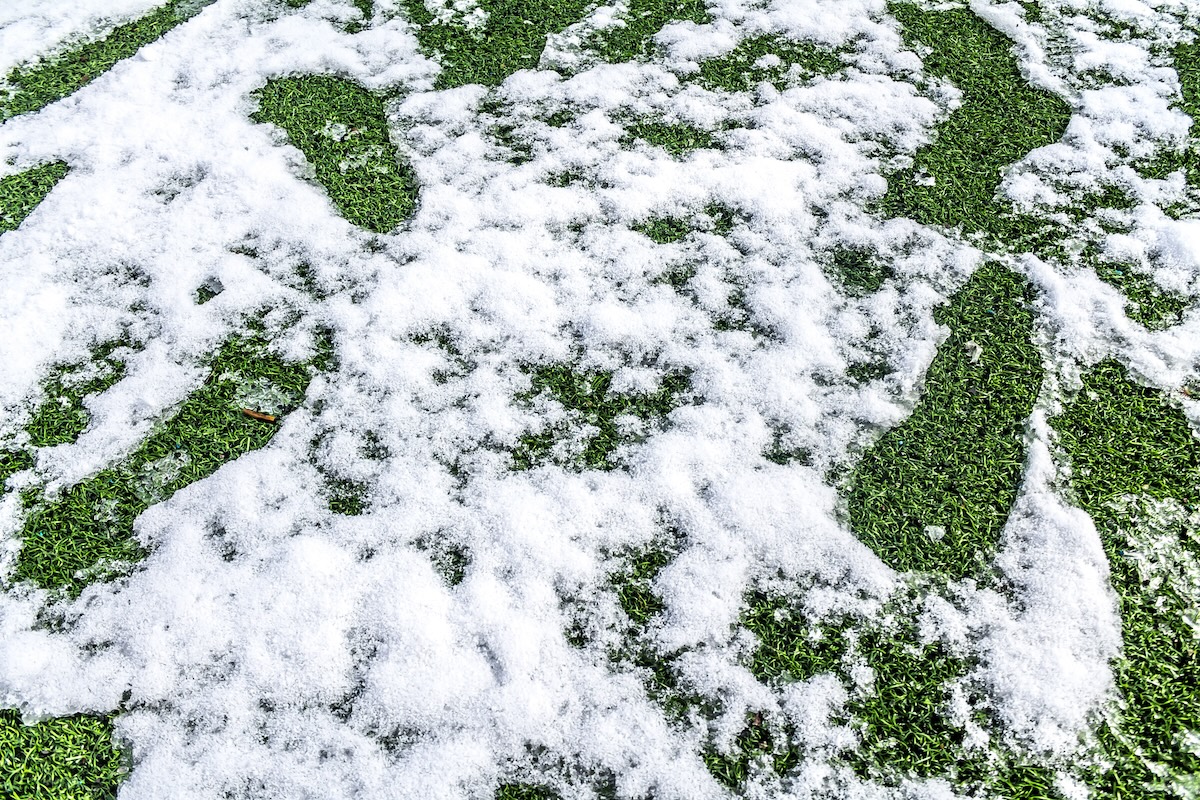
Snowfall interacts with a synthetic lawn through weight and temperature, nothing more complex than that. Snowflakes settle on the blades, the layer builds, and the fibers bend under the load. That’s the whole story. The plastic polymers used in turf systems are made to flex and recover. They can sit under heavy foot traffic, furniture legs, and months of UV exposure without giving up their shape. Snow is gentler than all of those. Most of the time, the blades rebound on their own once the snow lifts, even after a long freeze. The exception tends to be large, compacted drifts that sit in shaded pockets of a yard. In those cases, a pass with a power broom after the thaw can encourage the fibers to stand again.
Generally, you can walk on synthetic grass while there’s snow on it. Artificial turf generally has better traction than natural grass in winter conditions. The surface stays supported by the underlying infill and base, and it does not become muddy or uneven the way soil does. Someone stepping across a snow-covered lawn is essentially stepping on a winter “blanket” over a stable platform. (Something that’s easy to appreciate when the surrounding yards are slushy or frozen—turf generally keeps its footing better.)
What Snow Does (and Doesn’t Do) to Synthetic Grass
Let’s clear up a couple of the biggest questions about artificial turf and snowfall: does snow damage turf, and does it change the way the surface behaves once spring returns?
- Snow doesn’t alter color. UV light is the only thing that can cause artificial turf fading over time, and winter is the lowest UV season of the year. Many owners even feel like their lawn looks newer after a winter because the break from sunlight is a reset before spring.
- Snow doesn’t alter drainage. A good turf installation includes a base that drains vertically and laterally, so meltwater moves through it the same way rain does. The difference is simply speed—snow melts slowly, so water flows gently through the backing rather than arriving all at once during a storm. The base doesn’t saturate or swell the way soil can. It stays firm.
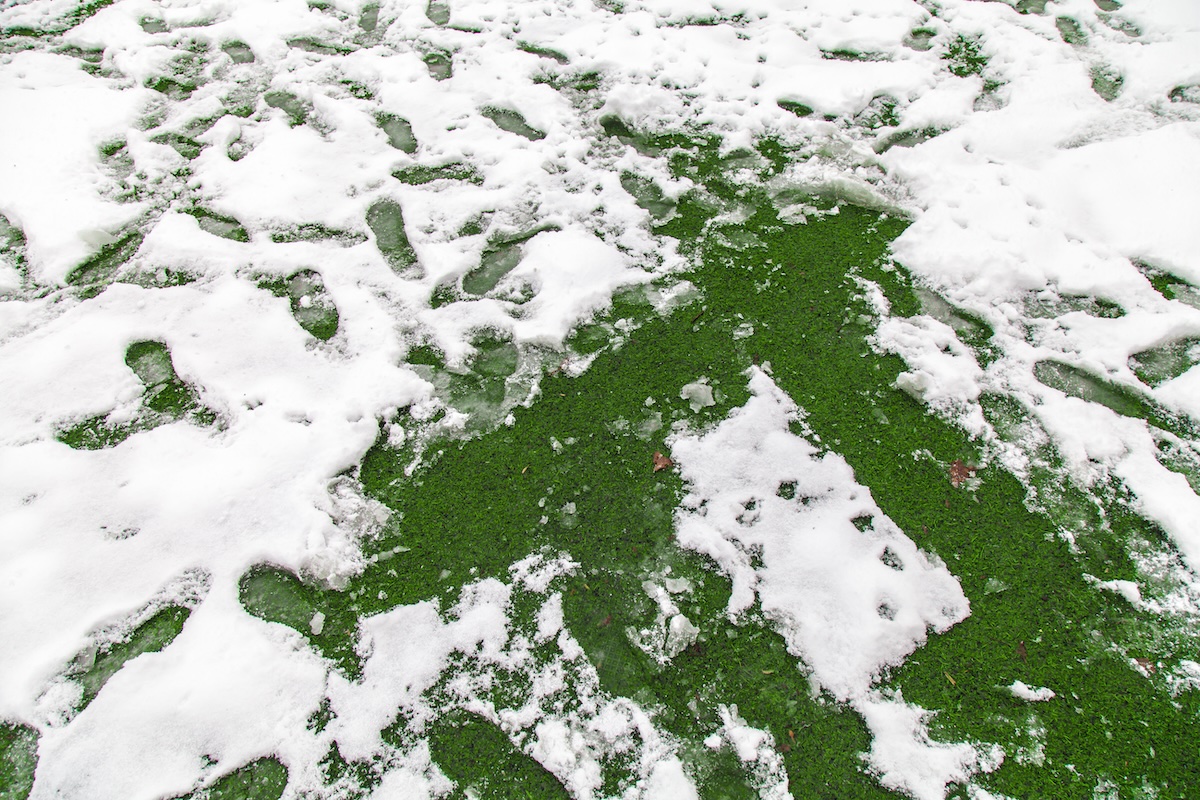
An effect you might notice is temporary fiber compression. Snow is weight, and weight bends blades. But premium quality synthetic turf is engineered with memory in the blades. Once the snow melts, the fibers should warm, relax, and spring upward again.
Some homeowners first learn this when they see their lawn looking slightly flattened right after a thaw, then watch it stand up gradually over the next few hours. It’s almost like watching steam lift off pavement, just materials behaving the way they were designed.
Can Artificial Turf Withstand Snow?
Yes—synthetic grass handles snow extremely well. Cold weather doesn’t degrade the fibers, the backing stays flexible, and the base materials don’t shift. This is why turf fields in northern states, ski towns, and colder climates can stay open year-round. You might see frost or a thin crust of ice on a field and expect trouble, but turf doesn’t react like natural grass. Natural lawns trap moisture in the soil and root layer, so freeze-thaw cycles can be destructive. Synthetic turf avoids that entirely.
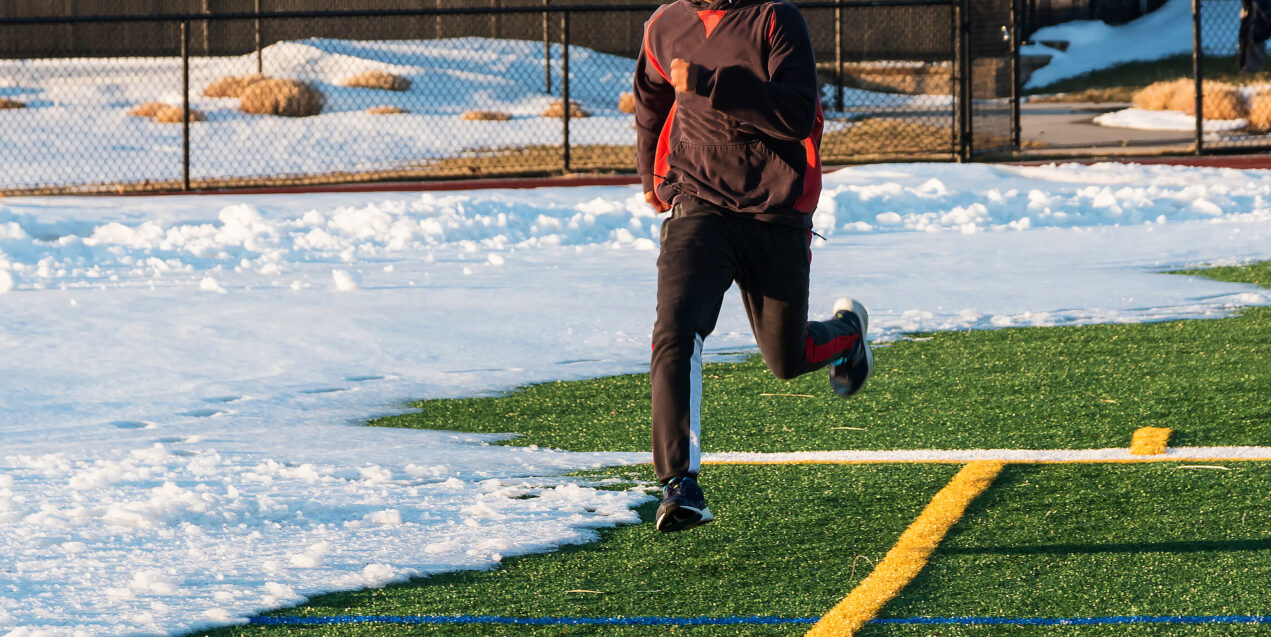
The bigger point is that turf doesn’t require special treatment for snow. Owners don’t need to cover their lawn or take seasonal precautions. Turf doesn’t rot, it doesn’t clog with mud, and it doesn’t become patchy when spring arrives. The winter months are basically downtime for the surface—nothing is happening within the material except the slow melt of snow through the drainage system.
How Fast Does Snow Melt on Synthetic Turf?
Snow tends to melt faster on artificial turf than on natural grass. The reason is simple: turf absorbs a small amount of radiant heat. Even on cold days, the backing and infill pick up warmth from the sun more efficiently than dormant natural grass does.

That warmth transfers upward, thinning the snow layer gradually. If the day has even a little bit of sunshine, you’ll usually see narrow melt lines appear first where the turf is warmest—edges near masonry, tree wells, or retaining walls. It’s the same effect you see on a driveway, when it starts thawing from the edges inward.
The base also helps the process along. Because water can move freely through the sub-base, meltwater drains instead of refreezing into a sheet. Anyone who has dealt with icy, thaw-freeze cycles on a natural yard understands how much easier it is when the meltwater simply disappears downward.
Cold Weather Tip: Turf doesn’t develop the same uneven thaw patterns that natural grass does. There’s no soil structure under turf to determine hot and cold spots. Everything melts at a steady, predictable rate unless shading or snow compaction slows an area down.
Walking, Playing, and Using Artificial Turf During Winter
Once snow is on the ground, a synthetic lawn keeps its structure. The infill holds the blades in place, the backing stays supported, and the surface behaves like a firm winter path rather than a soggy natural yard. Kids running around, dogs charging through drifts, someone hauling a shovel from the shed—higher quality artificial turf generally can handle all of that better than natural grass, without shifting or creating ruts.
Turf fibers provide grip even with a dusting of snow. Natural grass gets slick as soon as the first layer melts and refreezes, but synthetic fibers stay consistent because the surface doesn’t turn into mud. People who maintain sports fields pay close attention to texture underfoot, and how steady a turf field feels during cold months.

When the snow cover is deeper, the turf becomes more like a well-padded surface. You’re stepping on snow supported by the infill and base, not sinking into soil. It feels predictable, which is why a lot of homeowners end up using their turf paths as their default winter walkways without planning to. It just happens naturally once they see how stable it is.
How Ice Affects Synthetic Grass
Ice forms from refrozen meltwater, and synthetic turf only interacts with it at the surface level. The ice sits on top of the blades, it doesn’t bond into the backing, and it doesn’t seep downward. Once temperatures rise even slightly, it releases cleanly. If you tap a patch of ice on a turf edge, it usually lifts off in a sheet.
Some owners get nervous the first time they see turf blades trapped under ice because they expect them to stiffen permanently. The fibers are made to handle far harsher environmental cycles than a midwinter freeze. They flex within their tolerance range, thaw, and return to normal. Cold doesn’t make them brittle the way it would with low-quality plastics.
It’s important to avoid aggressive scraping with metal tools. A metal shovel edge can catch the fibers if someone applies weight in the wrong direction. Many people stick to letting ice melt naturally, and the lawn goes right back to its usual shape.
Using a Power Broom After Snow
A power broom definitely isn’t a requirement in winter, but it can be handy when blades stay slightly pressed down after a long cold spell or when heavy wet snow has compacted a spot. That said, you really don’t need to touch the lawn during winter; the first room-temperature afternoon often solves the flattening on its own. A broom just speeds up what the material would do anyway.
If someone chooses to use one, the technique stays simple: gentle passes in the direction of the grain, not downward force. The bristles lift the fibers and redistribute the infill evenly. This is the same process people use in spring maintenance, so winter doesn’t introduce anything unusual or delicate. And of course, there’s definitely some satisfaction in watching the blades stand back up after a cleaning pass.
Winter Maintenance Essentials
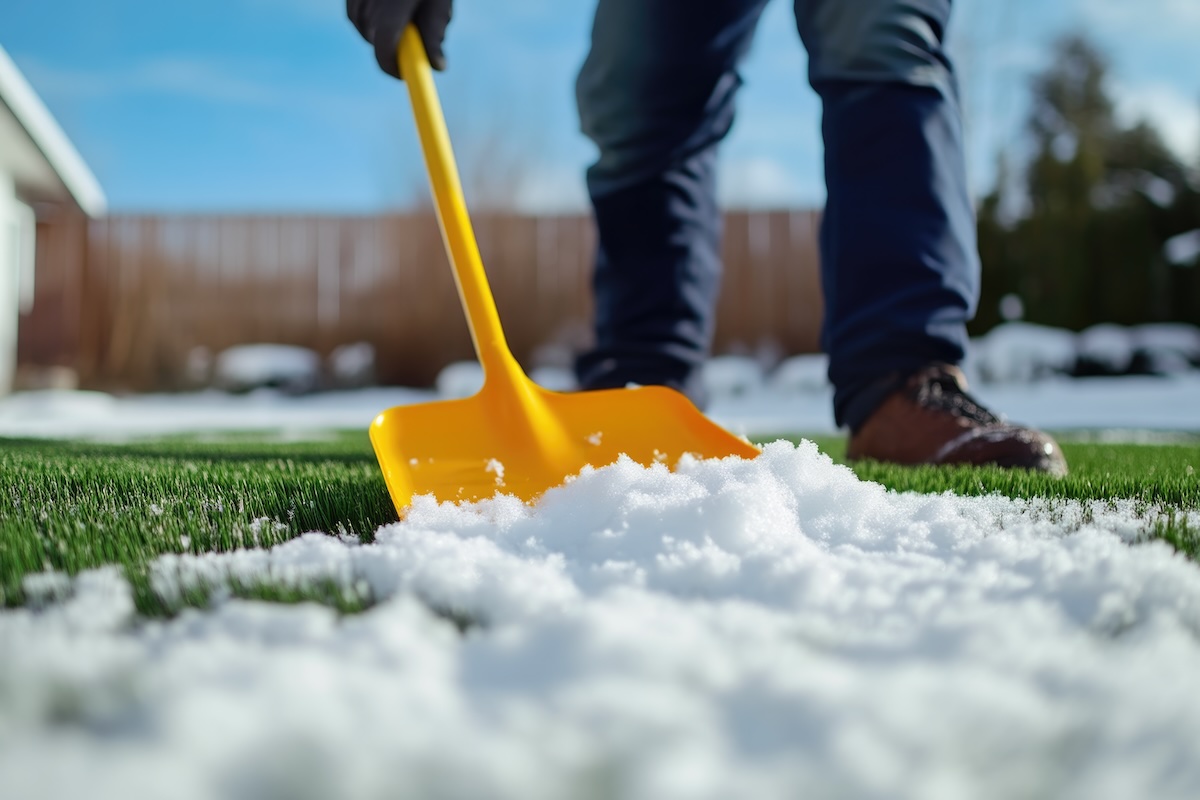
A synthetic lawn doesn’t need seasonal prep for winter because the materials don’t absorb moisture, and the base is already built to drain. There are only a few simple habits that help the surface stay tidy:
- Let snow melt naturally.
- Avoid metal shovels if clearing a small path.
- Brush the fibers upright in spring if they look compressed.
- It’s preferable to keep debris like leaves from freezing into place—blowing them off before a storm helps avoid little mats.
That’s it. Turf does not require winterizing. Everything that matters about the system is already designed to manage temperature changes and moisture movement.
The structure under a turf installation controls how water behaves. The crushed rock base stays stable in winter, so the meltwater moves straight down instead of spreading sideways. That means puddling is rare, even in backyards with tricky grading. Homeowners might notice this first near patios or walkways: the snow on turf recedes evenly while surrounding natural areas stay frozen longer.
Another factor to consider is the heat retention of artificial grass. The backing and infill hold a small amount of warmth from daylight, which encourages an even melt pattern. It doesn’t warm the yard dramatically, but it’s enough to stop the freeze-thaw cycle that makes natural yards lumpy in spring. The ultimate result is a surface that transitions out of winter cleanly. In other words, no bare patches, no soggy corners, no areas that need reseeding. Once the weather changes, the lawn looks like it took a short break and then went right back to its usual texture.
Synthetic turf systems are built with seasonal cycles in mind. The fibers, backing, and infill move through year after year of temperature swings without breaking down or changing how the lawn works. Cold weather isn’t a stressor in the way heat and UV exposure can be; winter is comparatively calm for the material. Even in regions with heavy snowpack, the turf sits dormant, protected by the very thing sitting on top of it.
The base remains stable through freeze-thaw cycles because it doesn’t rely on expanding soil to hold its shape. Crushed stone doesn’t heave, and water doesn’t collect in pockets below the surface. That’s why a synthetic lawn looks almost identical from one winter to the next, even after many years of seasonal use. The structure that supports it doesn’t shift around, so the surface doesn’t either.
Sports complexes tend to be good case studies here. Their fields experience some of the harshest winter conditions, yet the material continues to rebound once temperatures rise. Homeowners see the same effect in smaller spaces: a consistent lawn that doesn’t need spring patching or fixing.
Cold-Weather Myths About Synthetic Turf
Winter brings a handful of assumptions that sound reasonable until you look at how the components behave. A big one is the idea that frozen turf becomes fragile. The fibers don’t lose flexibility in cold temperatures; they’re engineered to tolerate far below-freezing conditions. Another misconception is that snow or ice can seep into the backing and create long-term problems. The turf doesn’t absorb moisture, and meltwater drains through the system the same way rainfall does.
There’s also a belief that snow has to be cleared immediately or it will “weigh down” the turf. Snow simply compresses the blades temporarily and then melts away. Owners usually figure this out the first season they have turf: they clear less than they expected because the surface manages itself.
How Synthetic Grass “Recovers” in Spring
Once temperatures rise, a synthetic lawn moves into its easiest season. Any slight compression from snow fades quickly as the fibers warm. If a yard has shaded sections where snow lingered longer, a quick broom pass in early spring brings everything back into alignment. The lawn’s color stays consistent, the edges remain defined, and the surface dries evenly because of the sub-base.
“Spring cleaning” can be much simpler compared to natural lawns. There’s no mud layer, no uneven thaw, and no regrading. The turf transitions cleanly, and once the first warm day hits, it looks the same as it did before winter started.
The Bottom Line
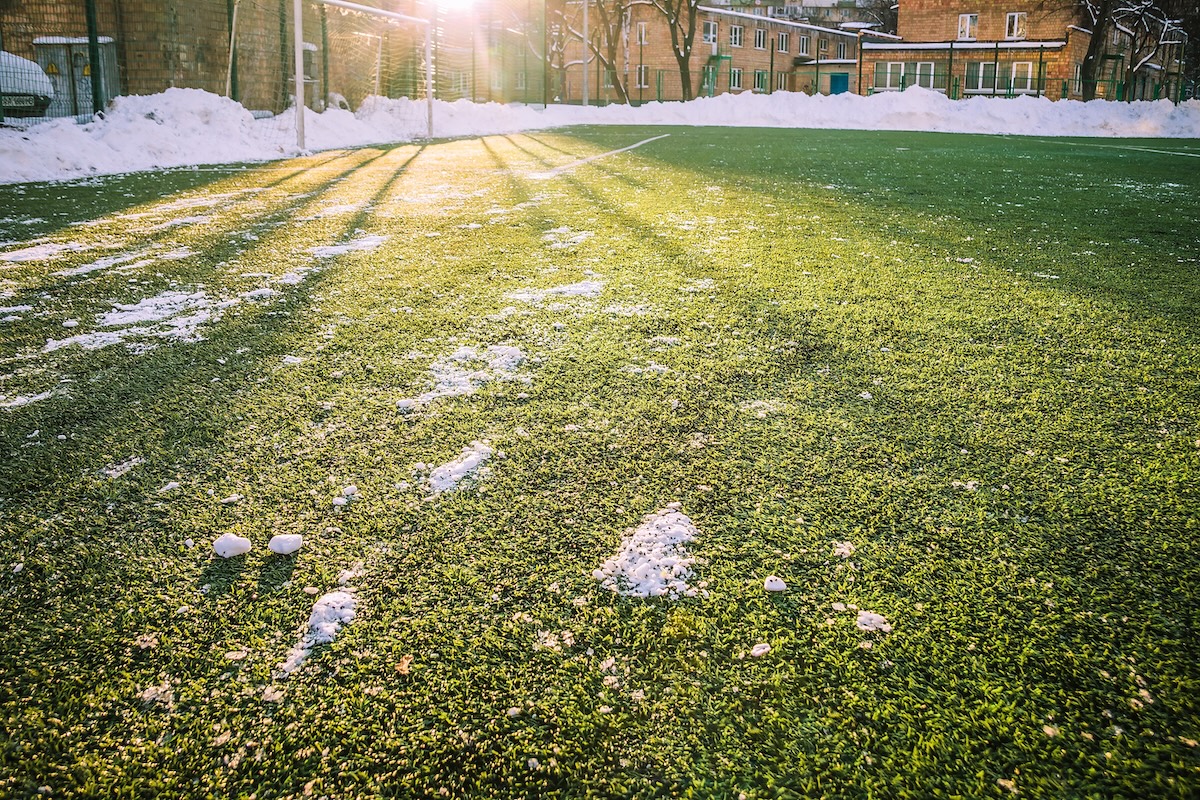
Artificial turf and snow coexist comfortably. Snow sits on the surface, melts naturally, and leaves the fibers and base untouched. The blades press down under the temporary weight, rebound as temperatures shift, and keep their color and integrity. Ice doesn’t bond to the material, and meltwater finds its way through the drainage system without pooling or refreezing into hazards.
Winter doesn’t demand maintenance beyond common sense. Owners don’t have to prepare the turf, protect it from cold, or intervene during the season. When spring arrives, the lawn will remain green without effort.
Synthetic turf may look like a warm-weather feature at first glance, but it’s built to handle all seasons, snow included. That’s one of the reasons households, businesses, and recreational facilities in colder regions keep leaning toward turf installations. The surface stays steady when everything else outdoors is in flux, and once the snow clears, the lawn is already right where you left it.