
Last Updated on December 3, 2025 by ReTurf
Artificial turf stays outside through everything—summer heat, heavy rain, and long freezes. You don’t have to bring it in for the winter, and you don’t have to cover it up—it just sits there and takes the weather like a sidewalk or a patio would, except it still looks like grass the whole time.
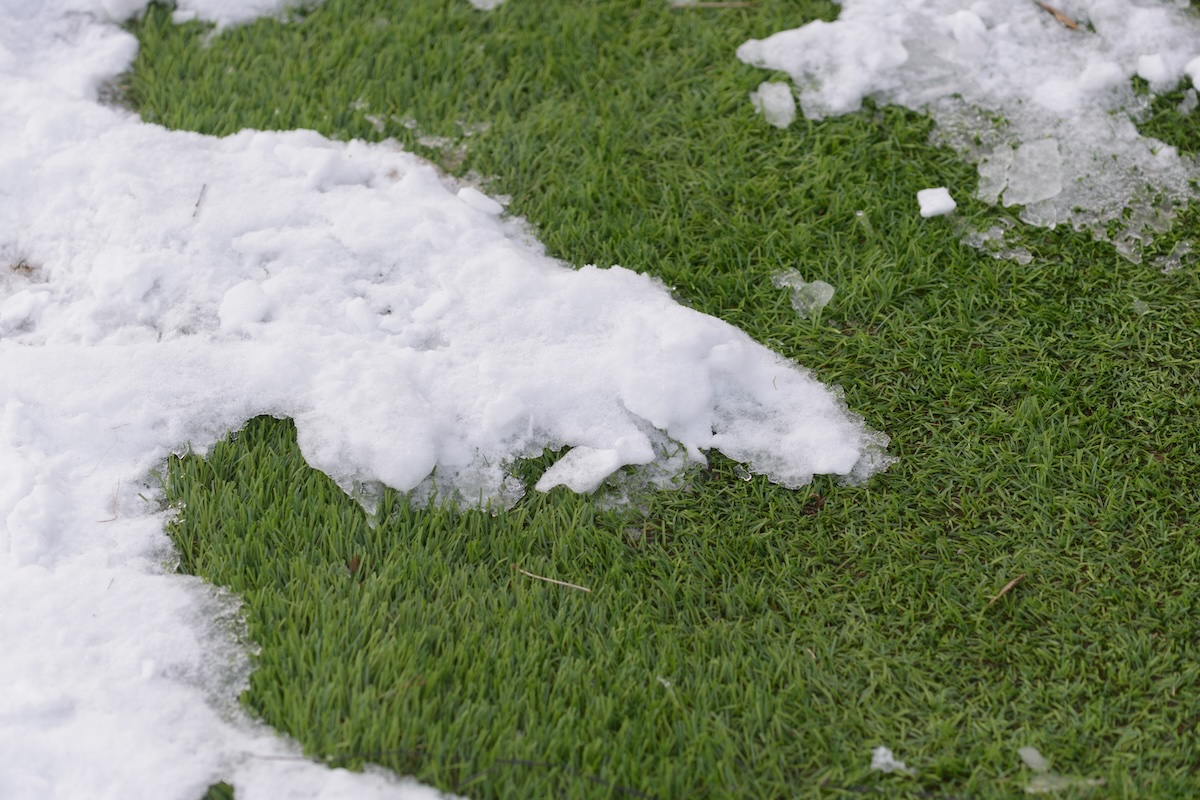
Once winter snow or ice hits, the main question is whether the surface itself can freeze and what happens underneath when it does. That’s a fair thing to wonder, especially given that most of us are used to watching natural grass lawns turn soggy, frozen, or patchy.
In practice, the water around the turf and inside the infill can freeze, the surface can stiffen up, and you might see a thin layer of ice now and then. But the turf system is built for it. The fibers, backing, and base stay stable through cold weather as long as the installation drains properly.
How “Freezing” Applies to Synthetic Grass
Natural grass holds water in its soil, roots, and plant tissue, so freezing reaches directly into those layers and reshapes the surface as the season goes on. Artificial turf doesn’t work that way. It’s a manufactured system typically made from plastic fibers, a backing layer, infill, and a compacted stone base. None of it holds water the way a living lawn does. So when things freeze, it’s the moisture around the turf that turns to ice—not the turf itself.
In practical terms, a cold winter brings three main changes:
- Ice can form on top of the fibers from refrozen meltwater.
- Moisture in the top layer of infill can freeze into a shallow crust.
- Frost can reach the native soil below the compacted base.
The turf fibers and backing move through those conditions without taking on water themselves.
What Actually Freezes: Water and Infill, Not the Fibers
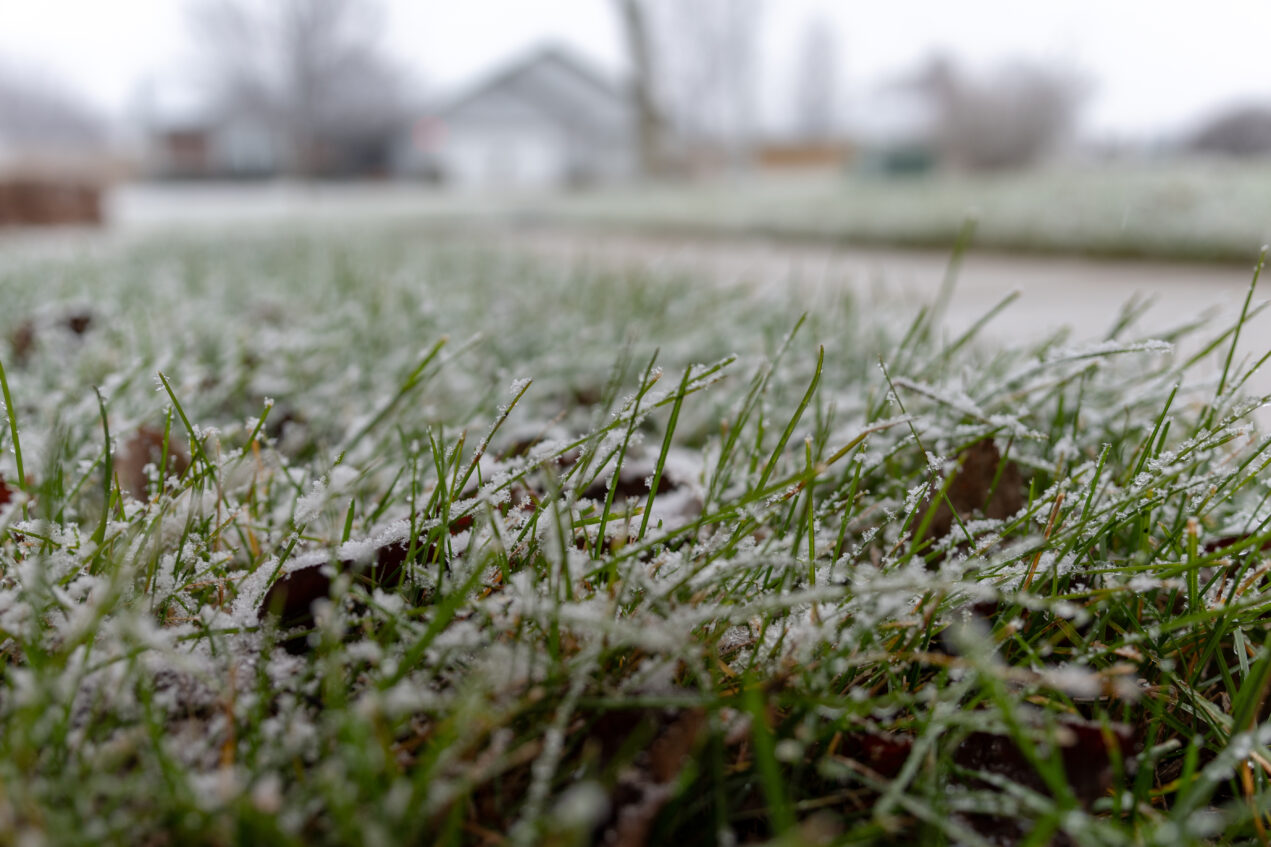
On cold days, nothing about the turf system changes at a material level. The blades are still extruded plastic. The backing is still a stable, perforated layer. And the base is still compacted aggregate that doesn’t swell or heave like soil. The surface might feel stiffer, but the structure underneath holds steady.
That said, the water that was left at the surface after a partial melt can turn into a hard film. If there is moisture in the very top of the infill layer, that moisture can freeze and lock the granules together until temperatures rise again. Those are temporary states. Once the thermometer moves back above freezing and sunlight does its work, ice and frozen infill release and the surface returns to its normal feel.
The polymers used in quality turf systems are rated for outdoor use well below typical winter lows. They stiffen as the temperature drops, but they remain within their designed tolerance range. The fibers are not turning brittle and snapping under ordinary residential or sports use in cold weather.
Does Freezing Damage Artificial Turf?
A freeze on its own does not harm a modern turf system that sits on a properly built base.
There are a few reasons for that:
- The turf does not hold water inside its fibers or backing, so there is no expansion inside the material when temperatures fall.
- The perforated backing allows meltwater to move downward instead of sitting in a trapped layer.
- The compacted stone base drains and does not swell when it gets cold.
Issues in winter usually trace back to mechanical abuse, not temperature. Metal shovels punched down into the surface, ice choppers used aggressively, or vehicle tires spinning in place on a frozen area can grab fibers or disturb infill and seams. When the surface is treated as a finished landscape material and tools are matched to it, freezing conditions pass without structural damage.
How Frozen Turf Feels Underfoot

When the thermometer drops, turf behaves more like an outdoor sports surface than a soft natural grass lawn. The fibers are stiffer. The top layer of infill may be temporarily locked together if it has taken on moisture and frozen. The base underneath stays solid because it was compacted long before winter and doesn’t depend on soil softness for support.
On a dry, frozen morning with no visible ice, the surface still provides grip because the fibers and infill continue to interact with footwear. When an ice film lies across the top, the surface becomes slippery for the same reason a frozen deck or driveway does: the shoe contacts ice, not the material underneath it.
Compared to natural grass, synthetic turf generally offers better traction in cold weather—especially before any melt-refreeze cycle begins. Natural grass tends to freeze unevenly because of moisture in the soil and plant structure. That often creates slick spots where ice forms at ground level, especially in shaded areas. Turf avoids that layer of hidden ice since the surface doesn’t hold water the same way.
Even when frozen, the blades and infill still create micro-interactions underfoot, helping distribute pressure and maintain contact. That’s why dry frozen turf often feels more stable than a frost-covered lawn. Once ice forms on top, though, both surfaces become slick for the same reason: shoes lose friction against the frozen film, not because the underlying surface failed. In those cases, the risk is similar to walking on any frozen hardscape.

From a durability standpoint, normal foot traffic across a frozen synthetic lawn is acceptable. The surface is designed to carry load through the infill and base, and cold temperatures do not change that structure.
The hidden layer underneath the turf controls how well the system rides out a season of freeze–thaw cycles. A standard cold-climate build uses a compacted subgrade with slope, several inches of graded aggregate, and controlled compaction passes to lock everything together.
Crushed stone doesn’t behave like clay soil in winter. It sheds water instead of absorbing it, and it does not swell when that water freezes. The voids between aggregate particles carry meltwater away when conditions allow. When temperatures drop again, there is no large volume of trapped water in the base layer trying to expand.
This is why a synthetic lawn with a correct base does not heave and settle the way a natural yard can through late winter and spring. The turf is anchored to a stable platform that maintains its shape year after year, even as the weather moves through repeated freeze–thaw cycles.
Tips for Choosing Artificial Turf Systems for Cold Regions
- Grass fibers (blades) made from resins with low-temperature flexibility
- Backing systems with consistent perforation patterns for drainage
- Base designs that use non-expansive aggregate at appropriate depth
- Infill types that tolerate some moisture without clumping long term
Winter Maintenance Around Frozen Turf
Freezing conditions change how maintenance tools should be used, more than they change the turf itself.
Snow that falls, sits, and melts on its own is the easiest case. It turns to water, moves through the backing and base, and leaves the fibers to rebound as temperatures rise. No scraping or chipping is required.
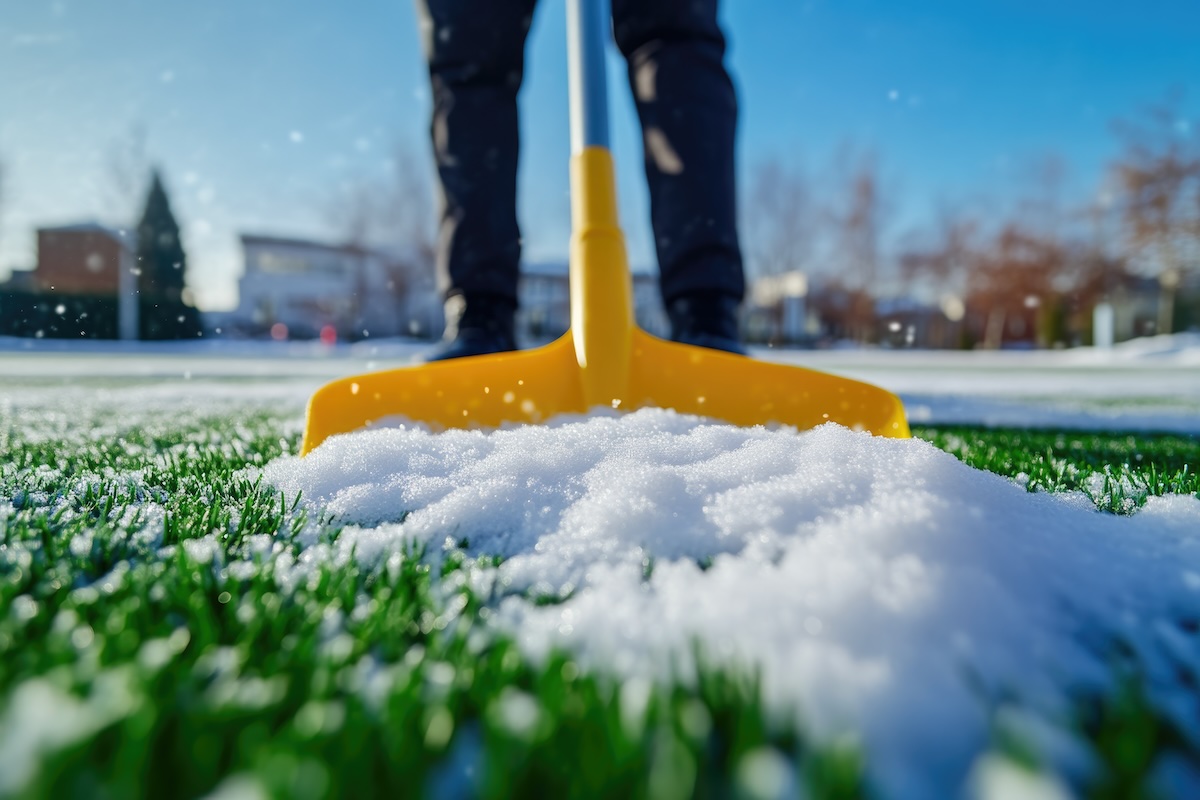
When a clear walking path is needed, a plastic shovel or wide push broom keeps weight off the fibers. The goal should be to skim accumulated snow without digging into the infill. Leaf blowers can handle light, dry snow without touching the surface at all. Metal edges sit in the risk category because they can catch tufts, open seams, or scar the backing if someone leans their weight into the tool.
De-icing products are usually handled near the turf rather than on it. Some installers might recommend placing salt or similar products on adjacent hardscape (walkways, driveways, patio edges) and letting meltwater move across the turf as needed, instead of broadcasting granules directly into the infill. Manufacturer guidelines are important, since different infill systems respond differently to chemicals over time.
Compressed Areas After Snowpack
Long snowpack in shaded spots or under plowed piles can press fibers down for weeks at a time. When everything finally thaws, those areas may look flatter than the rest of the lawn.
That is a mechanical effect from weight and frozen infill, not a failure of the turf. Once the surface dries and warms, a stiff broom or power broom pass lifts the blades and redistributes infill. The backing and base stay unchanged; they were carrying the snow load the entire time.
Takeaways
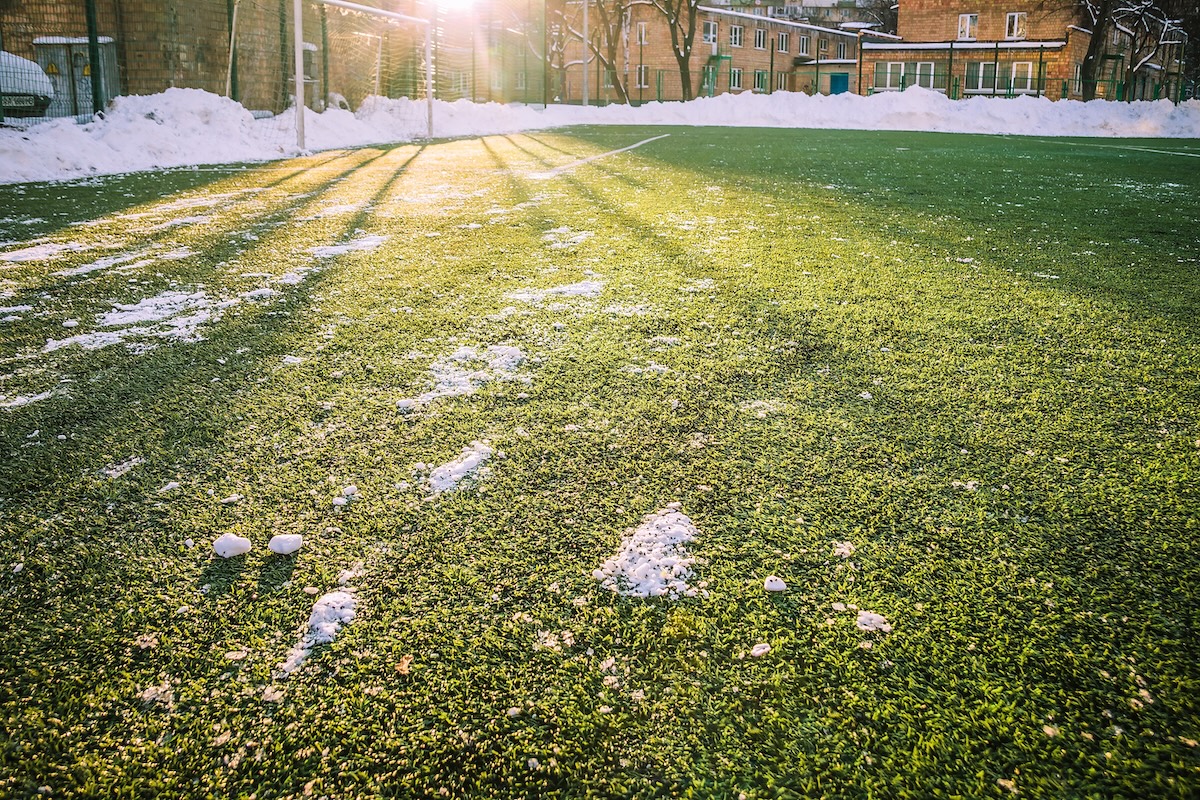
With all that said , the answer to “Can artificial turf freeze?” becomes clear. Water on and around the turf can freeze. The surface can feel firmer in low temperatures, and ice can sit on top. The system underneath is engineered to operate through that entire range without losing its shape, color, or function once winter passes.